
Story
Citi Downplays Five Major Market Risks, Maintaining Pro-Risk Stance
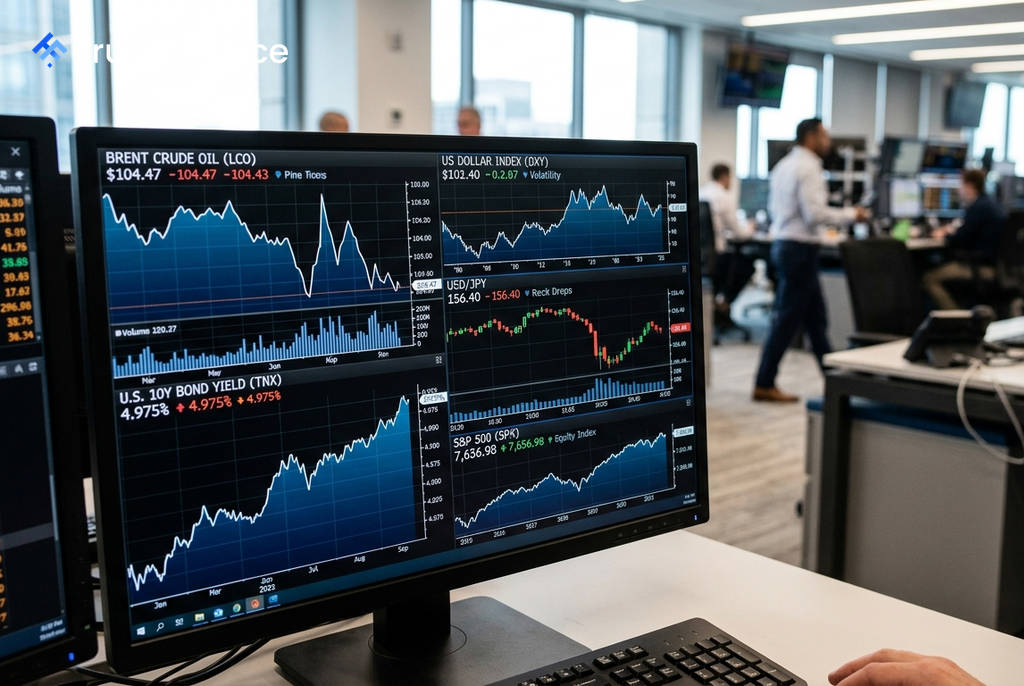
Strategists at Citi are maintaining a long-risk stance despite a growing list of investor concerns, arguing in a new macro strategy note that markets are misreading signals or overpricing the probability of adverse outcomes. The bank identified five key bearish narratives but concluded that the underlying risks are more contained than current pricing implies.
"Concerns keep rising. And not without reason," Citi strategists wrote. "We are open minded to some of these risks, but below attempt to set out which we think are more important than others, and what would change our views."
Central Bank Policy and Bond Yields
Citi addressed fears of a structurally hawkish Federal Reserve and a global growth shock driven by rising bond yields. Following a higher-than-expected 0.3% rise in August core CPI, the market has almost fully priced in a Fed rate hike this week. However, Citi's analysis of the committee's composition suggests a more nuanced internal debate than the market assumes.
On the risk from global bond yields, the bank pushes back against concerns of a major economic derailment. Strategists noted that the recent rise in yields is "all front-end led," reflecting the passthrough of higher energy prices rather than an expansion of the fiscal term premium. "It's not obvious to us that this is sufficient to derail growth," the note stated.
Geopolitics, Energy, and Currencies
 Ad
Citi's analysis suggests that several geopolitical and commodity-related risks are overstated. The key areas examined include:
- 1970s-Style Oil Shock: The bank's commodities team calculates that at the current drawdown rate of 3 million barrels per day, OECD crude inventories would not fall to crisis levels seen in the 1970s until late 2027.
- European Natural Gas: Citi sees the probability-weighted winter TTF price at around €61 per megawatt-hour, significantly below the approximately €81/MWh priced into markets, suggesting an overestimation of adverse outcomes.
- Japan Carry Unwind: The strategists noted that the yen's term premium has been compressing since July and that joint U.S.-Japan FX intervention has "effectively ended the 'Japan reflation regime,'" mitigating the risk of a disorderly unwind.
A 'Sleeper Threat' in AI Regulation
Beyond the primary five risks, Citi flagged a potential emerging threat from artificial intelligence regulation. The strategists warned that government-mandated bans on certain AI models deemed too dangerous could cause a "meaningful pause on training," leading to a sudden shock of excess capacity.
This regulatory risk, they wrote, could prove "more meaningful and existential" for the sector than threats from competition or efficiency breakthroughs. Investors are now looking ahead to upcoming policy meetings from the Federal Reserve and the Bank of Japan for further direction on the global economic outlook.
Read next
More on Stocks
FTC Orders Walmart, Uber, Delta to Disclose Data on Personalized Pricing
The U.S. Federal Trade Commission is demanding nine major companies, including leading retail, travel, and gig economy firms, to provide information on how they use consumer data for setting individual prices and wages.

Google Launches Gemini 4 Carbon AI Model to Bolster Cybersecurity Capabilities
Alphabet's Google has unveiled Gemini 4 Carbon, its latest AI model specifically designed for advanced cybersecurity tasks like vulnerability detection and secure code generation. The launch escalates competition with rivals OpenAI and Anthropic in the enterprise AI market.

Oracle Shares Surge After Unveiling $225 Billion Revenue Target for 2030
Oracle stock rose sharply after the company presented a long-term financial outlook targeting at least $225 billion in annual revenue by fiscal 2030, driven by its expanding AI infrastructure business.

DOJ Scrutinizes Nvidia's $12.9B Hugging Face Deal Amid Broader Antitrust Probe, Sources Say
The U.S. Department of Justice is reportedly examining Nvidia's planned $12.93 billion acquisition of AI platform Hugging Face as part of a wider, ongoing antitrust investigation into the chipmaker's market conduct.