
Story
Black Sea Shipping Turns to Improvised Anti-Drone Defenses Amid Escalating Attacks
Summary
Commercial vessels, including oil tankers and cargo ships, are deploying makeshift defenses like nets and water tanks as they navigate the Black Sea, responding to a sharp increase in drone attacks by both Russia and Ukraine.
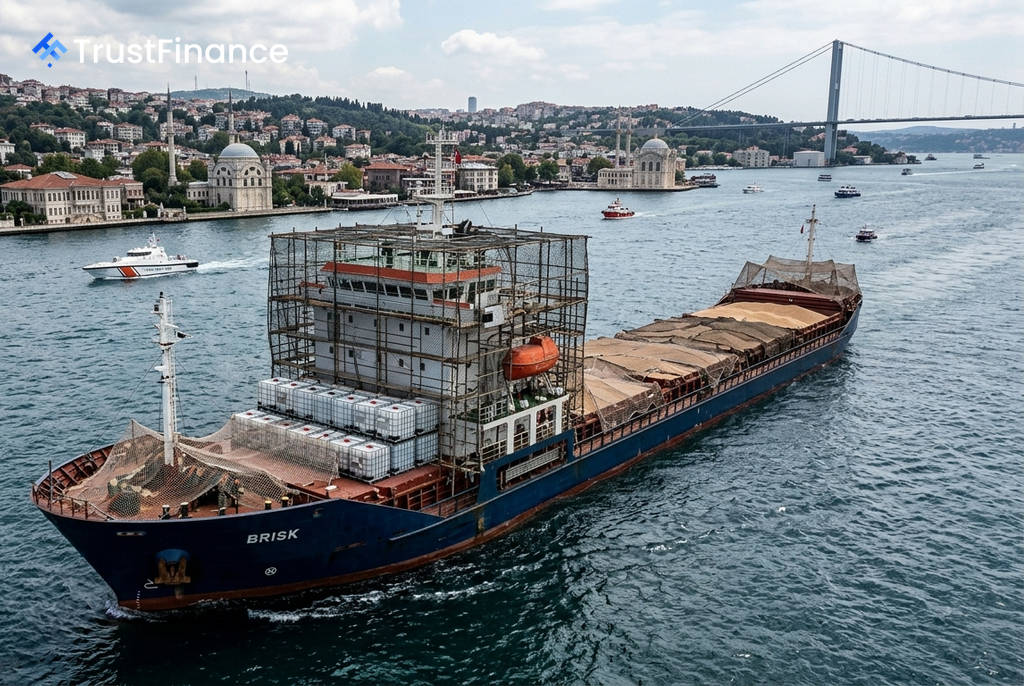
Commercial ships transiting the critical Bosphorus strait are being outfitted with makeshift defenses, including nets and water tanks, in an effort to protect against a surge in drone attacks in the Black Sea. The improvised measures underscore the escalating risks to maritime trade in the region following intensified attacks by both Russia and Ukraine on shipping and port infrastructure.
Ad-Hoc Protective Measures
Security experts and video footage have documented various crude but increasingly common defensive tactics being employed by vessel operators. These ad-hoc measures are intended to shield vulnerable parts of a ship, such as the engine room and superstructure, from explosive drones.
Examples of these defenses observed in recent weeks include:
- Water Tanks: The Sierra Leone-flagged crude oil tanker *Caruzo* was seen on August 11 with water tanks hanging around its stern to cushion a potential impact.
- Tires: The Russian-flagged tanker *Khrizopraz* passed through the strait on August 27 with tires lining its hull.
- 'Cope Cages': A growing number of vessels, including the crude tankers *Brisk* and *Integrator*, have been fitted with netting designed to detonate drones before they reach the ship's main structure.
Market Impact and Expert Analysis
 Ad
AdThe scale of attacks on commercial shipping has increased sharply, according to Corey Ranslem, chief executive of maritime security firm Dryad Global. He noted that while these countermeasures may be effective against smaller drones, they are unlikely to stop larger, military-grade unmanned naval or aerial vehicles.
The heightened danger was starkly illustrated by the Russian-flagged cargo ship *Omskiy-107*, which recently drifted to a beach near Istanbul with its command deck burned out. The increasing threat to commercial shipping raises concerns about rising insurance premiums, shipping costs, and potential disruptions to global oil and grain supplies.
Geopolitical Context
The escalation in maritime conflict follows Russia's intensified missile and drone strikes on Ukrainian grain export hubs in July. In response, Ukraine has stepped up its own attacks on vessels and infrastructure supporting Russian commodity exports.
Diplomatic efforts to restore stability have so far been unsuccessful. Turkey, which helped broker a 2022 grain export deal, has been attempting to mediate a new agreement. However, Russia stated on Wednesday that it sees no grounds for the Black Sea grain deal to resume, citing obstacles to its own food and fertilizer exports.
Read next
More on Commodities
Wheat Futures Decline on Technical Selling as Crude Oil Weakens
Chicago wheat futures edged lower on Wednesday, pressured by technical selling linked to a downturn in crude oil prices, though losses were limited by ongoing global supply concerns.

Raw Sugar Futures Slip as Declining Oil Prices Weigh on Ethanol Demand
Raw sugar futures edged lower as a drop in crude oil prices made ethanol production less profitable, incentivizing mills to produce more sugar. However, prices found support from forecasts of lower crop yields in key producing regions.

Continental Resources Signs MOU with Venezuela's PDVSA to Develop Orinoco Oil Field
U.S.-based Continental Resources has entered a preliminary agreement with Venezuela's state-owned oil company, PDVSA, to jointly develop a block in the Orinoco Heavy Oil Belt estimated to hold 30 billion barrels of oil.

Soybean Futures Rise on Hopes for U.S.-China Trade Talks
CBOT soybean futures closed higher Wednesday, supported by news of a planned meeting between top U.S. and Chinese officials which has raised expectations for stronger export demand.