
Story
US Weighs Polysilicon Tariffs, Price Floor to Bolster Chip and Solar Supply Chains
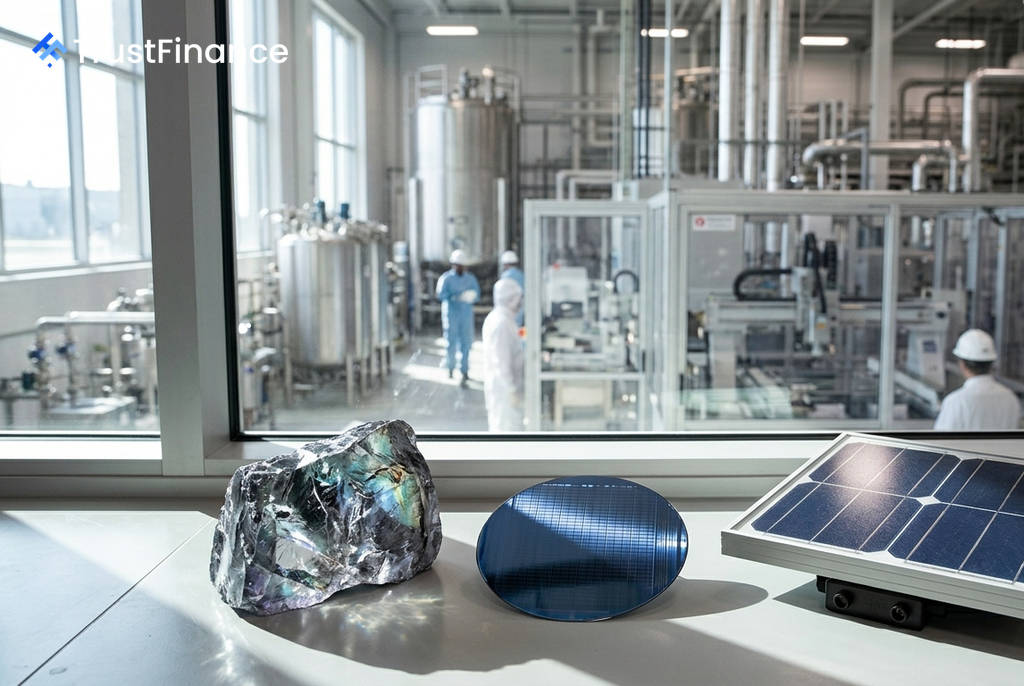
The Trump administration is preparing to set a price floor and new tariffs on imported polysilicon and related products, a move aimed at bolstering the domestic supply chain for semiconductors and solar panels, according to four people familiar with the plan. The decision, which could be announced later this month, follows a year-long national security investigation by the Commerce Department into the critical material.
Proposed Trade Measures
The administration is reportedly considering a hybrid system that combines a minimum import price with tariffs on polysilicon and its derivative products, such as silicon wafers and solar cells. This action is intended to protect U.S. polysilicon producers, including Michigan-based Hemlock Semiconductor and a Tennessee factory run by Germany's Wacker Chemie, from foreign competition.
According to two sources, the plan may include provisions allowing importers to offset the cost of the trade protections if they invest in U.S.-based wafer and cell manufacturing facilities. The measures stem from an investigation under Section 232 of the Trade Expansion Act, which permits the president to restrict imports deemed a threat to national security.
Strategic Rationale
The policy targets a foundational material for two strategic industries. Polysilicon is the ultra-pure silicon used to produce wafers for both computer chips and solar cells. While the chip industry is a key priority for the administration, it accounts for just 2.4% of global polysilicon demand, according to the Semiconductor Industry Association. The much larger demand from the solar industry is therefore essential to support a viable domestic production base for the material required by chipmakers.
 Ad
This initiative comes as the U.S. aims to reduce its reliance on China, which accounts for an estimated 80% of global solar manufacturing capacity. In a statement, a spokesperson for the Chinese Embassy in Washington urged the U.S. to "stop the Section 232 tariff measures."
Market Impact and Industry Concerns
While intended to support domestic manufacturing, the proposed trade barriers have raised concerns about rising costs. Industry groups representing solar developers and semiconductor buyers have warned the Commerce Department that tariffs could inflate prices for solar power projects, consumer electronics, and automobiles.
Even some domestic manufacturers worry about the potential fallout. Martin Pochtaruk, CEO of panel maker Heliene, referred to the solar industry's involvement in the chip-focused investigation as "collateral damage," cautioning that projects could be canceled if costs become too high. Trade groups and some lawmakers have argued that imports from non-Chinese producers will be necessary to meet demand until U.S. polysilicon, wafer, and cell production can be sufficiently expanded.
Read next
More on Stocks
FTC Orders Walmart, Uber, Delta to Disclose Data on Personalized Pricing
The U.S. Federal Trade Commission is demanding nine major companies, including leading retail, travel, and gig economy firms, to provide information on how they use consumer data for setting individual prices and wages.

Google Launches Gemini 4 Carbon AI Model to Bolster Cybersecurity Capabilities
Alphabet's Google has unveiled Gemini 4 Carbon, its latest AI model specifically designed for advanced cybersecurity tasks like vulnerability detection and secure code generation. The launch escalates competition with rivals OpenAI and Anthropic in the enterprise AI market.

Oracle Shares Surge After Unveiling $225 Billion Revenue Target for 2030
Oracle stock rose sharply after the company presented a long-term financial outlook targeting at least $225 billion in annual revenue by fiscal 2030, driven by its expanding AI infrastructure business.

DOJ Scrutinizes Nvidia's $12.9B Hugging Face Deal Amid Broader Antitrust Probe, Sources Say
The U.S. Department of Justice is reportedly examining Nvidia's planned $12.93 billion acquisition of AI platform Hugging Face as part of a wider, ongoing antitrust investigation into the chipmaker's market conduct.