
Story
US to Impose 50% Tariffs on $20 Billion of Canadian Goods
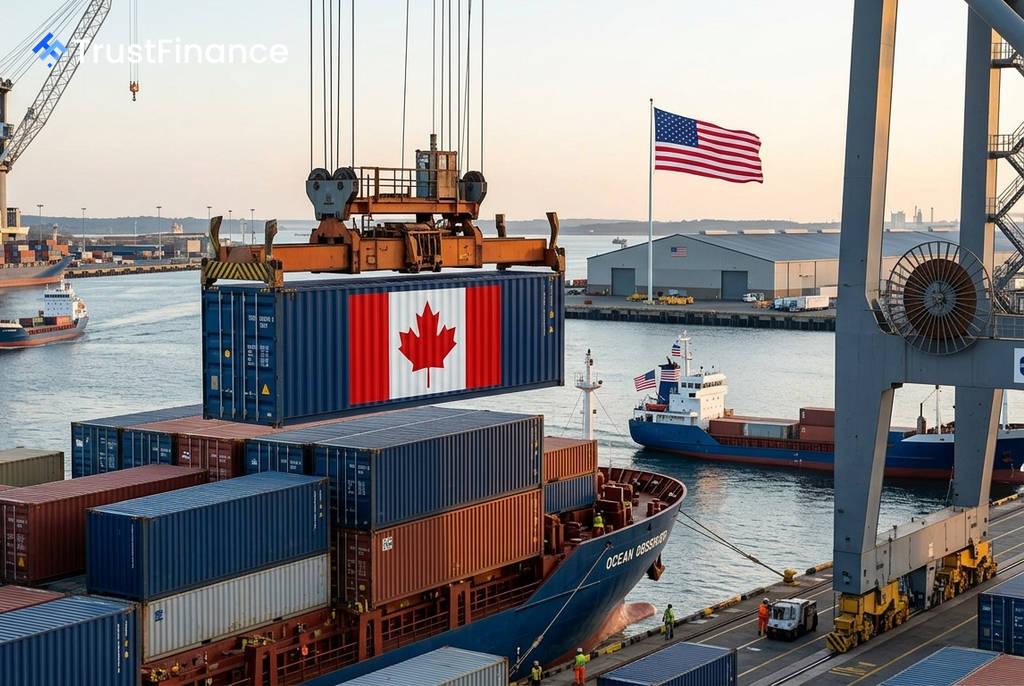
The Trump administration announced on Monday it will impose 50% tariffs on nearly $20 billion worth of imports from Canada, escalating a trade dispute with a key North American partner. The move, which is set to take effect in 30 days, targets a wide array of Canadian products and marks a significant new front in global trade tensions.
Details of the New Tariffs
The U.S. action was taken under Section 338 of the Tariff Act of 1930, a provision that allows the president to levy punitive tariffs against countries deemed to have discriminated against U.S. goods. According to trade experts cited by Reuters, this is the first known use of the statute in nearly a century.
The U.S. Trade Representative's office stated the tariffs will apply to goods valued at nearly $20 billion, representing about 5.2% of the $382 billion in goods the U.S. imported from Canada in 2025. Products affected include:
- Dairy products
- Wine and cement
- Furniture and swimming pools
- Ice hockey gear, fishing rods, and clothing
Key Canadian exports such as energy, potash, fish, and critical minerals are exempt from the new levies, as are products already covered by existing Section 232 tariffs.
U.S. Justification and Canadian Response
 Ad
The White House cited Canada's alleged "discriminatory treatment" of American-made cars, alcohol, and dairy products as the reason for the tariffs. U.S. Trade Representative Jamieson Greer said in a statement that Canada "continues to retaliate against the United States for its efforts to rebalance trade."
In response, Canadian Prime Minister Mark Carney stated that his government has made "comprehensive proposals" to resolve the disputes and that previous U.S. tariffs violated the North American trade pact. "This trade dispute has raised costs for families, particularly in the U.S.," Carney's statement read.
Washington highlighted that Canadian imports of U.S. motor vehicles fell by 22% and U.S. alcoholic beverages dropped by 81% over the past year, which it attributed to retaliatory Canadian policies.
Market and Historical Context
The invocation of the Tariff Act of 1930 is notable, as the law is historically associated with protectionist policies that economists say worsened the Great Depression. John Veroneau, a former U.S. trade official, told Reuters that while the tariffs may be lawful, they "violate the spirit of Section 338," calling their use to retaliate against counter-tariffs "ironic, to say the least."
The move adds a layer of uncertainty for investors and businesses reliant on North American supply chains. It comes as the U.S. holds separate bilateral talks with Mexico on the U.S.-Mexico-Canada Agreement (USMCA), pointedly leaving Canada out of the recent negotiations.
Read next
More on Forex
Polish Zloty Hits 11-Month Low Against Euro on Energy Price Pressure
The Polish zloty weakened to 4.410 against the euro, its lowest point since November 2023, as rising energy prices and caution ahead of a U.S. Federal Reserve decision weighed on the currency.

Sterling Slips as Dollar Strengthens Ahead of Fed Decision and UK Budget
The British pound lost ground against a resurgent U.S. dollar on Wednesday as market attention shifted from tech sector volatility to upcoming central bank decisions and the UK budget announcement.

Eurozone Bond Yields Climb as French Fiscal Concerns Return Ahead of Fed, ECB Decisions
Yields on French and German government bonds rose as relief from a ratings affirmation for France proved temporary, with investors refocusing on fiscal challenges and awaiting key policy verdicts from the U.S. Federal Reserve and the European Central Bank.

Canadian Dollar Slips as Markets Await Bank of Canada, Fed Decisions
The Canadian dollar edged lower against its U.S. counterpart, snapping a seven-day winning streak as investors adopted a cautious stance ahead of Wednesday's key interest rate announcements from both the Bank of Canada and the U.S. Federal Reserve.