
Story
US Judge Rejects DOJ's Bid to Force Sale of Google's Ad Tech Unit
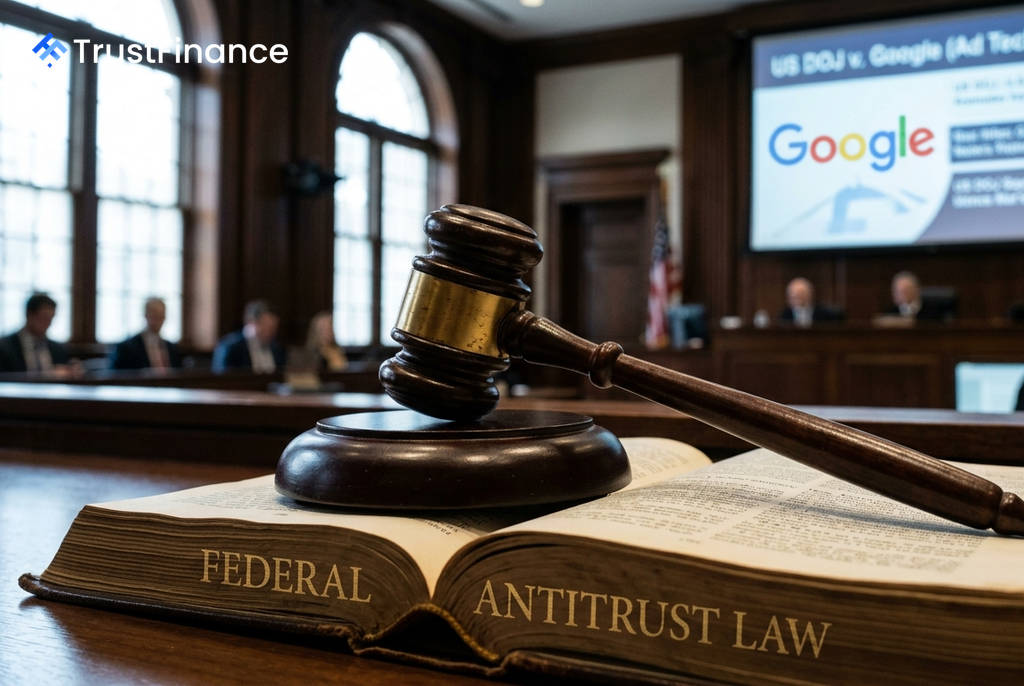
A federal judge has rejected the U.S. Department of Justice's bid to force Alphabet's Google to sell its advertising technology business, a core component of its digital ad empire. The ruling on Wednesday from U.S. Judge Leonie Brinkema in Alexandria, Virginia, marks a major victory for Google and a significant blow to the government's efforts to break up the tech giant.
The Court's Decision
Judge Brinkema declined to order the divestiture of Google's AdX, an online advertising exchange where publishers sell ad space through auctions that take place in milliseconds. The DOJ and a coalition of states, which sued Google in 2023, had argued that a forced sale was the only effective remedy for the company's anticompetitive behavior.
This decision follows an April 2025 ruling in which the same judge found that Google maintained illegal monopolies over ad servers and exchanges. The court determined that Google unlawfully required publishers using its ad server to also use its AdX exchange, where Google charges a 20% fee. While denying the structural remedy of a sale, the judge reportedly accepted most of the behavioral remedies proposed by the parties.
A Setback for US Antitrust Enforcement
The ruling represents the third consecutive time that U.S. antitrust enforcers have failed in court to secure a forced breakup of a major technology firm. This outcome is likely to intensify debate over the effectiveness of current antitrust laws and court processes in curbing the market power of Big Tech.
 Ad
Previous government efforts that were rejected by courts include:
- The Federal Trade Commission's attempt to force Meta Platforms to sell Instagram and WhatsApp.
- The DOJ's bid to make Google sell its Chrome browser as part of a separate case targeting its search monopoly.
Context for Investors
While the AdX exchange is a critical part of Google's ad infrastructure, its direct financial contribution is relatively small, mitigating the immediate market impact of a potential sale. According to court documents and analysis by Wedbush, Google's Ad Manager unit represented 4.1% of the company's total revenue and 1.5% of its operating profit in 2020, with more recent figures redacted.
Google had argued during the trial that a forced sale would be technically complex and disruptive for its customers. The verdict allows Google to keep its integrated ad tech stack intact, a key strategic advantage. Meanwhile, major antitrust cases against Amazon and Apple are not expected to reach trial until 2027 at the earliest.
Read next
More on Stocks
FTC Orders Walmart, Uber, Delta to Disclose Data on Personalized Pricing
The U.S. Federal Trade Commission is demanding nine major companies, including leading retail, travel, and gig economy firms, to provide information on how they use consumer data for setting individual prices and wages.

Google Launches Gemini 4 Carbon AI Model to Bolster Cybersecurity Capabilities
Alphabet's Google has unveiled Gemini 4 Carbon, its latest AI model specifically designed for advanced cybersecurity tasks like vulnerability detection and secure code generation. The launch escalates competition with rivals OpenAI and Anthropic in the enterprise AI market.

Oracle Shares Surge After Unveiling $225 Billion Revenue Target for 2030
Oracle stock rose sharply after the company presented a long-term financial outlook targeting at least $225 billion in annual revenue by fiscal 2030, driven by its expanding AI infrastructure business.

DOJ Scrutinizes Nvidia's $12.9B Hugging Face Deal Amid Broader Antitrust Probe, Sources Say
The U.S. Department of Justice is reportedly examining Nvidia's planned $12.93 billion acquisition of AI platform Hugging Face as part of a wider, ongoing antitrust investigation into the chipmaker's market conduct.