
Story
Tencent Launches WorkBuddy Open Platform with 100+ Partners to Build AI Office Ecosystem
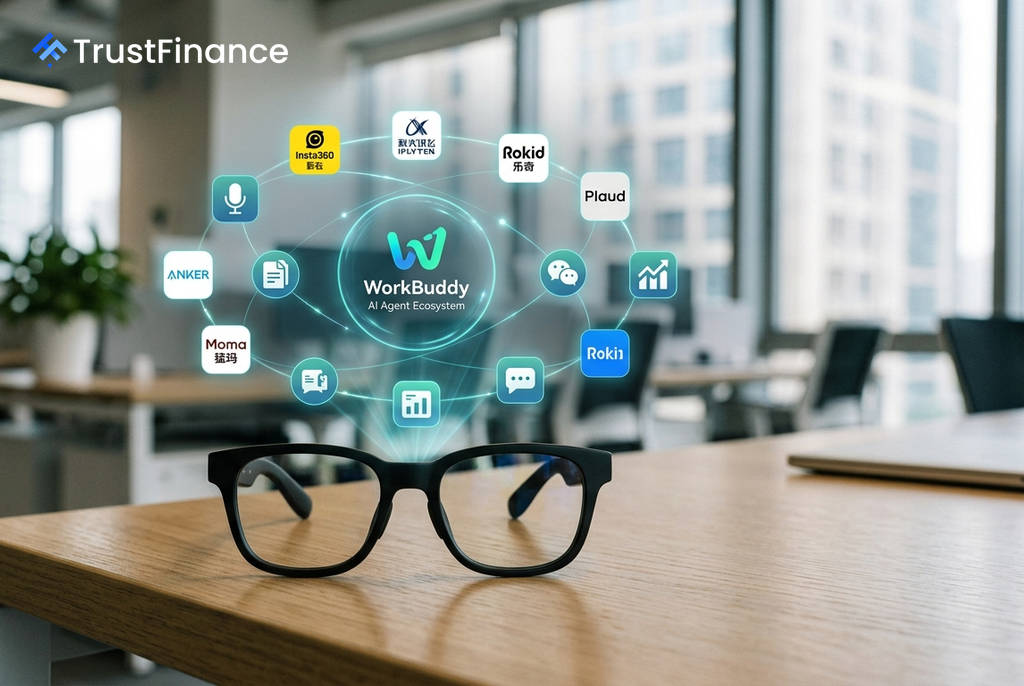
Tencent has officially launched its WorkBuddy Open Platform, integrating its AI-powered office agent with products from over 100 ecosystem partners. The initiative aims to create a broad, interconnected system where smart hardware and industry-specific applications serve as entry points for AI-driven productivity tasks, drawing comparisons to Google's Android operating system.
An Ecosystem of Entry Points
At a recent press event, Tencent showcased nine co-branded smart hardware devices from partners including Plaud, Rokid, Insta360, iFlytek, and Anker. The platform also integrates over 30 industry applications from companies like Fanruan and Beisen. The strategy is to embed WorkBuddy's capabilities into everyday devices like smart glasses, microphones, and recording cards, allowing users to initiate AI tasks seamlessly from anywhere.
"The challenge now is to ensure the AI agent operates without interruption across any device, system, or scenario," said Lin Zuolu, head of WorkBuddy's open ecosystem, in a media interview. He explained that Tencent cannot address every specialized business need alone and requires partners to contribute professional data, industry knowledge, and system integration capabilities. Hardware partners will focus on data capture—such as clear audio recording in meetings—while WorkBuddy handles instruction comprehension and task execution.
The Unresolved Revenue Question
While the platform successfully connects a wide range of hardware and software, a clear monetization framework for partners has not yet been established. According to interviews with several participating firms, discussions about revenue sharing are still in the early stages.
 Ad
- Hardware Partners: The current model appears to separate hardware sales from software subscriptions. Zou Qing, a representative for co-branding partner Ulanzi, stated that hardware vendors will "only make money on the hardware," with no commission from WorkBuddy's subscription revenue, and vice versa.
- Software Partners: Application vendors like Beisen and Fanruan consider it premature to discuss revenue splits, noting that the market is still in a "user education phase." Their current focus is on user acquisition, with monetization to be addressed later.
- Tencent's Approach: The company is reportedly building management tools to direct value to partners who provide specialized skills and data. For model usage costs, WorkBuddy product expert Wang Shengjie said users will pay for token consumption directly on a "pay-as-you-go" basis.
Competitive Landscape
The launch of the WorkBuddy Open Platform comes amid intensifying competition in China's AI office solutions market. Since July, major tech firms have consolidated their efforts, with ByteDance launching "Doubao Work," Alibaba debuting "Qianwen Office," and Baidu integrating its internal agent into "Baidu Dazi."
According to data from iResearch, WorkBuddy was the leading service in China with approximately 20.97 million PC-side visits in June. By focusing on an open hardware and industry ecosystem, Tencent appears to be positioning itself to defend its market lead. However, the long-term success of this strategy will depend on its ability to create a profitable and sustainable model for its partners.
Read next
More on Stocks
FTC Orders Walmart, Uber, Delta to Disclose Data on Personalized Pricing
The U.S. Federal Trade Commission is demanding nine major companies, including leading retail, travel, and gig economy firms, to provide information on how they use consumer data for setting individual prices and wages.

Google Launches Gemini 4 Carbon AI Model to Bolster Cybersecurity Capabilities
Alphabet's Google has unveiled Gemini 4 Carbon, its latest AI model specifically designed for advanced cybersecurity tasks like vulnerability detection and secure code generation. The launch escalates competition with rivals OpenAI and Anthropic in the enterprise AI market.

Oracle Shares Surge After Unveiling $225 Billion Revenue Target for 2030
Oracle stock rose sharply after the company presented a long-term financial outlook targeting at least $225 billion in annual revenue by fiscal 2030, driven by its expanding AI infrastructure business.

DOJ Scrutinizes Nvidia's $12.9B Hugging Face Deal Amid Broader Antitrust Probe, Sources Say
The U.S. Department of Justice is reportedly examining Nvidia's planned $12.93 billion acquisition of AI platform Hugging Face as part of a wider, ongoing antitrust investigation into the chipmaker's market conduct.