
Story
Samsung, SK Hynix Reportedly Test Chinese Chip Tools to Mitigate U.S. Export Risks
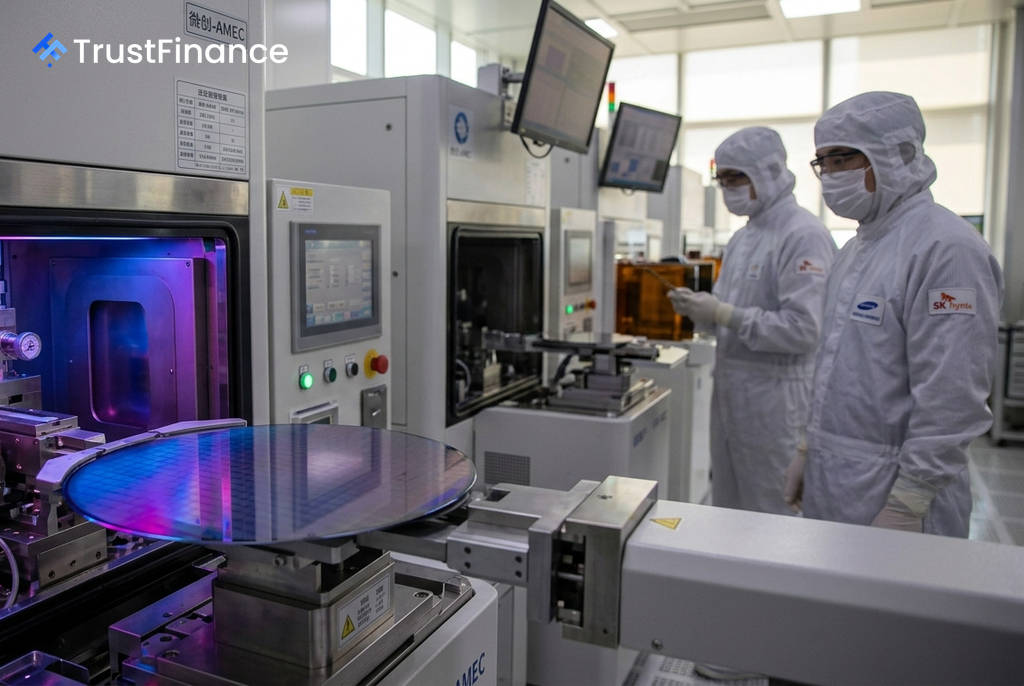
Samsung Electronics and SK Hynix are testing chipmaking equipment from Chinese suppliers for their factories in China, a strategic move to hedge against potential disruptions from tightening U.S. export controls, according to three people familiar with the matter cited by Reuters.
Hedging Against U.S. Restrictions
The evaluation of tools from firms like China’s Advanced Micro-Fabrication Equipment (AMEC) reportedly began around two years ago. The move comes as the South Korean memory giants grow wary that future U.S. restrictions could extend beyond new equipment to affect the servicing and repair of Western tools already installed in their Chinese plants.
According to the report, the U.S. Commerce Department designated the companies' Chinese factories as "validated end users" (VEU) in 2023, but this status was later revoked and replaced with an annual license system. Sources indicated the goal is to keep Chinese suppliers as a backup to maintain existing production lines, not to expand manufacturing capacity in China.
In a statement to Reuters, Samsung denied testing AMEC equipment or considering it for its China factory. SK Hynix declined to comment on the matter.
An Opening for Chinese Suppliers
The trials represent a significant opportunity for Chinese equipment makers to gain validation from the world's leading chip manufacturers. This development underscores a paradox of U.S. policy: measures designed to constrain China's semiconductor industry are creating openings for Chinese firms to gain a foothold in foreign-owned facilities operating within the country.
 Ad
While Chinese equipment makers still trail global leaders in advanced lithography, they have narrowed the gap in other key areas and offer a significant cost advantage.
- Chinese tools can cost 20% to 30% less than comparable equipment from established foreign suppliers, according to research firm TechInsights.
- This trend poses a long-term challenge to dominant U.S. firms like Applied Materials and Lam Research, which count China as a major market.
Market Context and Outlook
The rise of domestic suppliers could reshape China's semiconductor equipment market. Deutsche Bank estimates that leading Chinese firms like AMEC and Naura Technology could collectively capture 25% to 30% of China’s projected $28 billion wafer-fabrication equipment market this year.
However, Chinese suppliers still face significant hurdles. These include lengthy qualification processes with global chipmakers, concerns over intellectual property protection, and potential political pressure from Washington. It remains unclear if the Korean firms would deploy Chinese equipment in their domestic factories due to these risks.
Read next
More on Stocks
FTC Orders Walmart, Uber, Delta to Disclose Data on Personalized Pricing
The U.S. Federal Trade Commission is demanding nine major companies, including leading retail, travel, and gig economy firms, to provide information on how they use consumer data for setting individual prices and wages.

Google Launches Gemini 4 Carbon AI Model to Bolster Cybersecurity Capabilities
Alphabet's Google has unveiled Gemini 4 Carbon, its latest AI model specifically designed for advanced cybersecurity tasks like vulnerability detection and secure code generation. The launch escalates competition with rivals OpenAI and Anthropic in the enterprise AI market.

Oracle Shares Surge After Unveiling $225 Billion Revenue Target for 2030
Oracle stock rose sharply after the company presented a long-term financial outlook targeting at least $225 billion in annual revenue by fiscal 2030, driven by its expanding AI infrastructure business.

DOJ Scrutinizes Nvidia's $12.9B Hugging Face Deal Amid Broader Antitrust Probe, Sources Say
The U.S. Department of Justice is reportedly examining Nvidia's planned $12.93 billion acquisition of AI platform Hugging Face as part of a wider, ongoing antitrust investigation into the chipmaker's market conduct.