
Story
Randstad Executives Signal Hiring Demand May Be Bottoming Out

Summary
Global staffing firm Randstad reported early signs of improvement in hiring demand during the second quarter, suggesting a more than two-year downturn in the labor market may be reaching a turning point. The recovery is reportedly being led by temporary and blue-collar roles, particularly in the U.S. and Germany.
Executives at global staffing firm Randstad said on Wednesday that early indicators for hiring demand are showing signs of improvement, suggesting a labor-market downturn that has pressured the industry for over two years may be starting to bottom out. The nascent recovery is being driven by the most cyclical parts of the market, which are often the first to rebound.
A Two-Tiered Recovery
According to Chief Executive Sander van ’t Noordende, demand improved across a broad range of markets during the second quarter. The upturn was led by the company's operational, or blue-collar, business and its temporary staffing services, which typically recover ahead of permanent recruitment.
This trend was particularly evident in key markets:
- In the United States, Randstad's revenue grew 4%, buoyed by a 13% increase in its operational business. In contrast, professional staffing revenue declined by 6%.
- Germany, Europe’s largest economy, showed a similar pattern of blue-collar strength offsetting white-collar weakness.
 Ad
AdMarket Implications
The improvement in temporary and operational hiring is a closely watched leading indicator for the broader economy. A stabilization in these areas often precedes a wider recovery in labor market conditions, including a pickup in more lucrative permanent placements. This news aligns with a recent rally in the shares of European staffing companies, as investors have been positioning for a potential turning point in the sector.
Executive Commentary
Randstad's leadership noted a divergence in client behavior, with larger corporations showing more confidence than smaller businesses. "The larger customers have been less shy," van ’t Noordende said, adding that smaller firms are maintaining a more cautious, wait-and-see approach. Furthermore, Chief Financial Officer Jorge Vazquez highlighted that the U.S. hiring rate, which has lagged pre-pandemic levels, was starting to edge higher, providing another data point supporting a potential stabilization.
Read next
More on Stocks
OpenAI to Preview Cybersecurity-Focused GPT-6 Model, Fortune Reports
The AI developer is reportedly preparing to unveil GPT-6 Cyber and a related security automation product in the coming weeks, signaling a deeper push into the enterprise cybersecurity market.
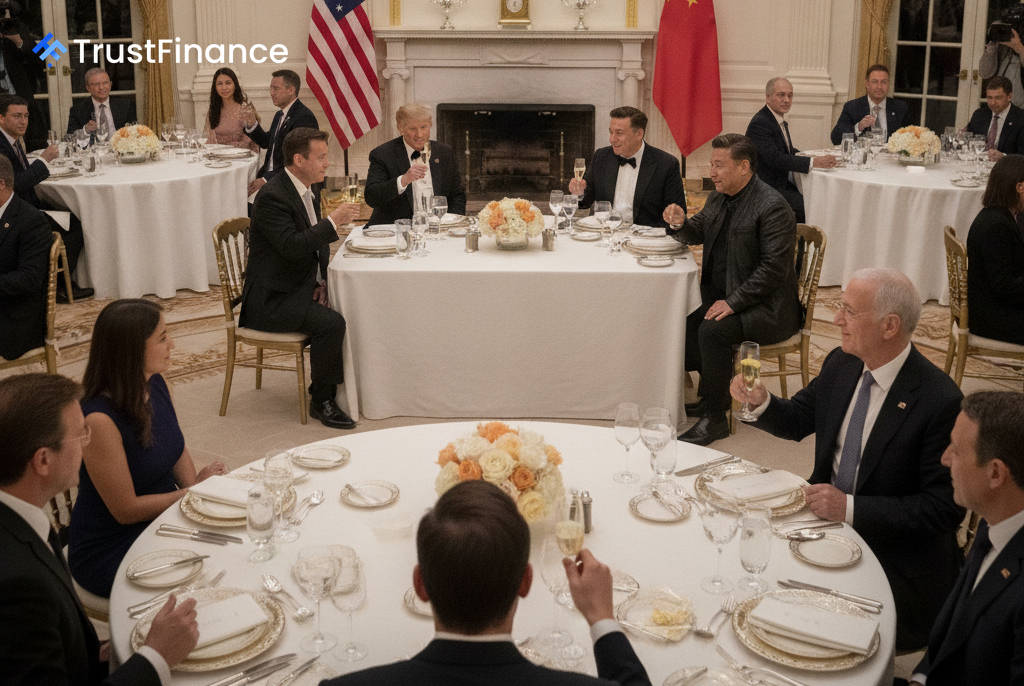
Tech and Wall Street CEOs Attend Trump-Xi White House State Dinner
A state dinner hosted by U.S. President Donald Trump for Chinese President Xi Jinping featured a prominent list of corporate leaders, including SpaceX's Elon Musk, Nvidia's Jensen Huang, and JPMorgan's Jamie Dimon, signaling a focus on technology and finance in bilateral talks.

Oracle Force Majeure Notice on AI Data Center Project Spurs Investor Caution
An Oracle force majeure notice on a major data center project being built by Blue Owl has heightened investor and lender concerns over the risks involved in financing the rapid expansion of AI infrastructure.

US Stock Futures Slip as 19-Year High Treasury Yields, Oil Spike Weigh on Sentiment
U.S. stock index futures edged lower Thursday evening as investors contended with the highest 10-year Treasury yields since 2007 and a sharp rise in crude oil prices, stoking concerns about inflation and further Federal Reserve rate hikes.