
Story
Global Food Prices Reach Highest Level Since 2022 Amid Supply Risks, FAO Reports
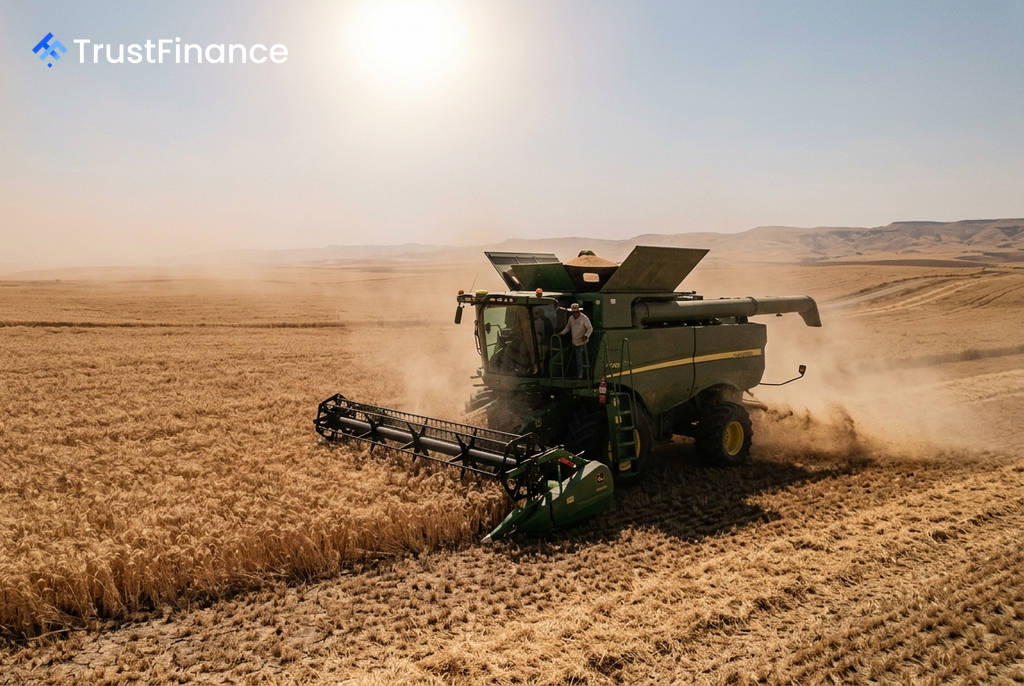
Global food prices rose in August to their highest level since late 2022, driven by a combination of adverse weather events and mounting geopolitical tensions that are threatening the supply of key agricultural staples, the United Nations’ Food and Agriculture Organization (FAO) reported Friday.
The FAO Food Price Index, which tracks a basket of internationally traded food commodities, averaged 133.3 points in August. This marks an increase from July's revised reading of 130.8 and is the highest level recorded since November 2022, though it remains nearly 17% below the all-time high set in March 2022 following Russia's invasion of Ukraine.
Converging Market Pressures
According to the FAO, the recent price surge reflects a growing risk premium in agricultural markets as multiple supply-side shocks converge. All five of the index's sub-categories—cereals, vegetable oils, sugar, meat, and dairy—posted increases during the month.
Key factors tightening supply expectations include:
- Adverse Weather: Extreme heat and drought in Europe are impacting maize and sugar beet harvests, while the prospect of a severe El Nino weather pattern is raising concerns for palm oil and sugar production in Asia.
- Geopolitical Tensions: Escalating conflict in the Black Sea region has curtailed grain shipments from both Russia and Ukraine. Separately, tensions between the U.S. and Iran are reportedly straining the flow of fertilizers.
- Commodity-Specific Shocks: The FAO's sugar price index saw the most significant jump, surging 11.9% to its highest point since June 2025, partly due to lower-than-expected production in Brazil.
 Ad
"August’s increase in global food prices is a warning that the risk premium is returning to food markets," said FAO Chief Economist Maximo Torero in a statement. "Climate shocks, geopolitical tensions and disrupted trade logistics are converging to tighten supply expectations."
Production Forecasts Trimmed
In a separate report, the FAO revised its outlook for global crop production, adding to supply-side concerns. The agency lowered its 2026 forecast for global cereal production by 3.4 million metric tons to 2.980 billion tons. This revised figure would represent a 2.0% decline from 2025, the largest annual drop since 2018, though it would still be the second-largest output on record.
Consequently, the forecast for world cereal stocks at the end of the 2026/2027 season was revised down by 1.1% to 947.2 million tons. The FAO noted this would leave global inventories only marginally above the previous season's levels, as a reduced estimate for coarse grain stocks outweighed an upward revision for wheat, which has seen inventories build in Russia and Ukraine due to shipping disruptions.
Read next
More on Stocks
FTC Orders Walmart, Uber, Delta to Disclose Data on Personalized Pricing
The U.S. Federal Trade Commission is demanding nine major companies, including leading retail, travel, and gig economy firms, to provide information on how they use consumer data for setting individual prices and wages.

Google Launches Gemini 4 Carbon AI Model to Bolster Cybersecurity Capabilities
Alphabet's Google has unveiled Gemini 4 Carbon, its latest AI model specifically designed for advanced cybersecurity tasks like vulnerability detection and secure code generation. The launch escalates competition with rivals OpenAI and Anthropic in the enterprise AI market.

Oracle Shares Surge After Unveiling $225 Billion Revenue Target for 2030
Oracle stock rose sharply after the company presented a long-term financial outlook targeting at least $225 billion in annual revenue by fiscal 2030, driven by its expanding AI infrastructure business.

DOJ Scrutinizes Nvidia's $12.9B Hugging Face Deal Amid Broader Antitrust Probe, Sources Say
The U.S. Department of Justice is reportedly examining Nvidia's planned $12.93 billion acquisition of AI platform Hugging Face as part of a wider, ongoing antitrust investigation into the chipmaker's market conduct.