
Story
FAA to Fully Restore Boeing's Self-Certification Authority for 737 MAX and 787 Jets
Summary
The Federal Aviation Administration will allow Boeing to issue its own airworthiness certificates for all new 737 MAX and 787 aircraft, a key milestone that signals regulatory confidence and supports the planemaker's production ramp-up.
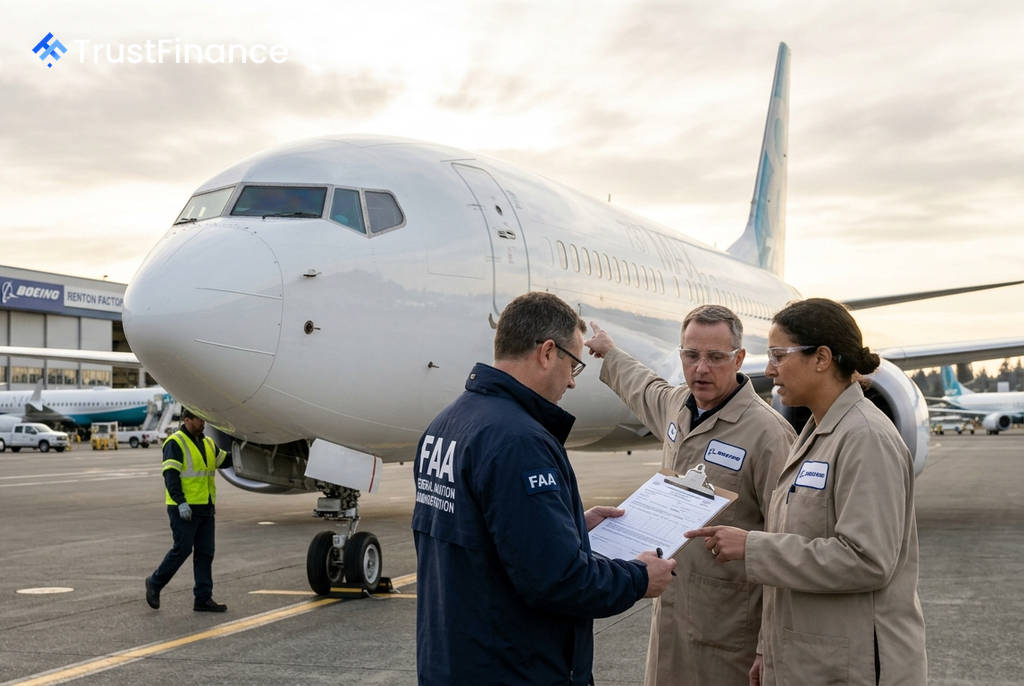
The U.S. Federal Aviation Administration (FAA) announced Friday it will restore The Boeing Company's authority to issue airworthiness certificates for all new 737 MAX and 787 airplanes, starting next week. This move marks a significant vote of confidence in the manufacturer's production quality and is a critical step in its efforts to increase aircraft deliveries.
A Key Regulatory Milestone
The FAA's decision follows an extended period of heightened scrutiny over Boeing's manufacturing processes. In a statement, the agency said the move was based on "months of thorough data and safety review demonstrating consistent production quality and reflects the FAA’s confidence in Boeing’s ability to issue airworthiness certificates under FAA oversight."
Boeing stated it will continue "to work under the oversight of the FAA in building safe, high-quality commercial airplanes that comply with all airworthiness certification requirements.” The regulator confirmed it will maintain its oversight through ongoing inspections, audits, and monitoring of Boeing's production system.
Path to Restoration
The FAA had previously stripped Boeing of this self-certification authority, a privilege known as Organization Designation Authorization (ODA), for its key programs following significant safety and quality issues.
 Ad
Ad- 2019: Authority for the 737 MAX was revoked following the second of two fatal crashes.
- 2022: Authority for the 787 Dreamliner was revoked due to persistent production quality flaws.
In September, the FAA partially restored the authority, permitting Boeing to certify MAX and 787 aircraft on alternating weeks. The agency noted that over the last eight months, it observed "comparable production quality findings" regardless of whether Boeing or the FAA issued the certificates, paving the way for Friday's decision.
Impact on Production and Deliveries
Regaining full certification authority is crucial for Boeing as it seeks to ramp up production. The ability to self-certify streamlines the delivery process, reducing bottlenecks and allowing the company to meet its production targets more efficiently. This comes after the FAA raised Boeing's monthly production cap for the 737 MAX to 42 aircraft, lifting a 38-plane limit imposed after a mid-air panel blowout in January 2024.
In an interview with Reuters this week, FAA Administrator Bryan Bedford said Boeing is "doing much better." In May, Bedford noted the agency supported Boeing's plan to increase production to 47 aircraft a month. The administrator also projected that the MAX 7 would be certified this summer, with the larger MAX 10 approved by the end of the year.
Read next
More on Stocks
Citi Lowers Burberry Price Target on Softer Luxury Demand
Citi analysts reduced their price target for Burberry to £14.6, citing a challenging macroeconomic environment and slowing growth in the luxury sector, though they maintained a "Buy" rating on the stock.

SharonAI Stock Falls Over 6% in 'Sell the News' Reaction to Partnership
Shares of SharonAI Holdings are declining sharply, erasing recent gains as investors take profits following a new partnership announcement. The drop comes amid broader market weakness and ongoing concerns about the company's high valuation.

Aehr Test Systems Stock Slides Amid Insider Selling and Analyst Concerns
Shares of Aehr Test Systems are extending recent losses amid a combination of factors, including the lingering impact of an analyst downgrade, recent insider selling, and a weak broader market for technology stocks.

Aurora Innovation Stock Slides Over 8% in 'Sell the News' Reaction to Investor Day
Shares of the autonomous trucking firm are declining despite positive operational updates, as investors take profits amid broader market weakness and concerns over the company's financials.