
Story
Eurozone Bond Yields Hold Near Multi-Year Highs as $100 Oil Stokes Inflation Fears

Eurozone government bond yields held near multi-year highs on Friday as a surge in crude oil prices past $100 a barrel intensified inflation fears and reinforced expectations of prolonged monetary tightening from the European Central Bank. The move threatens to increase borrowing costs for governments and corporations, posing a significant headwind to regional economic growth.
Yields React to Oil Price Spike
The benchmark German 10-year Bund yield, a key indicator for the bloc's borrowing costs, traded near 3.19%, its highest level since 2011. The rate-sensitive German two-year yield, which reflects near-term ECB policy expectations, eased slightly to 2.85% but remained around its highest point since mid-2024.
The pressure on bond markets follows a more than 7% jump in crude prices, reportedly driven by threats of military action in Middle East transit routes and new U.S. trade tariffs. Across the region, the Italian 10-year yield stood at 4.02%, keeping the closely watched spread over its German counterpart near 81 basis points as investors demand a higher risk premium for holding peripheral debt.
ECB Policy in Focus
The sustained high yields reflect market concern that the energy shock will force the ECB to maintain a restrictive monetary policy stance for longer to combat inflation. This market reaction unfolded just a day after the ECB held its deposit facility rate unchanged at 2.25%.
 Ad
In its accompanying statement, the central bank explicitly warned that the full inflationary impact of the energy shock has not yet fully materialized in the economy, signaling vigilance against persistent price pressures.
Broader Implications for Eurozone Economy
Persistently elevated sovereign yields have significant macroeconomic consequences. Governments face steeper interest payments when issuing new debt or refinancing old obligations, which could constrain public spending, particularly for highly indebted nations.
Sovereign yields also serve as a benchmark for commercial lending. According to recent ECB data, banks in the Eurozone have already begun to moderately tighten credit standards for corporate loans and mortgages. This creates a dual pressure on businesses, which face rising energy input costs alongside higher borrowing expenses, threatening to squeeze profit margins and stall capital investment.
Read next
More on Forex
Polish Zloty Hits 11-Month Low Against Euro on Energy Price Pressure
The Polish zloty weakened to 4.410 against the euro, its lowest point since November 2023, as rising energy prices and caution ahead of a U.S. Federal Reserve decision weighed on the currency.

Sterling Slips as Dollar Strengthens Ahead of Fed Decision and UK Budget
The British pound lost ground against a resurgent U.S. dollar on Wednesday as market attention shifted from tech sector volatility to upcoming central bank decisions and the UK budget announcement.
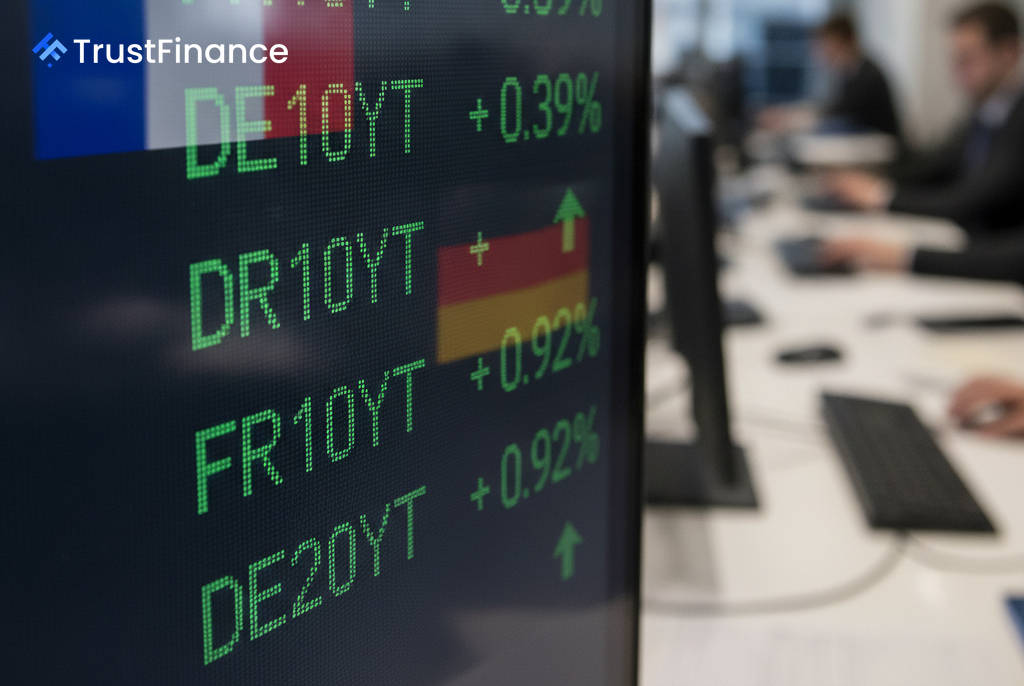
Eurozone Bond Yields Climb as French Fiscal Concerns Return Ahead of Fed, ECB Decisions
Yields on French and German government bonds rose as relief from a ratings affirmation for France proved temporary, with investors refocusing on fiscal challenges and awaiting key policy verdicts from the U.S. Federal Reserve and the European Central Bank.

Canadian Dollar Slips as Markets Await Bank of Canada, Fed Decisions
The Canadian dollar edged lower against its U.S. counterpart, snapping a seven-day winning streak as investors adopted a cautious stance ahead of Wednesday's key interest rate announcements from both the Bank of Canada and the U.S. Federal Reserve.