
Story
Dollar Tree Shares Fall on Weak Guidance Despite Tariff-Boosted Q2 Beat
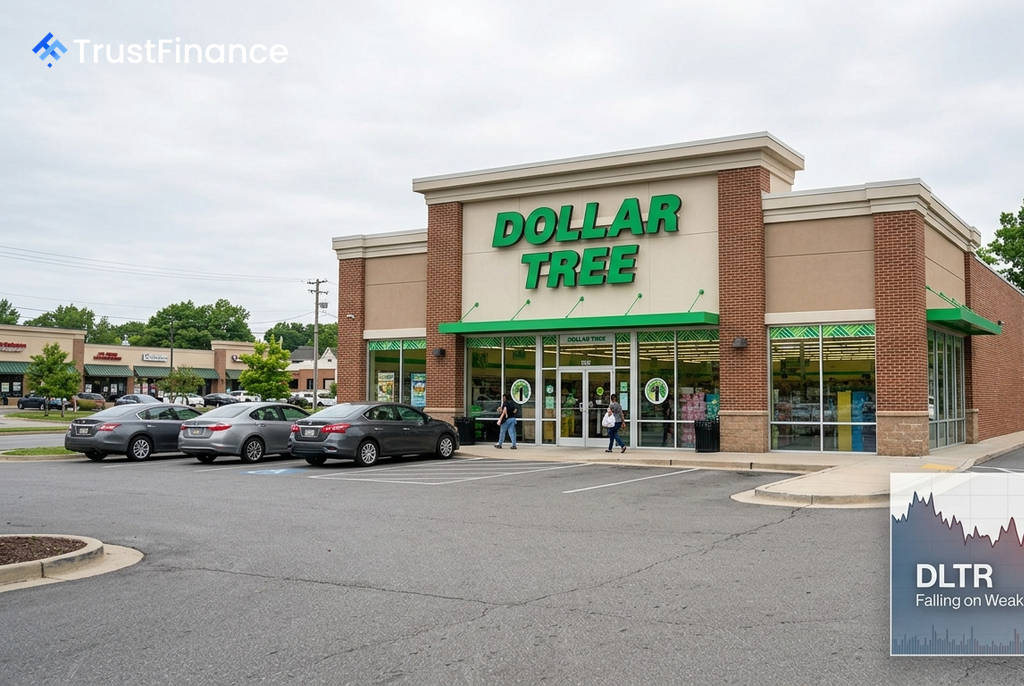
Dollar Tree, Inc. (DLTR) reported second-quarter earnings that far surpassed analyst estimates, but a weak third-quarter forecast sent shares down approximately 4%. The discount retailer's results were heavily influenced by a significant, one-time tariff refund that masked a more complex underlying performance.
A Deceptive Beat and Cautious Outlook
Dollar Tree posted Q2 earnings per share (EPS) of $2.70 on revenue of $4.90 billion, crushing the consensus estimate of $1.11 EPS. However, the headline number included a $383 million refund from IEEPA tariffs, which contributed $1.31 to the quarterly EPS. Excluding this windfall, the company's underlying adjusted EPS was $1.39, still a roughly 23% beat over expectations.
The market's negative reaction was driven by the company's Q3 guidance. Dollar Tree projected EPS in the range of $0.80 to $0.95, significantly below the $1.39 Wall Street consensus. Management attributed the lowered forecast to plans to reinvest approximately $0.50 per share of the tariff refund into pricing to drive competitiveness and market share.
For the full fiscal year 2026, the company raised its EPS guidance to a range of $7.70–$8.05, up from $6.70–$7.10 previously. This new forecast includes an estimated $0.60 benefit from tariff refunds for the full year.
Green Shoots in Traffic and Sales
Beyond the tariff-related noise, Dollar Tree delivered several positive operational signals. Key among them was a return to positive customer traffic, which rose +0.4% in the second quarter, marking the first increase after four consecutive quarters of declines.
 Ad
This contributed to a strong comparable store sales growth of +3.7%, which exceeded the high end of management's guidance. The growth was driven by a 3.3% increase in average transaction size, alongside the modest traffic improvement. The results suggest the company's strategic shift to include multi-price point items is gaining traction, with these products now accounting for 17% of total Q2 sales, a 400 basis point increase year-over-year.
Market Reaction and Key Catalysts
The stock's decline indicates that investors are looking past the one-time Q2 benefit and focusing on the near-term margin pressure from reinvestment. The central debate for investors is whether the positive traffic trend is sustainable and if the company's strategic initiatives can drive growth once the tariff tailwinds fade.
Key developments for investors to monitor include:
- Sustained Traffic Growth: Whether the company can maintain positive foot traffic into the second half of the year.
- Multi-Price Expansion: The continued rollout of its 3.0-format stores and the growing percentage of sales from items priced above the traditional $1.25.
- Operational Efficiency: Management noted progress in improving store standards and reducing inventory, which declined 9% year-over-year.
Read next
More on Stocks
FTC Orders Walmart, Uber, Delta to Disclose Data on Personalized Pricing
The U.S. Federal Trade Commission is demanding nine major companies, including leading retail, travel, and gig economy firms, to provide information on how they use consumer data for setting individual prices and wages.

Google Launches Gemini 4 Carbon AI Model to Bolster Cybersecurity Capabilities
Alphabet's Google has unveiled Gemini 4 Carbon, its latest AI model specifically designed for advanced cybersecurity tasks like vulnerability detection and secure code generation. The launch escalates competition with rivals OpenAI and Anthropic in the enterprise AI market.

Oracle Shares Surge After Unveiling $225 Billion Revenue Target for 2030
Oracle stock rose sharply after the company presented a long-term financial outlook targeting at least $225 billion in annual revenue by fiscal 2030, driven by its expanding AI infrastructure business.

DOJ Scrutinizes Nvidia's $12.9B Hugging Face Deal Amid Broader Antitrust Probe, Sources Say
The U.S. Department of Justice is reportedly examining Nvidia's planned $12.93 billion acquisition of AI platform Hugging Face as part of a wider, ongoing antitrust investigation into the chipmaker's market conduct.