
Story
Chinese Memory Chip Makers Leverage AI Boom for Pricing Power, Major Deals
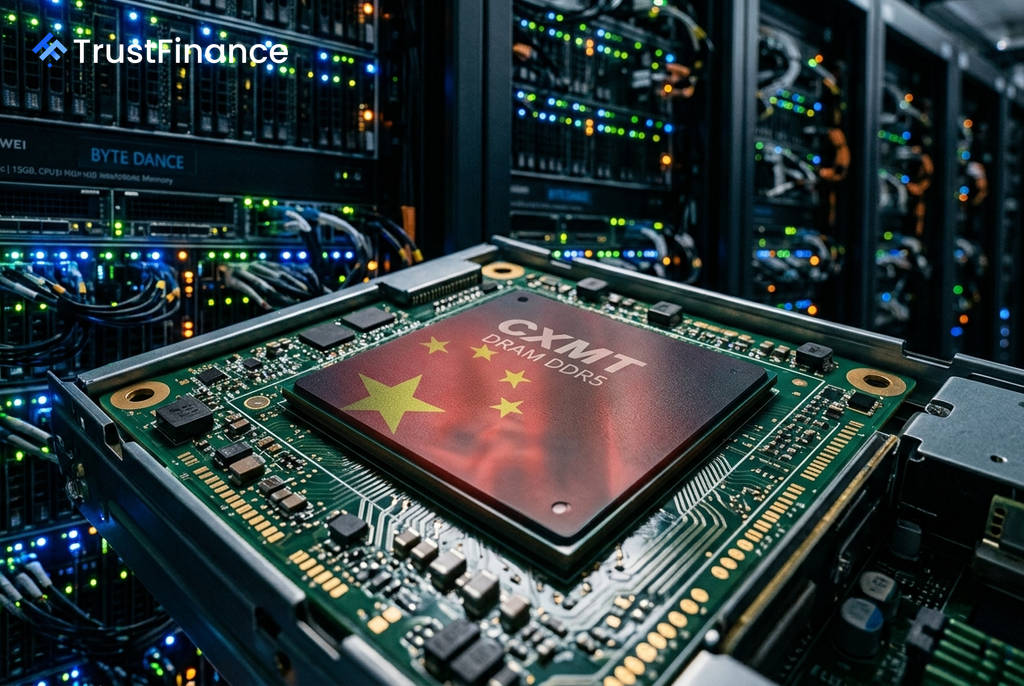
A surge in global demand for artificial intelligence infrastructure has dramatically shifted the fortunes of China's top memory chip manufacturers, ChangXin Memory Technologies (CXMT) and Yangtze Memory Technologies Corp (YMTC). Once reliant on state funding, these firms are now wielding significant market power, dictating prices to major domestic tech companies and securing massive supply contracts, according to a Reuters report citing multiple sources familiar with the companies' operations.
Rising Market Power
The AI-driven demand for memory chips, critical components for servers and data centers, has allowed CXMT and YMTC to move from low-margin producers to price-setters. In some cases, the companies are reportedly charging more than their larger South Korean competitors, Samsung and SK Hynix. This newfound leverage was highlighted in a recent pricing dispute between CXMT and Huawei, which resulted in engineers from a Huawei-linked vendor being ordered off CXMT's factory floor, two people told Reuters.
This market strength has translated into major business deals. According to three sources familiar with the arrangement, CXMT recently signed a five-year supply agreement with ByteDance, the owner of TikTok, worth more than $7 billion. This follows a separate deal with Tencent in June valued at over $3 billion.
Financial Windfall and IPO Ambitions
The boom has had a profound impact on the chipmakers' financials as they prepare for public listings. CXMT is set to launch its $8.6 billion IPO in Shanghai, having erased a decade of losses in just six months. The company reported $7.5 billion in revenue for the first quarter, a 719% increase from the prior year.
YMTC is also preparing for its own IPO, with some executives reportedly targeting a valuation of 1 trillion yuan (approximately $148 billion). Both firms, known as China's "twin stars" of memory, are backed by the state-run China Integrated Circuit Industry Investment Fund (the "Big Fund") and are central to Beijing's goal of technological self-sufficiency.
 Ad
US Scrutiny and Geopolitical Headwinds
The companies' rapid ascent has attracted significant attention from Washington. The Pentagon has designated both firms as Chinese military companies, a charge they deny. YMTC is already on the U.S. Entity List, which restricts its access to American technology and suppliers.
According to four people familiar with the discussions, the U.S. is debating further restrictions, though officials are reportedly divided on the next steps. Micron, a major U.S. competitor, has advocated for tighter controls. Conversely, Apple has argued that it needs access to Chinese memory and has sought assurances that CXMT will not be added to the trade blacklist, two of the sources said.
Expansion Plans and Technology Hurdles
Despite geopolitical pressures, both companies are pursuing aggressive expansion plans. CXMT is building two new fabrication plants and is in talks for a third, with plans to more than double its production capacity to over 600,000 wafers per month. However, both firms remain dependent on deep ultraviolet (DUV) lithography machines from Dutch firm ASML and are barred from acquiring the more advanced extreme ultraviolet (EUV) systems used by their international rivals. This technology gap keeps them several years behind competitors in producing cutting-edge chips like high-bandwidth memory (HBM), a critical component for AI processors.
Read next
More on Stocks
FTC Orders Walmart, Uber, Delta to Disclose Data on Personalized Pricing
The U.S. Federal Trade Commission is demanding nine major companies, including leading retail, travel, and gig economy firms, to provide information on how they use consumer data for setting individual prices and wages.

Google Launches Gemini 4 Carbon AI Model to Bolster Cybersecurity Capabilities
Alphabet's Google has unveiled Gemini 4 Carbon, its latest AI model specifically designed for advanced cybersecurity tasks like vulnerability detection and secure code generation. The launch escalates competition with rivals OpenAI and Anthropic in the enterprise AI market.

Oracle Shares Surge After Unveiling $225 Billion Revenue Target for 2030
Oracle stock rose sharply after the company presented a long-term financial outlook targeting at least $225 billion in annual revenue by fiscal 2030, driven by its expanding AI infrastructure business.

DOJ Scrutinizes Nvidia's $12.9B Hugging Face Deal Amid Broader Antitrust Probe, Sources Say
The U.S. Department of Justice is reportedly examining Nvidia's planned $12.93 billion acquisition of AI platform Hugging Face as part of a wider, ongoing antitrust investigation into the chipmaker's market conduct.