
Story
Blackstone, KKR Among Dozens of Financial Firms Targeted in Hacking Campaign, Google Reports
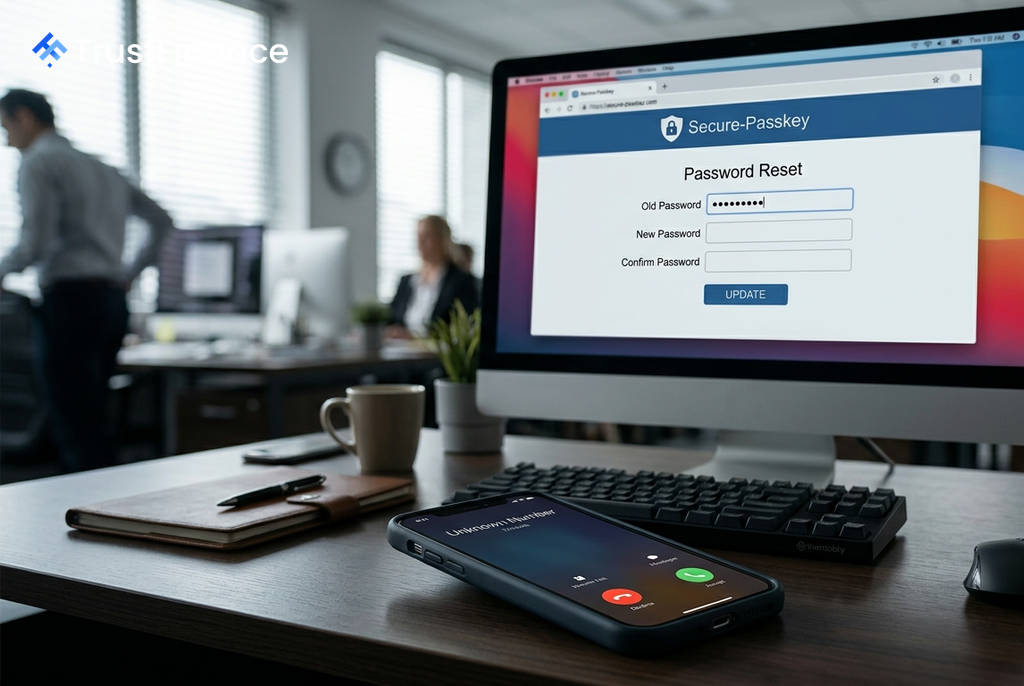
A widespread hacking campaign over the past month targeted dozens of high-profile U.S. financial institutions, including private equity firms Blackstone, KKR, and Apollo Global Management, according to a Google report and internet intelligence data. The attackers used sophisticated social engineering tactics, primarily phone calls, to attempt to steal employee login credentials.
Attack Methodology
The hackers, operating under names like Redact and Falcon, employed a technique known as vishing (voice phishing). Posing as a company's internal IT help desk, they would call employees, often on their personal cell phones, to create a sense of urgency, Google said in a blog post.
The attackers then directed their targets to malicious websites with names like "passkeyhelpdesk" designed to mimic legitimate corporate portals. While on the phone, the hackers would guide the employee to enter their password and then provide the multi-factor authentication code, allowing the attackers to hijack the account in real-time.
High-Profile Targets and Potential Impact
The campaign's targets represent a significant cross-section of the U.S. financial industry. According to data reviewed by Reuters, the hackers created fraudulent websites aimed at employees of firms including:
 Ad
- Blackstone
- Bridgewater Associates
- Apollo Global Management
- Bain Capital
- KKR
- TPG
- CME Group
- Moody’s
While Google confirmed that some unnamed companies paid ransoms, Reuters could not establish which specific firms were successfully compromised. A successful breach at these institutions could expose highly sensitive financial data, investment strategies, and client information, posing a substantial risk to the firms and market stability. KKR, Bain Capital, CME, TPG, and Apollo declined to comment to Reuters, while Blackstone, Bridgewater, and Moody's did not immediately respond.
The 'Human Element' Exploit
Cybersecurity experts noted that the campaign's reliance on social engineering highlights a persistent vulnerability in corporate defenses. Rather than using advanced technical exploits, the attackers focused on manipulating human trust to bypass otherwise robust security systems.
"Sophisticated is not the right word," said Austin Larsen, a principal threat analyst at Google, describing the tactic. "It is just really effective." Google noted the hackers have recently shifted their focus toward private equity, law firms, and financial ratings agencies, likely because they believe these organizations hold data valuable enough to compel a ransom payment.
Read next
More on Stocks
FTC Orders Walmart, Uber, Delta to Disclose Data on Personalized Pricing
The U.S. Federal Trade Commission is demanding nine major companies, including leading retail, travel, and gig economy firms, to provide information on how they use consumer data for setting individual prices and wages.

Google Launches Gemini 4 Carbon AI Model to Bolster Cybersecurity Capabilities
Alphabet's Google has unveiled Gemini 4 Carbon, its latest AI model specifically designed for advanced cybersecurity tasks like vulnerability detection and secure code generation. The launch escalates competition with rivals OpenAI and Anthropic in the enterprise AI market.

Oracle Shares Surge After Unveiling $225 Billion Revenue Target for 2030
Oracle stock rose sharply after the company presented a long-term financial outlook targeting at least $225 billion in annual revenue by fiscal 2030, driven by its expanding AI infrastructure business.

DOJ Scrutinizes Nvidia's $12.9B Hugging Face Deal Amid Broader Antitrust Probe, Sources Say
The U.S. Department of Justice is reportedly examining Nvidia's planned $12.93 billion acquisition of AI platform Hugging Face as part of a wider, ongoing antitrust investigation into the chipmaker's market conduct.