
Story
Airline Stocks Diverge as Fare Hikes Counteract Surging Oil Prices
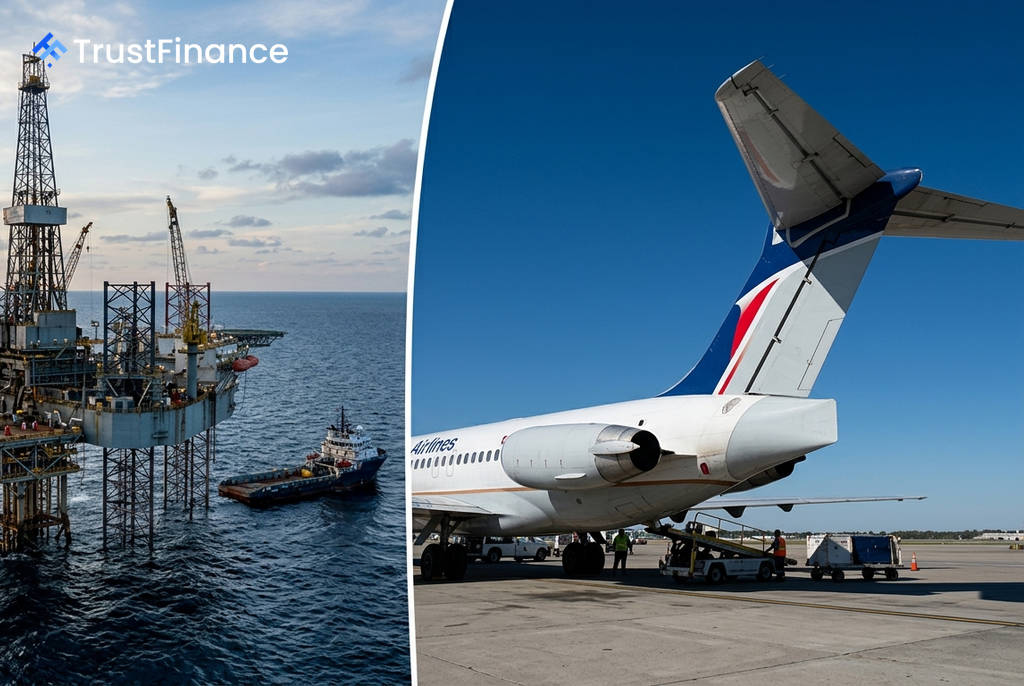
A sharp rise in crude oil prices is creating a significant headwind for the airline industry, but strong consumer demand and aggressive fare hikes are allowing some carriers to navigate the turbulence. With WTI crude trading at $89.78 per barrel, a year-to-date increase of 56.5% as of September 4, the ability to pass on costs has become the key differentiator for investors in the sector.
The Fuel Cost Challenge
Jet fuel typically represents 20-25% of an airline's total operating expenses, making the recent surge in energy prices a direct threat to profitability. WTI crude has climbed 18.6% in the last month alone, with Brent crude reaching $94.47. The pressure has already prompted analysts at TD Cowen to trim price targets across the sector, citing the impact of higher fuel costs on earnings.
United Airlines' CEO, Scott Kirby, recently noted that jet fuel prices are near $4 per gallon. However, he also stated that the airline expects to recover 100% of these higher costs during the fourth quarter through fare increases, supported by what he described as "very strong across the board" demand.
Pricing Power Divides the Sector
 Ad
The data supports the view that airlines are successfully passing costs to consumers. According to the source, U.S. airfares in July 2026 were up 25.5% year-over-year. This pricing power is creating a clear division between financially robust airlines and those with weaker fundamentals.
- Stronger Performers: Panama-based Copa Airlines (CPA) stands out with a projected FY2025 net margin of 18.6%, roughly triple that of major U.S. carriers, and a low price-to-earnings (P/E) ratio of 8.5x. Delta Air Lines (DAL) is also seen as well-positioned, generating $3.84 billion in free cash flow in fiscal 2025.
- Carriers Facing Headwinds: In contrast, Southwest Airlines (LUV) is contending with a negative free cash flow yield of -2.1% and a high P/E ratio of 24.7x. American Airlines (AAL) is operating with effectively negative book equity and has been cutting capacity, signaling operational pressure.
Investor Outlook
The current environment suggests that a selective approach is warranted. While the headline risk of high oil prices is real, carriers with strong balance sheets, efficient operations, and demonstrated pricing power appear better equipped to protect their margins. Those burning cash or carrying significant debt face a more challenging path as fuel costs continue to weigh on the industry.
Read next
More on Stocks
FTC Orders Walmart, Uber, Delta to Disclose Data on Personalized Pricing
The U.S. Federal Trade Commission is demanding nine major companies, including leading retail, travel, and gig economy firms, to provide information on how they use consumer data for setting individual prices and wages.

Google Launches Gemini 4 Carbon AI Model to Bolster Cybersecurity Capabilities
Alphabet's Google has unveiled Gemini 4 Carbon, its latest AI model specifically designed for advanced cybersecurity tasks like vulnerability detection and secure code generation. The launch escalates competition with rivals OpenAI and Anthropic in the enterprise AI market.

Oracle Shares Surge After Unveiling $225 Billion Revenue Target for 2030
Oracle stock rose sharply after the company presented a long-term financial outlook targeting at least $225 billion in annual revenue by fiscal 2030, driven by its expanding AI infrastructure business.

DOJ Scrutinizes Nvidia's $12.9B Hugging Face Deal Amid Broader Antitrust Probe, Sources Say
The U.S. Department of Justice is reportedly examining Nvidia's planned $12.93 billion acquisition of AI platform Hugging Face as part of a wider, ongoing antitrust investigation into the chipmaker's market conduct.