
Story
Yen Surges as US and Japan Confirm Coordinated FX Intervention
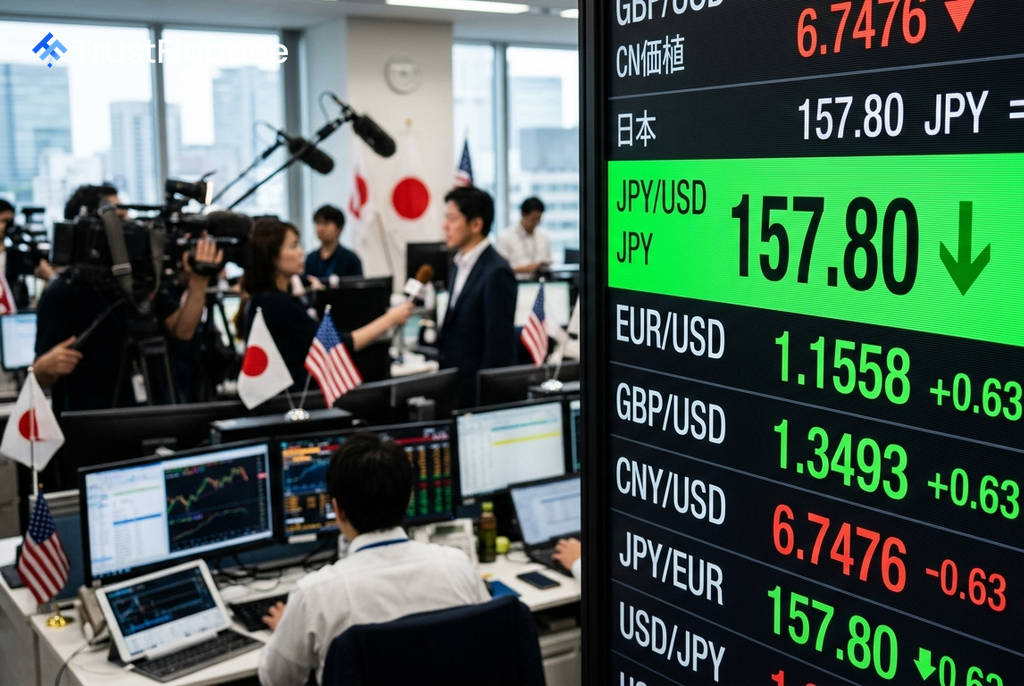
The Japanese yen strengthened on Monday after Japan's Finance Minister Satsuki Katayama and U.S. Treasury Secretary Scott Bessent confirmed a coordinated intervention in foreign exchange markets to curb the yen's recent, excessive depreciation. The action follows the yen's slide to a 40-year low of over 162 per dollar in late July.
In early trading, the dollar fell 0.4% against the yen, with the USD/JPY pair trading around 156.70. The intervention helped the yen achieve a 1.6% monthly gain against the dollar in July, its best performance since last October, driven by a combination of the official action and hawkish signals from the Bank of Japan.
A 'Fundamental Shift' in Policy
U.S. Treasury Secretary Bessent issued a statement Sunday affirming Washington's strong support for Japan's efforts to correct the yen's significant undervaluation, warning that the Treasury would not rule out further joint market operations. This marks the first coordinated U.S.-Japan action to buy yen in decades and is seen by analysts as a significant policy development.
Analysts at Bank of America Global Research described the joint intervention as a "fundamental shift." They noted that with U.S. participation, the risk of Japan unilaterally depleting its foreign exchange reserves is effectively removed, making it significantly more difficult for speculators to challenge the authorities. The officials confirmed they plan to use the Federal Reserve's FIMA repo facility to minimize any negative impact on the U.S. Treasury market.
Market Impact and Outlook
 Ad
Market strategists are now closely watching the USD/JPY 155 level, which Bank of America identified as a potential "inflection point." A decisive break below this level could shift market sentiment from buying on dips to selling on rallies. The coordinated action has also increased expectations that the Bank of Japan may accelerate its monetary tightening, with some investors now anticipating a 25-basis-point rate hike as early as September rather than October.
The Bank of Japan held its benchmark interest rate at 1.0% last week, as expected. However, Governor Kazuo Ueda maintained a hawkish tone, citing upside inflation risks from high energy import costs and signaling a readiness to raise rates again later this year.
Dollar Remains on Defense Ahead of Key Data
Elsewhere in the currency markets, the U.S. dollar remained on the defensive. The U.S. Dollar Index was little changed at 99.80 after falling 1.5% the previous week amid uncertainty over the Federal Reserve's policy path. The euro held steady near $1.1380.
Investors are now awaiting a series of key U.S. economic reports this week, including the ISM Manufacturing survey, JOLTS job openings, and Friday's non-farm payrolls report. This data will be critical for gauging the Federal Reserve's likelihood of raising interest rates at its September meeting.
Read next
More on Forex
Polish Zloty Hits 11-Month Low Against Euro on Energy Price Pressure
The Polish zloty weakened to 4.410 against the euro, its lowest point since November 2023, as rising energy prices and caution ahead of a U.S. Federal Reserve decision weighed on the currency.

Sterling Slips as Dollar Strengthens Ahead of Fed Decision and UK Budget
The British pound lost ground against a resurgent U.S. dollar on Wednesday as market attention shifted from tech sector volatility to upcoming central bank decisions and the UK budget announcement.

Eurozone Bond Yields Climb as French Fiscal Concerns Return Ahead of Fed, ECB Decisions
Yields on French and German government bonds rose as relief from a ratings affirmation for France proved temporary, with investors refocusing on fiscal challenges and awaiting key policy verdicts from the U.S. Federal Reserve and the European Central Bank.

Canadian Dollar Slips as Markets Await Bank of Canada, Fed Decisions
The Canadian dollar edged lower against its U.S. counterpart, snapping a seven-day winning streak as investors adopted a cautious stance ahead of Wednesday's key interest rate announcements from both the Bank of Canada and the U.S. Federal Reserve.