
Story
US Dollar Gains on Safe-Haven Bids as Middle East Tensions Escalate
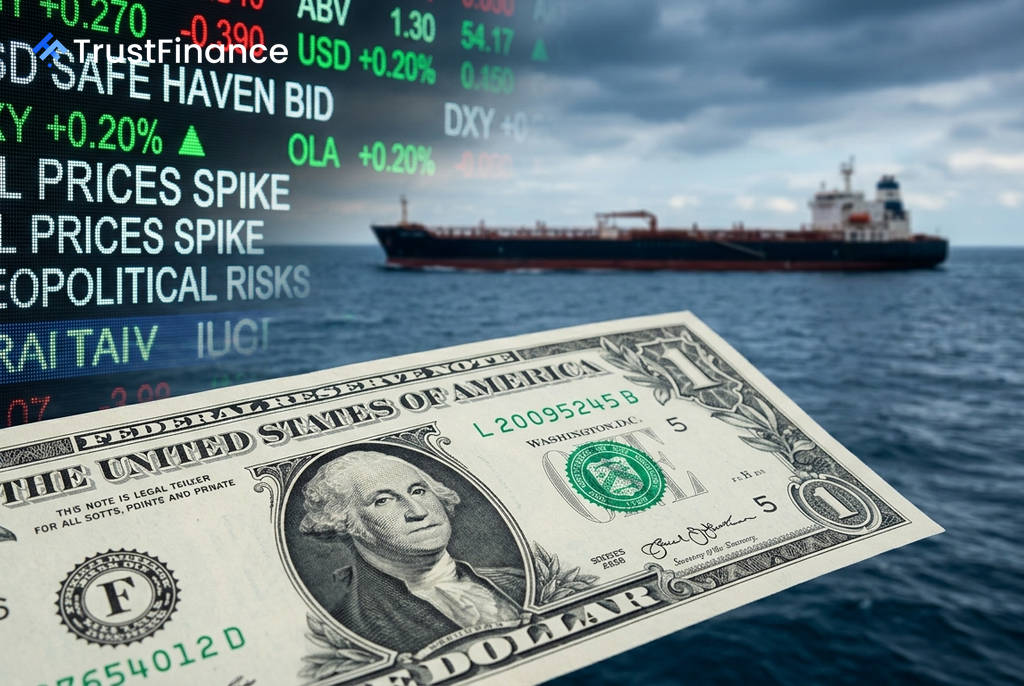
The U.S. dollar gained against a basket of major currencies on Tuesday, driven by a flight to safety as escalating geopolitical tensions in the Middle East overshadowed monetary policy outlooks. The U.S. Dollar Index (DXY), which measures the greenback against six major peers, was up 0.2% to 101.10.
Geopolitical Tensions Fuel Demand for Safety
Investor sentiment shifted after the United Kingdom Maritime Trade Operations (UKMTO) reported attacks on three separate oil tankers in the vicinity of the Strait of Hormuz. In response, the U.S. Treasury Department revoked a general license authorizing the sale of Iranian crude oil and petroleum products. According to reports from Reuters and Axios citing a U.S. official, the move was a direct consequence of the attacks, which were blamed on Iran.
The incidents prompted the UKMTO to upgrade its threat level for the region to "severe." The heightened risk sent oil prices spiking more than 5%, reinforcing the dollar's appeal as a primary safe-haven asset during times of global instability.
Focus Shifts from Fed Policy
Prior to Tuesday's events, the dollar's trajectory was largely dictated by expectations for U.S. monetary policy. The currency had weakened late last week following a softer-than-expected June jobs report, which traders interpreted as giving the Federal Reserve room to keep interest rates on hold.
 Ad
Market participants are now looking ahead to the release of the minutes from the Fed's June meeting on Wednesday. The document will be scrutinized for insights into policymakers' thinking, particularly after half of the committee members indicated that rate hikes could still be warranted this year.
Other Major Currencies React
The euro slipped 0.3% against the dollar to $1.1411. Stronger-than-forecast German industrial production data was offset by cautious comments from European Central Bank Governing Council member Fabio Panetta, who warned of a fragile outlook for the eurozone economy.
Elsewhere, the Japanese yen saw a fleeting recovery against the dollar before giving up gains, with the USD/JPY pair remaining near 40-year lows. The yen fell to its lowest level against the British pound since 2007, keeping traders on alert for potential currency market intervention by Japanese authorities.