
Story
Thyssenkrupp Steel Halts Own Rhine Shipments Amid Low Water Levels
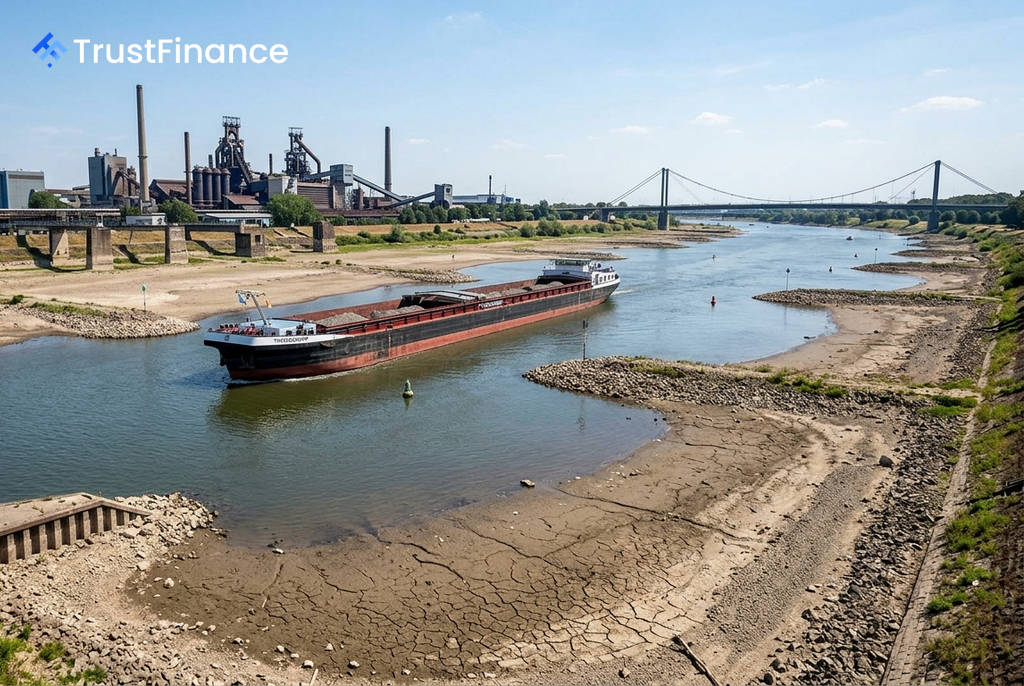
Thyssenkrupp Steel has suspended its own barge transport operations on the Rhine river due to persistently low water levels, a move that is affecting the flow of raw materials to its primary production facility in Duisburg, Germany.
Logistical Adjustments
A company spokesperson confirmed the situation to the German newspaper *Rheinische Post* on Tuesday, stating that the ongoing low-water conditions have forced a change in logistics. While the company's own vessels are currently docked, Thyssenkrupp has resorted to chartering external barges.
These chartered vessels have a shallower draught, enabling them to navigate parts of the river that have become impassable for Thyssenkrupp's own fleet. This strategy aims to maintain the supply of essential materials to the Duisburg plant despite the environmental challenge.
 Ad
Market Context
The Rhine river is a critical industrial artery for Germany and much of Western Europe, serving as a primary route for transporting bulk commodities like coal, iron ore, chemicals, and grain. Low water levels, often a result of dry weather, are a recurring issue that can create significant logistical bottlenecks and increase transportation costs for industrial firms.
For investors, disruptions on the Rhine can signal potential pressure on company margins due to higher freight charges or, in severe cases, production slowdowns if raw material shortages occur. Companies heavily reliant on the waterway, such as steelmakers and chemical producers, are particularly exposed to these climate-related risks.
Read next
More on Stocks
FTC Orders Walmart, Uber, Delta to Disclose Data on Personalized Pricing
The U.S. Federal Trade Commission is demanding nine major companies, including leading retail, travel, and gig economy firms, to provide information on how they use consumer data for setting individual prices and wages.

Google Launches Gemini 4 Carbon AI Model to Bolster Cybersecurity Capabilities
Alphabet's Google has unveiled Gemini 4 Carbon, its latest AI model specifically designed for advanced cybersecurity tasks like vulnerability detection and secure code generation. The launch escalates competition with rivals OpenAI and Anthropic in the enterprise AI market.

Oracle Shares Surge After Unveiling $225 Billion Revenue Target for 2030
Oracle stock rose sharply after the company presented a long-term financial outlook targeting at least $225 billion in annual revenue by fiscal 2030, driven by its expanding AI infrastructure business.

DOJ Scrutinizes Nvidia's $12.9B Hugging Face Deal Amid Broader Antitrust Probe, Sources Say
The U.S. Department of Justice is reportedly examining Nvidia's planned $12.93 billion acquisition of AI platform Hugging Face as part of a wider, ongoing antitrust investigation into the chipmaker's market conduct.