
Story
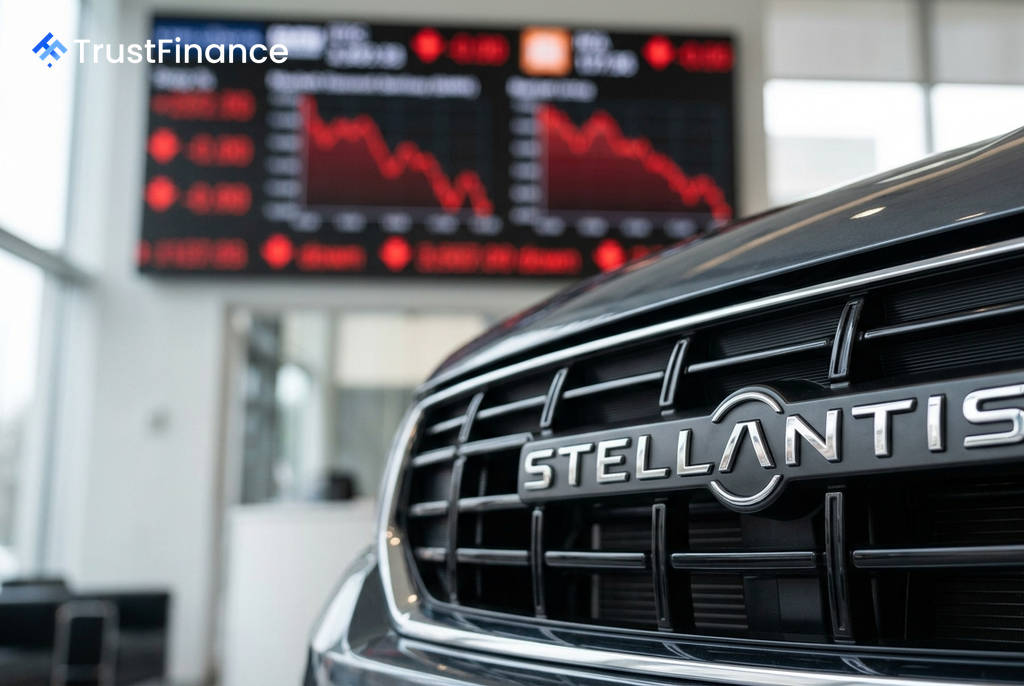
Stellantis Stock Falls as JPMorgan, HSBC Downgrade on Inventory and Recall Concerns
Summary
Shares of the automaker declined toward a 52-week low after JPMorgan and HSBC cut their ratings, citing concerns over a delayed financial recovery, rising U.S. dealer inventories, and numerous vehicle recalls.
Stellantis (STLA) shares extended recent losses on Tuesday, weighed down by two high-profile analyst downgrades that raised concerns about the automaker's operational turnaround and financial outlook. The stock slipped 1.3% to trade at €4.633, approaching its 52-week low.
Analyst Downgrades Fuel Sell-Off
The most recent catalyst was a decision by JPMorgan on July 9 to downgrade Stellantis stock from Overweight to Neutral. The bank also significantly cut its price target on the shares from €10.00 to €6.00, arguing that a meaningful financial recovery is unlikely before fiscal year 2027 or 2028. JPMorgan analysts noted it would take approximately 14 months for savings from lower component purchasing costs to impact new product launches.
This followed an earlier downgrade from HSBC, which moved its rating to Reduce from Hold and lowered its 12-month price target to €4.00 from €5.50. HSBC's more cautious stance was driven by two key factors:
- Rising U.S. Inventories: Dealer inventories climbed to 93 days of supply in June, which the bank noted was about 120,000 units above year-earlier levels.
- Vehicle Recalls: The company has issued 19 vehicle recalls so far in 2026, covering approximately 2.5 million units.
 Ad
AdMarket Impact and Broader Pressures
The back-to-back downgrades have soured investor sentiment, pushing Stellantis shares near a 52-week low of €4.618. The stock has now lost more than half its value from its 52-week high of €10.494. In the prior session, the company was the worst performer on Italy's benchmark index, hitting a five-year low.
A challenging macroeconomic environment is adding to the pressure. Broader market weakness, combined with elevated energy prices amid geopolitical tensions, typically serves as a headwind for capital-intensive auto manufacturers. Investors are now awaiting more concrete evidence that the company's turnaround strategy is gaining traction before re-engaging with the stock.