
Story
Samsung Unveils Next-Generation V-NAND Memory for AI Market
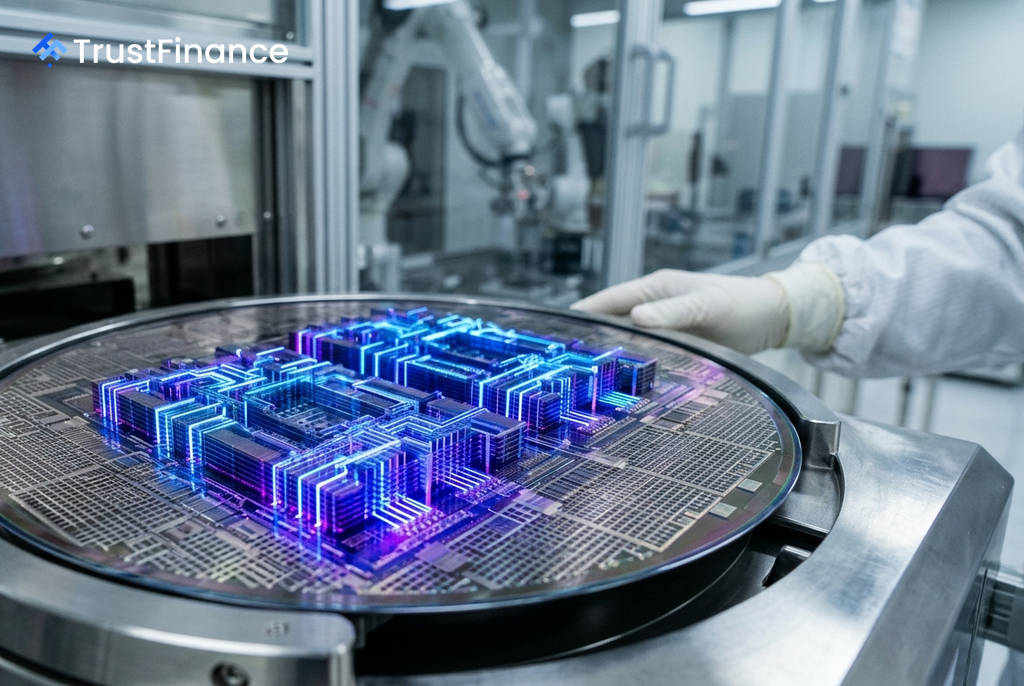
Samsung Electronics on Tuesday introduced a new generation of memory technology designed for artificial intelligence, seeking to reinforce its leadership position in the rapidly expanding market for AI hardware. The world's largest memory chip manufacturer revealed its V10 Bonding V-NAND (BV-NAND) prototype at the Future of Memory and Storage (FMS) conference in Santa Clara, California.
Key Technology Unveiled
The new BV-NAND prototype leverages a new wafer-bonding architecture to significantly boost storage density and performance, catering to the intensive demands of AI workloads. As AI systems expand from training models to generating real-time user responses, the need for high-capacity, high-performance NAND flash memory has surged.
Key features of the V10 BV-NAND announced by Samsung include:
- Layers: More than 400 layers, a new milestone in vertical stacking.
- Density: An approximate 58% increase in memory density compared to its previous V9 NAND generation.
- Performance: Enhanced read, write, and input/output (I/O) speeds to handle complex AI tasks more efficiently.
Future Concepts and Vision
 Ad
Looking further ahead, Samsung also presented concept models for what it termed the industry’s first zHBM and zNAND-O architectures. These concepts outline a vision for 3D memory where cells are stacked vertically directly on top of AI processors, rather than alongside them as with conventional High-Bandwidth Memory (HBM).
This vertical stacking approach is designed to reduce the distance data must travel, which Samsung said could increase bandwidth, triple energy efficiency, and cut thermal resistance by more than half. The company stated its wafer-bonding technology could enable more than 10 times the memory density of current HBM5 memory.
Market Implications
Samsung's announcement comes as investors and analysts closely watch the memory chip sector. While concerns exist over potential long-term weakness in segments like Chinese smartphone demand, the demand from the AI industry remains exceptionally strong.
This robust AI demand was highlighted by a recent Samsung disclosure that long-term agreements with customers could eventually account for 60% to 70% of its total memory sales. Separately, analysts at Citi noted in a July report that inventories for both DRAM and NAND remain well below historical levels, suggesting a tight supply chain despite concerns over softening end-market demand in other areas.
Read next
More on Stocks
FTC Orders Walmart, Uber, Delta to Disclose Data on Personalized Pricing
The U.S. Federal Trade Commission is demanding nine major companies, including leading retail, travel, and gig economy firms, to provide information on how they use consumer data for setting individual prices and wages.

Google Launches Gemini 4 Carbon AI Model to Bolster Cybersecurity Capabilities
Alphabet's Google has unveiled Gemini 4 Carbon, its latest AI model specifically designed for advanced cybersecurity tasks like vulnerability detection and secure code generation. The launch escalates competition with rivals OpenAI and Anthropic in the enterprise AI market.

Oracle Shares Surge After Unveiling $225 Billion Revenue Target for 2030
Oracle stock rose sharply after the company presented a long-term financial outlook targeting at least $225 billion in annual revenue by fiscal 2030, driven by its expanding AI infrastructure business.

DOJ Scrutinizes Nvidia's $12.9B Hugging Face Deal Amid Broader Antitrust Probe, Sources Say
The U.S. Department of Justice is reportedly examining Nvidia's planned $12.93 billion acquisition of AI platform Hugging Face as part of a wider, ongoing antitrust investigation into the chipmaker's market conduct.