
Story
KOSPI Selloff Driven by Financing Costs, Not Weak Profits, Analysts Say
Summary
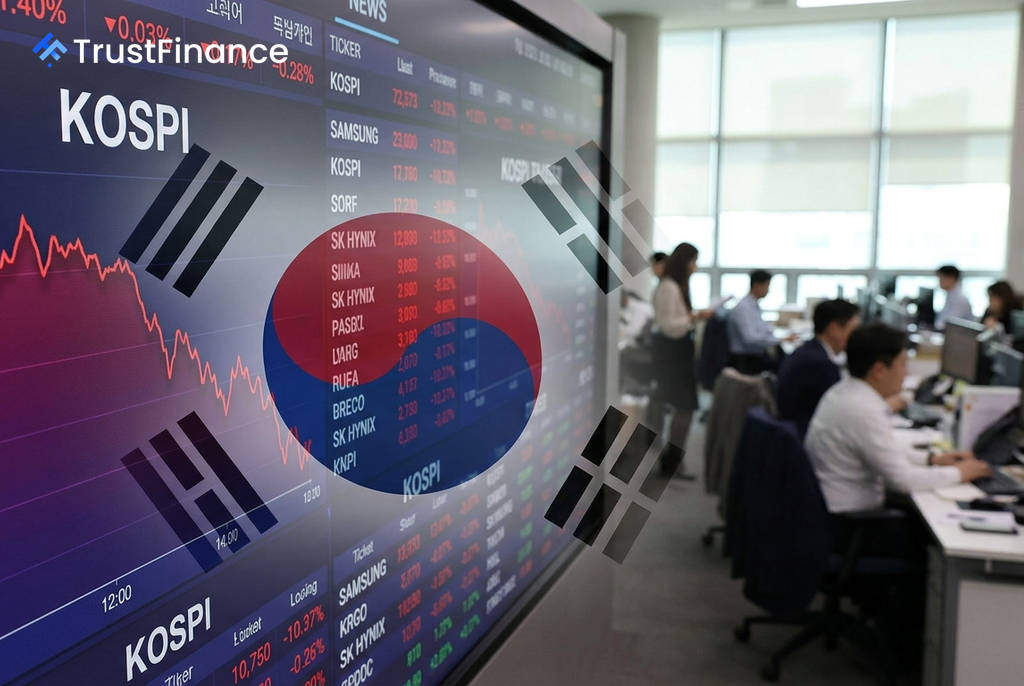
South Korea's KOSPI index is experiencing a sharp selloff despite resilient corporate profits, as investors prioritize rising financing costs and geopolitical risks, according to a KB Securities report.
South Korean stocks have sold off sharply despite a robust corporate earnings season, as investor focus shifts from strong profits to macroeconomic headwinds like financing costs and geopolitical uncertainty, according to a research note from KB Securities.
Valuation Pressure Eclipses Earnings
KB Securities analysts argue that resilient earnings are not the primary driver of the benchmark KOSPI index's recent decline. Instead, the market is increasingly viewing capital-intensive investments, particularly in artificial intelligence, through the lens of funding costs rather than long-term growth prospects. This has put pressure on index heavyweights, with both Samsung Electronics and SK Hynix posting steep declines from recent peaks.
The note highlights that investor concerns over the return on AI-related capital spending are not new. A similar selloff occurred last November, which later reversed on expectations of U.S. Federal Reserve rate cuts. KB Securities contends that the recovery was driven by the prospect of lower borrowing costs, not a fundamental increase in confidence about AI profitability.
Macro Factors in Focus
Renewed geopolitical tensions in the Middle East have pushed U.S. Treasury yields higher, reviving fears of tighter monetary policy and weighing on equity valuations. According to the report, a sustained rebound in the KOSPI will likely require a combination of two factors:
 Ad
Ad- A macroeconomic catalyst that stabilizes interest rates.
- A company-specific event that restores confidence among capital providers.
However, the brokerage expects geopolitical uncertainty to ease over time, citing potential political pressure on the Trump administration ahead of the U.S. midterm elections, where higher oil prices and borrowing costs could negatively impact voter sentiment.
Potential Policy Catalysts
KB Securities also pointed to a policy proposal from OpenAI as a potential positive development for market sentiment. The proposal involves granting the U.S. government a 5% equity stake to establish an AI-focused sovereign wealth fund.
Analysts believe such a move, if adopted, could reduce the perceived default risk for AI investments, thereby lowering funding costs and narrowing corporate credit spreads. The report cautioned that greater government backing could also encourage excessive risk-taking and inflate asset bubbles over the longer term.
Read next
More on Stocks
River Cruise Industry Can Adapt to Climate Change Risks, Bernstein Says
Bernstein analysts report that while European river cruises face more frequent disruptions from low water levels due to climate change, the industry has sufficient adaptation strategies to ensure its long-term viability.

Aramco Reportedly Explores Standalone Gas Unit With Potential $100 Billion Valuation
Saudi Aramco is reportedly considering a major restructuring to create a standalone natural gas division, which could be valued at over $100 billion and potentially be listed or sold to new investors.

Apple Ordered to Pay Record $5.7 Billion in Haptic Patent Case, Plans to Appeal
A U.S. jury found Apple's Taptic Engine infringed on two patents held by Taction, ordering a landmark $5.7 billion payment. The tech giant has stated it will appeal the verdict.

Northern Star Rejects Takeover Overture From Gold Fields, Bloomberg Reports
South Africa's Gold Fields Ltd. recently approached Australia's Northern Star Resources about a potential acquisition, but the offer was rejected, according to a report. The move comes as Northern Star faces pressure from an activist investor and deals with operational challenges.