
Story
IBM Acquires HRL Laboratories, Adopts Dual-Track Quantum Computing Strategy
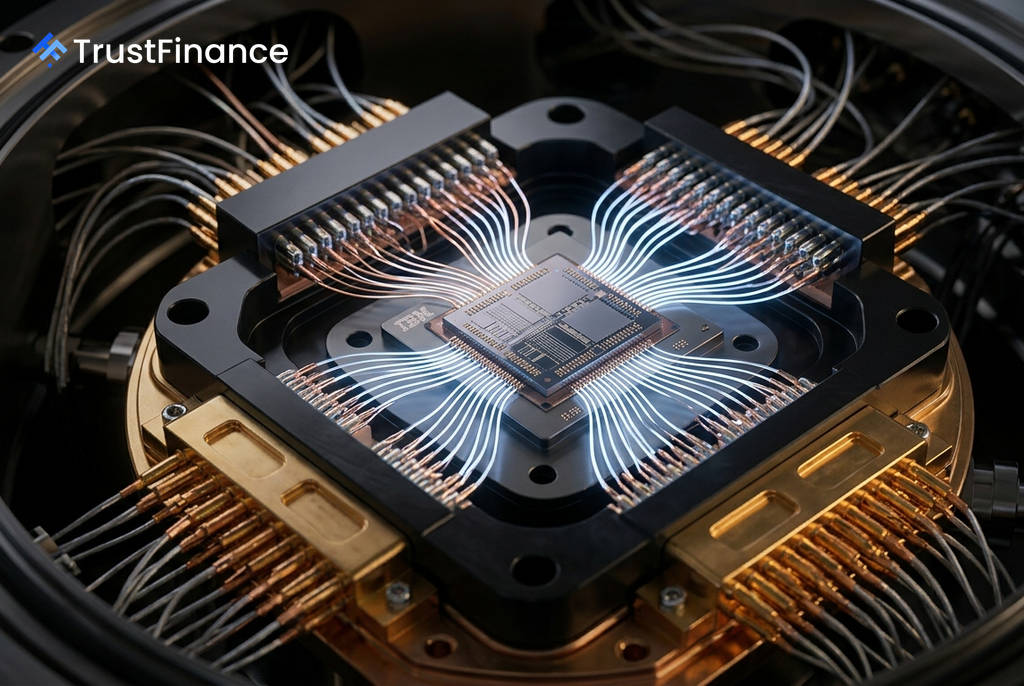
International Business Machines Corp. (IBM) announced on Thursday its acquisition of HRL Laboratories, a private quantum computing research lab, in a strategic move to diversify its approach to building next-generation computers. The deal, whose financial terms were not disclosed, adds HRL's expertise in electron spin qubits to IBM's established work with superconducting circuits, creating a dual-track development strategy.
A New Pillar in Quantum Development
The acquisition signals a significant expansion of IBM's quantum roadmap. HRL Laboratories, formerly the research arm of Hughes Aircraft and jointly owned by Boeing Co. and General Motors, is a leader in electron spin quantum circuits, also known as "qubits." This technology represents a different physical approach to quantum computing than IBM's primary focus on superconducting circuits.
Jay Gambetta, director of IBM Research, told Reuters that the company believes the future of quantum computing will likely involve one or both of these technologies. "They (HRL) have a very strong spin qubit team, the strongest in the world," Gambetta said. He added that IBM "would not pursue a second path that was not built on a foundation that could be integrated together."
 Ad
Technological Synergy and Market Context
While distinct, both superconducting and electron spin technologies can be fabricated using similar equipment found in conventional semiconductor manufacturing. A key advantage of electron spin circuits is their potential to be made much smaller than their superconducting counterparts, a feature IBM expects to become critical after its "Blue Jay" superconducting system is delivered in 2033, according to Gambetta.
Under the deal, HRL's team will begin utilizing IBM's advanced chip fabrication facility in New York. Former owners Boeing and GM will continue to partner with IBM on quantum technologies following the transaction. The move mirrors a similar diversification by competitor Alphabet's Google, which also recently added a second quantum technology to its portfolio, highlighting the intense and evolving race to develop commercially viable quantum machines.
Read next
More on Stocks
FTC Orders Walmart, Uber, Delta to Disclose Data on Personalized Pricing
The U.S. Federal Trade Commission is demanding nine major companies, including leading retail, travel, and gig economy firms, to provide information on how they use consumer data for setting individual prices and wages.

Google Launches Gemini 4 Carbon AI Model to Bolster Cybersecurity Capabilities
Alphabet's Google has unveiled Gemini 4 Carbon, its latest AI model specifically designed for advanced cybersecurity tasks like vulnerability detection and secure code generation. The launch escalates competition with rivals OpenAI and Anthropic in the enterprise AI market.

Oracle Shares Surge After Unveiling $225 Billion Revenue Target for 2030
Oracle stock rose sharply after the company presented a long-term financial outlook targeting at least $225 billion in annual revenue by fiscal 2030, driven by its expanding AI infrastructure business.

DOJ Scrutinizes Nvidia's $12.9B Hugging Face Deal Amid Broader Antitrust Probe, Sources Say
The U.S. Department of Justice is reportedly examining Nvidia's planned $12.93 billion acquisition of AI platform Hugging Face as part of a wider, ongoing antitrust investigation into the chipmaker's market conduct.