
Story
Eurozone Yields Rise as Iran Tensions and Fed Uncertainty Rattle Bond Markets
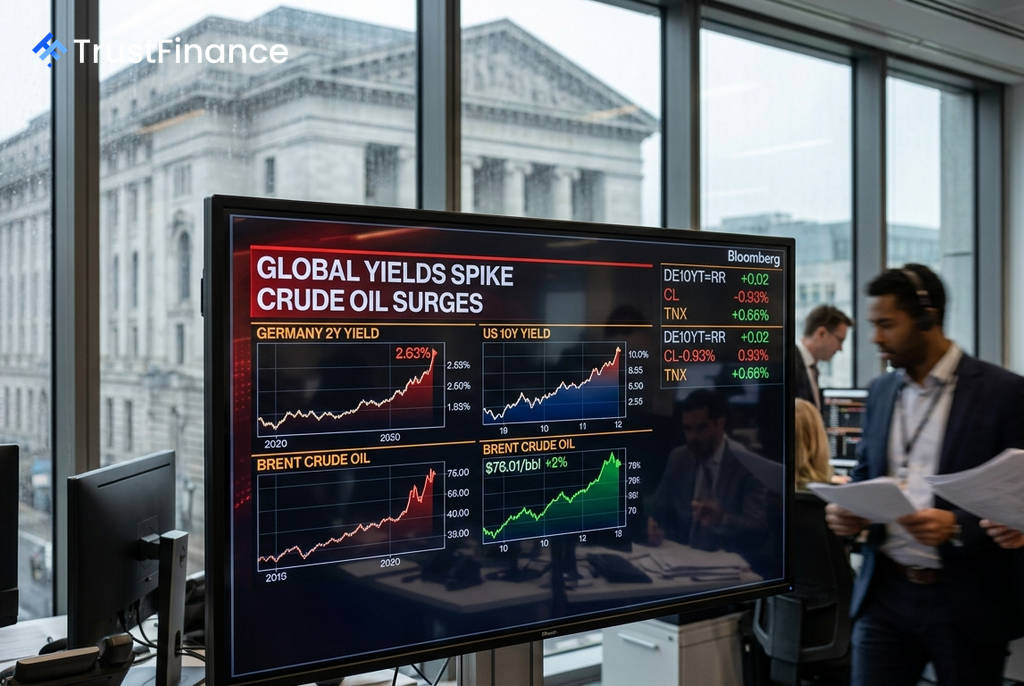
Eurozone government bond yields rose on Wednesday, with a sell-off in short-dated debt leading the move, as investors reacted to a combination of renewed geopolitical risk and uncertainty over U.S. monetary policy. The dual pressures pushed investors to demand higher returns on sovereign debt, which is highly sensitive to shifts in inflation and interest rate expectations.
Geopolitical Tensions Fuel Inflation Fears
A sharp escalation in tensions between the United States and Iran served as the primary catalyst for the market move. According to reports, Washington's decision to revoke a key sanctions waiver related to Iranian oil sales triggered a 2% jump in global crude prices to $75.60 a barrel. Tehran reportedly viewed the move as a breach of an ongoing framework agreement.
For fixed-income markets, the immediate consequence is a renewed threat of inflation. The spike in energy costs challenges the recent cooling in Eurozone consumer prices, prompting traders to price in the risk of more persistent inflation, which erodes the value of bond returns.
Markets Brace for Hawkish Fed Minutes
Adding to the upward pressure on yields was investor caution ahead of the scheduled release of the Federal Reserve's June meeting minutes. The minutes will offer the first detailed insight into the policy debate under the central bank's new chairman, Kevin Warsh. Markets are particularly focused on Warsh's known preference for a less predictable communication style compared to his predecessors.
 Ad
This potential for a more opaque Federal Reserve has introduced a new risk premium, especially for short-term bonds that rely heavily on clear central bank guidance. Analysts noted that if the minutes reveal a significant push among Fed officials for tighter policy to combat inflation, it could trigger a further sell-off across global bond markets.
Short-Term Debt Leads Sell-Off
The market reaction was most pronounced at the front end of the yield curve, reflecting immediate concerns over inflation and central bank policy. Key market movements included:
- Germany’s 2-year government bond yield, a bellwether for Eurozone interest rate expectations, spiked to 2.63%.
- The benchmark German 10-year Bund yield saw a more moderate increase, rising 2 basis points to 3.03%.
The sharper rise in short-term yields indicates that investors are rapidly reassessing the immediate path for inflation and interest rates, while the long-term outlook remains, for now, more anchored.