
Story
Asian Currencies Mixed as Dollar Holds Gains on Hawkish Fed Signal

Summary
The U.S. dollar held near a seven-week high following the Federal Reserve's first rate hike in three years, leading to a mixed performance among Asian currencies as markets await a key policy decision from the Bank of Japan.
Most Asian currencies showed a mixed performance on Thursday as the U.S. dollar maintained its strength near a seven-week high. The dollar's position was bolstered by the Federal Reserve's first interest rate increase in three years and signals that further monetary tightening is likely.
Dollar Strengthens on Hawkish Fed Stance
The U.S. Federal Reserve voted unanimously to raise its benchmark policy rate by 25 basis points to a range of 3.75%-4.00%. According to an Investing.com report, this was the first U.S. rate hike in three years. The central bank's latest projections also indicated that officials anticipate one more rate increase before the end of 2026.
Following the announcement, the U.S. dollar index, which measures the greenback against a basket of major currencies, climbed 0.7% overnight to trade around 100.30. Market expectations, reflected in rate futures, now imply a roughly 90% probability of another 25-basis-point hike by the end of the year, likely at the Fed's December meeting.
Yen Steadies Ahead of Bank of Japan Decision
The Japanese yen held near a two-week low against the dollar, with the USD/JPY pair trading around 156.08. Investor focus is now squarely on the Bank of Japan's (BOJ) policy decision, which is expected on Friday. Markets anticipate the BOJ will raise its own policy rate to a 31-year high in response to persistent inflationary pressures.
 Ad
AdTraders will be closely watching for guidance from BOJ Governor Kazuo Ueda on the potential timing and pace of any future rate hikes. Meanwhile, the British pound was also in focus ahead of a Bank of England policy announcement, with the GBP/USD pair trading near a six-week low.
Regional Currencies Diverge
Across the region, currency movements were varied. The Chinese yuan remained resilient, with both the onshore (USD/CNY) and offshore (USD/CNH) pairs trading flat. China has reportedly expanded its onshore central clearing system for foreign currencies, a move aimed at encouraging direct trading with the yuan and reducing reliance on the U.S. dollar.
Other notable movements included:
- The South Korean won weakened, with the USD/KRW pair rising 0.2% to 1,379.63.
- The Indonesian rupiah fell, as USD/IDR gained 0.6% to 17,755.1.
- The Malaysian ringgit lost ground, with USD/MYR up 0.4% to 4.0977.
- The Indian rupee strengthened, pushing the USD/INR pair down 0.2% to 95.921.
Read next
More on Forex
US Treasury Yields Surge as Bond Buyback Plan Underwhelms Market
U.S. Treasury yields rose sharply after the Treasury Department announced a smaller-than-expected bond buyback program, a move that compounded pressure from surging oil prices and persistent inflation fears.

Yen Extends Rally as Currency Markets Brace for Fed, ECB, and BoJ Decisions
The Japanese yen continued its strong advance on Wednesday, while the U.S. dollar and euro held steady as currency markets await a pivotal week of interest rate decisions from the world's major central banks.
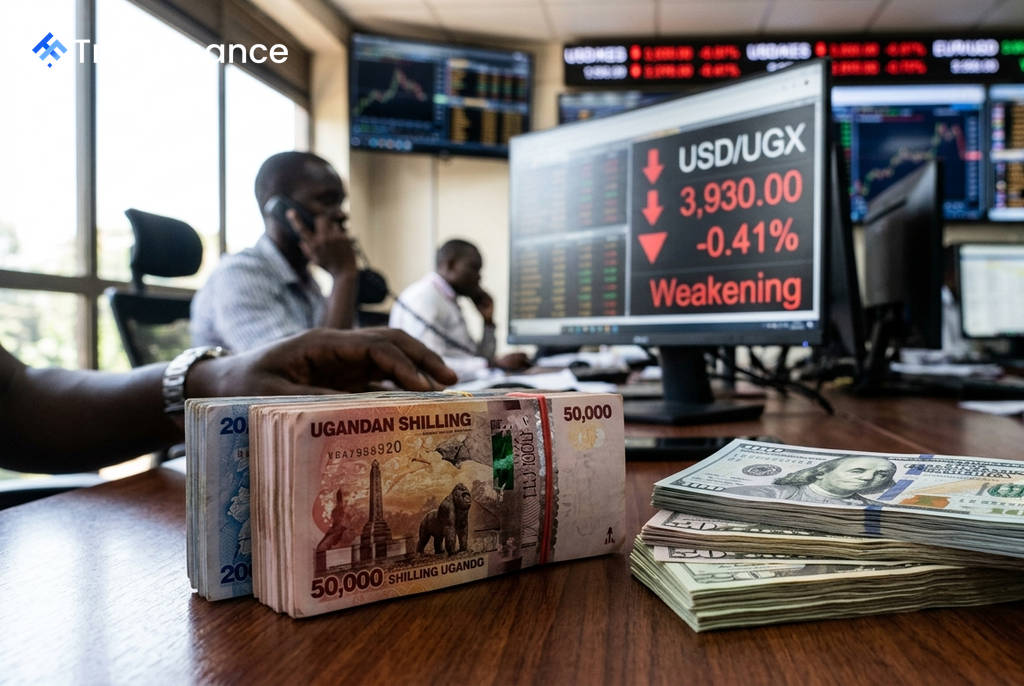
Ugandan Shilling Weakens Toward Record Low on Strong Dollar Demand
The Ugandan shilling fell against the U.S. dollar, driven by strong demand from manufacturers and energy firms amid geopolitical uncertainty. Traders see the currency potentially reaching the psychologically significant 4,000 level for the first time.
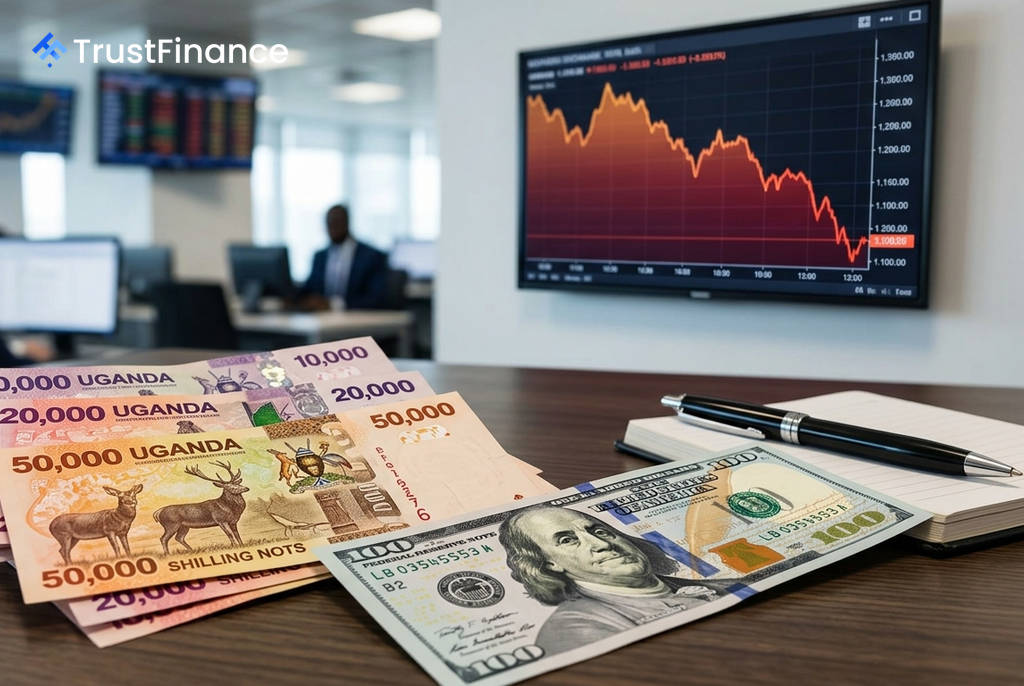
Ugandan Shilling Nears Record Low on Surging Corporate Dollar Demand
The Ugandan shilling has weakened significantly against the U.S. dollar, driven by strong demand from manufacturers and energy firms. Traders anticipate further depreciation, potentially pushing the currency to a historic low above 4,000 per dollar.