
Story
US-Ukraine Tensions Escalate Over Strikes on Russian Refineries
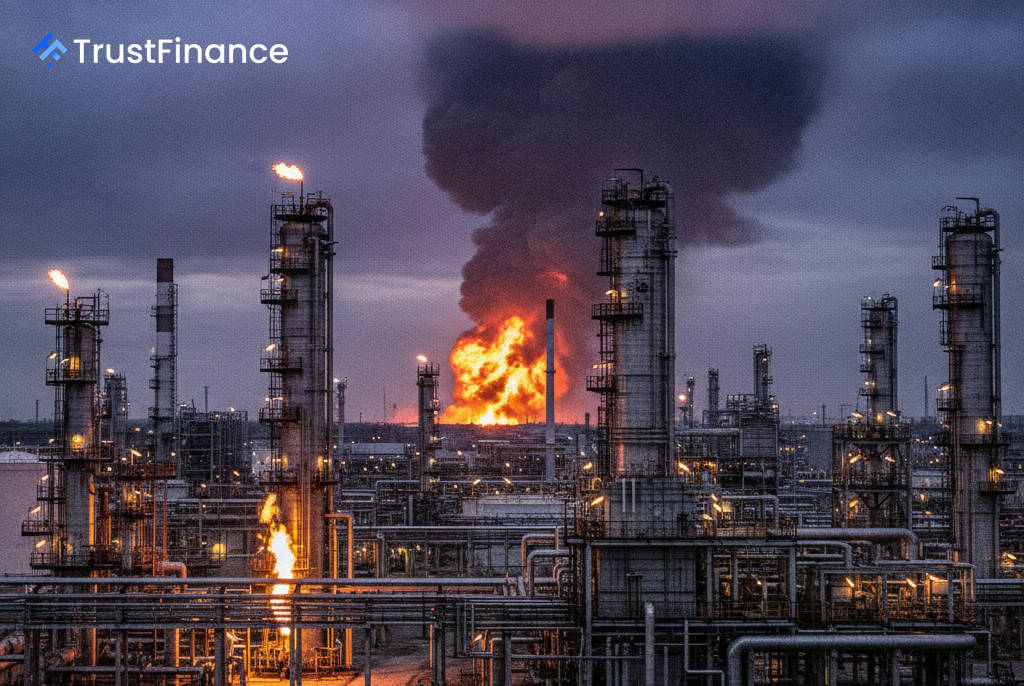
Relations between the U.S. and Ukraine have soured significantly in recent weeks, with President Donald Trump openly criticizing Ukrainian drone strikes against Russian energy infrastructure. The public disagreement stems from Washington's concerns over soaring global fuel costs and domestic inflation ahead of midterm elections, creating a crisis that analysts fear could jeopardize vital U.S. support for Kyiv.
Pressure Mounts Amid Energy Price Spike
The Trump administration's frustration is centered on Ukraine's campaign targeting Russian diesel facilities. According to a Reuters report, global energy costs have spiked since a conflict involving the U.S., Israel, and Iran began in February, pushing diesel prices to record highs.
In response to domestic political pressure over inflation, President Trump on September 13 began publicly calling for Ukraine to cease the attacks. The following week, Secretary of State Marco Rubio stated that Washington was also concerned about strikes hitting U.S.-linked oil shipments. Ukraine has so far refused to halt the drone campaign, which it describes as its only effective response to nearly five years of Russian bombardment.
U.S. Eases Sanctions on Russian Diesel
Following Kyiv's defiance, the Trump administration took a significant step to stabilize fuel markets. On October 9, Trump announced a deal to purchase diesel from Moscow, issuing a temporary general license to allow Russian diesel onto the global market.
 Ad
This move included waiving sanctions on Russia that were authorized by a bill the president himself signed into law in September. Suriya Jayanti, a former U.S. official now working in Ukraine's power sector, told Reuters that Russia's attacks on Ukraine's grid have increased despite Trump unilaterally announcing an "energy ceasefire" on October 11. "It is clear to everyone in Kyiv that the goal is not actually an energy ceasefire, but it is really just an effort to hobble Ukraine," Jayanti said.
Diplomatic Fallout and Future Talks
The friction has extended to military cooperation. Ukrainian President Volodymyr Zelenskiy has said that U.S. officials threatened to cut off intelligence sharing if the energy strikes continued. However, a U.S. official familiar with the matter, speaking on condition of anonymity, disputed this account to Reuters.
Despite the tensions, diplomatic efforts are ongoing. Negotiators from Ukraine, Russia, and the U.S. are scheduled to meet in Abu Dhabi in the first half of November, according to Zelenskiy. This follows talks in Oslo on October 20, where U.S. envoy Jared Kushner repeated the demand for Ukraine to halt its attacks on Russian refineries.
Read next
More on Commodities
European Natural Gas Prices Hit Nearly Four-Year High on Mideast Tensions, Low Storage
European wholesale natural gas futures surged to their highest levels in almost four years, driven by supply fears stemming from Middle East conflicts and critically low storage levels ahead of the winter heating season.

Lula's Surprise Brazil Victory Poised to Reverse Market Rally
President Luiz Inacio Lula da Silva has won a surprise fourth term in Brazil, a result that defied investor expectations and is set to unwind a recent rally in Brazilian stocks, bonds, and the currency.

Natural Gas Rebound Stalls at Key Technical Resistance
Natural gas prices have bounced from oversold territory but are now confronting a critical resistance zone defined by the 50-day and 200-day moving averages. The outcome of this test could determine the commodity's short-term directional bias.

Agricultural Commodities Outperform Copper on Risk-Adjusted Basis, OptionMetrics Reports
Sugar, wheat, and soybeans have delivered superior risk-adjusted returns so far this year, quietly outperforming the much-hyped copper, according to a new analysis from options data firm OptionMetrics.