
Story
U.S. Treasury Yields Retreat as Weak Jobs Data Shifts Rate Outlook
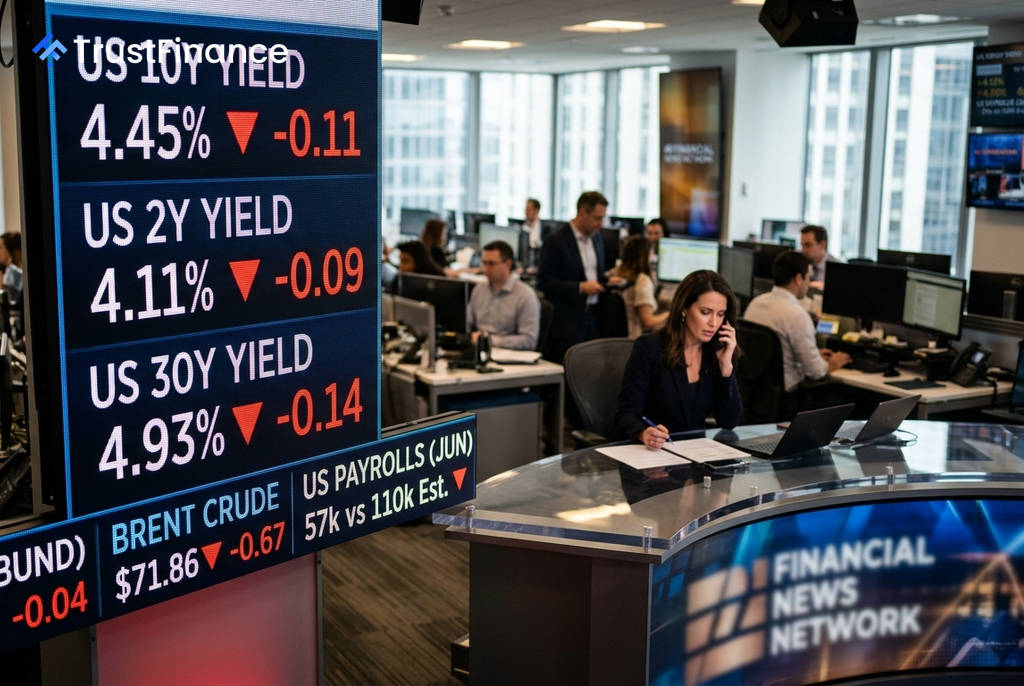
U.S. Treasury yields declined on Monday, extending a slide that began after last week’s soft labor market report prompted investors to reassess the outlook for inflation and interest rates. The yield on the benchmark 10-year Treasury note eased to approximately 4.45%, while the policy-sensitive 2-year note yield fell to 4.11%.
Weak Payrolls Data Cools Rate Hike Bets
The move lower in yields follows a U.S. jobs report for June that missed economist forecasts significantly. The economy added just 57,000 nonfarm payrolls, the smallest gain in four months and well below the consensus estimate of 110,000.
While the unemployment rate unexpectedly declined to 4.2%, analysts noted this was due to a shrinking labor force participation rate, which hit its lowest point since 2021. The data has bolstered the view among some investors that the labor market is cooling, potentially giving the Federal Reserve less reason to maintain an aggressive monetary policy stance.
Focus Shifts to Fed Minutes and Oil Prices
 Ad
Adding to the downward pressure on yields, a sharp drop in oil prices has helped ease near-term inflation concerns. Brent crude futures slid to around $71.86 per barrel amid signs of easing shipping disruptions and potential for increased OPEC+ output.
Investors are now turning their attention to the release of the June Federal Open Market Committee (FOMC) meeting minutes on Wednesday. The report is drawing heightened scrutiny as it will be the first to provide insight into the central bank's policy discussions under newly appointed Fed Chair Kevin Warsh.
Global Context
In Europe, government bond yields also consolidated. Germany's 10-year Bund yield, the benchmark for the eurozone, hovered around 2.91%, pulling back from a recent two-week high. European markets are awaiting commentary from European Central Bank officials, including President Christine Lagarde, and a slate of economic data this week.