
Story
U.S. 10-Year Treasury Yield Surpasses 5% for First Time in 19 Years
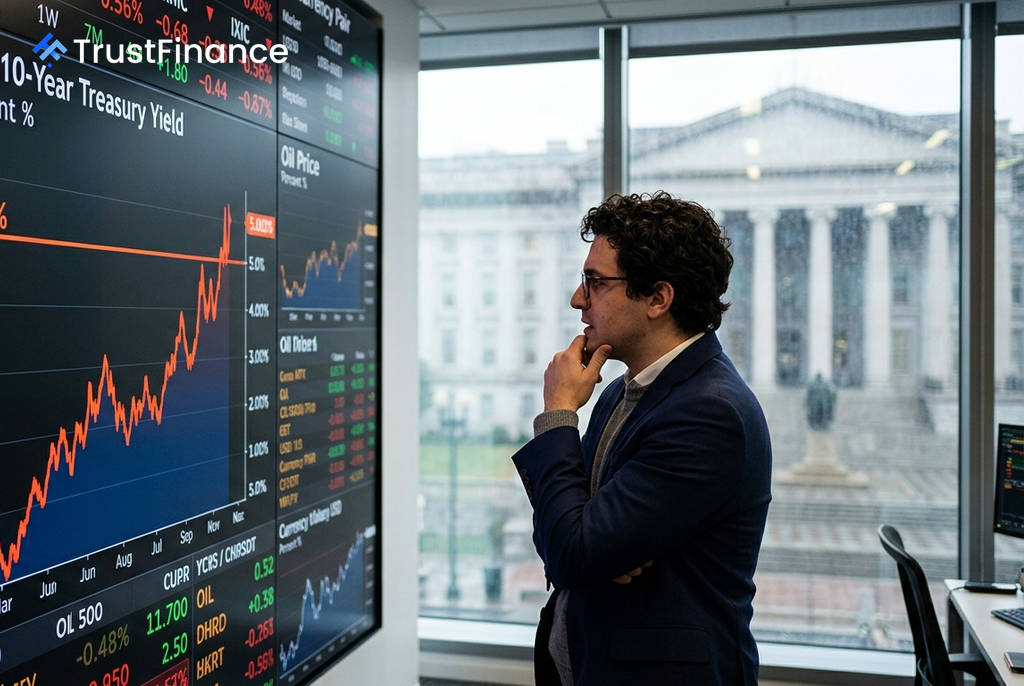
The yield on the benchmark 10-year U.S. Treasury note surged past 5% on Tuesday, reaching its highest level in 19 years as markets braced for a pivotal Federal Reserve meeting and testimony from Treasury Secretary Scott Bessent. The move reflects growing investor anxiety over persistent inflation and the future path of monetary policy.
Bond Market Under Pressure
The spike in the 10-year yield, a critical benchmark for borrowing costs across the economy, marks a level not seen since 2007. The sell-off in government bonds was primarily driven by climbing energy prices and expectations of further interest rate hikes from the Federal Reserve. Brent crude futures pushed above $107 per barrel amid ongoing geopolitical tensions in the Middle East, according to a Reuters report.
The pressure on government debt was global, with Japanese 10-year government bond yields also rising back above 3%. The moves signal a broad reassessment of inflation and growth risks among fixed-income investors.
Equities Fall as Key Events Loom
Equity markets responded negatively to the surge in borrowing costs, with Wall Street futures pointing to a lower open on Tuesday. The risk-off sentiment follows a difficult session on Monday, particularly for the technology sector.
 Ad
The SOX semiconductor index tumbled more than 5%, its largest single-day drop since July, dragging the broader S&P 500 and Nasdaq into negative territory. The decline was linked to investor concerns over narratives calling for a slowdown in artificial intelligence development.
Focus on Washington
Investor attention is now firmly fixed on Washington, where the Federal Reserve begins its two-day policy meeting today. Markets are widely expecting a quarter-point interest rate hike on Wednesday and are pricing in the possibility of up to four rate increases over the next year.
Also on Tuesday, Treasury Secretary Scott Bessent is scheduled to appear before the House Financial Services Committee. He is expected to address several key issues, including:
- The Treasury's recent, and thus far unsuccessful, attempts to cap rising bond yields.
- The administration's proposed $1.3 trillion stimulus, which includes $5,000 checks for Americans.
- A joint currency intervention with Japan aimed at strengthening the yen.
Read next
More on Commodities
U.S. Crude Inventories Post Surprise Draw While Gasoline Stocks Swell, EIA Reports
U.S. crude oil stockpiles fell unexpectedly last week, driven by a surge in exports, while gasoline inventories saw a significant build amid weakening demand, according to the latest EIA data.

UBS Raises Year-End Brent Forecast to $110 on Middle East Supply Risks
UBS has increased its year-end forecast for Brent crude to $110 per barrel, citing escalating supply risks in the Middle East, declining global inventories, and record-high freight costs.

Iran Dismisses Latest Qatari Peace Proposal as 'Unacceptable'
A senior Iranian official has rejected the latest Qatari-mediated draft deal to end the eight-month war, calling the ideas 'unacceptable' and signaling a continued diplomatic impasse. The news comes amid rising oil prices following attacks on Saudi energy infrastructure.

Argentina Poised to Gain EU Soymeal Market Share as Deforestation Rules Hit Brazil
Argentina's soybean industry is preparing to capture a larger share of the European Union's soymeal market as new EU anti-deforestation rules are expected to disrupt exports from rival Brazil.