
Story
Tesla to Unveil Cybercab Amid Scrutiny of Robotaxi Progress and Hurdles
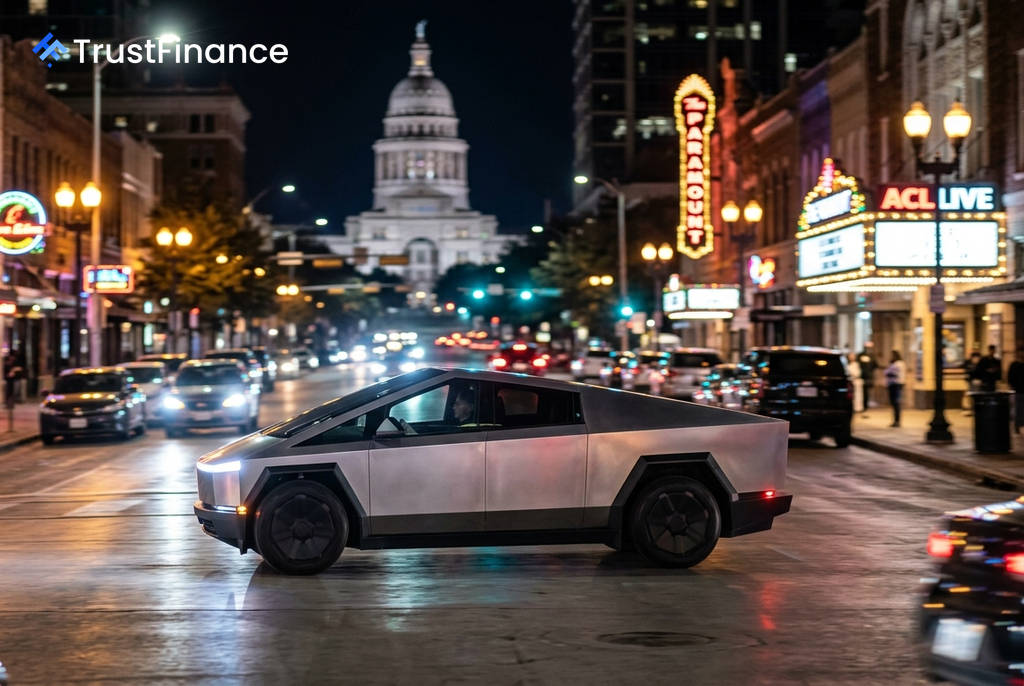
Tesla is scheduled to unveil its purpose-built, two-seater Cybercab on Thursday, a pivotal moment for the company's long-promised robotaxi service. The event in Austin, Texas, comes as investors closely watch for tangible progress on the autonomous driving ambitions that underpin much of the automaker's high valuation.
The Cybercab Unveiling
The "Cybercab Launch Event" is scheduled to begin at 5:45 p.m. ET, according to a post on X by a company engineer. The vehicle, which is designed without a steering wheel or pedals, is central to CEO Elon Musk's vision of a vast, autonomous ride-hailing network.
While Tesla currently operates a limited robotaxi service in some Texas and Florida cities using its Model Y vehicles, the Cybercab is intended to be the primary model for the future fleet. Production reportedly began in April 2026, though Musk cautioned at the time that the initial ramp-up would be "very slow."
High Stakes for Valuation
Analysts and investors view the success of Tesla's driverless vehicle program as a key justification for its $1.4 trillion market capitalization, which far exceeds that of legacy automakers. The focus on future autonomous technology is particularly critical as Tesla's core electric vehicle business faces intensifying global competition, especially from Chinese manufacturers.
 Ad
Musk has previously stated that the Cybercab will eventually become Tesla's highest-volume vehicle. The plan involves a global network of robotaxis that would also allow individual Tesla owners to add their personal vehicles to the ride-hailing fleet when not in use.
A History of Delays and Challenges
Despite years of ambitious forecasts from Musk, the deployment of a widespread robotaxi service has consistently fallen short of targets. A July 2025 prediction that the network would expand at a "hyper-exponential rate" did not materialize, and executives have since adopted a more cautious tone.
The company faces significant operational and regulatory hurdles. Federal regulations limit the number of vehicles without manual controls that a manufacturer can sell, and Tesla has not yet secured permits in the key market of California to test driverless vehicles without a safety driver or operate a commercial robotaxi service.
According to state records cited by Reuters, Tesla's progress in Texas lags behind competitors. As of Wednesday, Tesla had 420 autonomous vehicles registered in the state, including 45 Cybercabs. In contrast, Alphabet's Waymo, the current U.S. leader in the sector, has 988 vehicles registered there.
Read next
More on Stocks
FTC Orders Walmart, Uber, Delta to Disclose Data on Personalized Pricing
The U.S. Federal Trade Commission is demanding nine major companies, including leading retail, travel, and gig economy firms, to provide information on how they use consumer data for setting individual prices and wages.

Google Launches Gemini 4 Carbon AI Model to Bolster Cybersecurity Capabilities
Alphabet's Google has unveiled Gemini 4 Carbon, its latest AI model specifically designed for advanced cybersecurity tasks like vulnerability detection and secure code generation. The launch escalates competition with rivals OpenAI and Anthropic in the enterprise AI market.

Oracle Shares Surge After Unveiling $225 Billion Revenue Target for 2030
Oracle stock rose sharply after the company presented a long-term financial outlook targeting at least $225 billion in annual revenue by fiscal 2030, driven by its expanding AI infrastructure business.

DOJ Scrutinizes Nvidia's $12.9B Hugging Face Deal Amid Broader Antitrust Probe, Sources Say
The U.S. Department of Justice is reportedly examining Nvidia's planned $12.93 billion acquisition of AI platform Hugging Face as part of a wider, ongoing antitrust investigation into the chipmaker's market conduct.