
Story
South Korean Retail Investors Sell Kospi Shares at Record Pace After July Rout
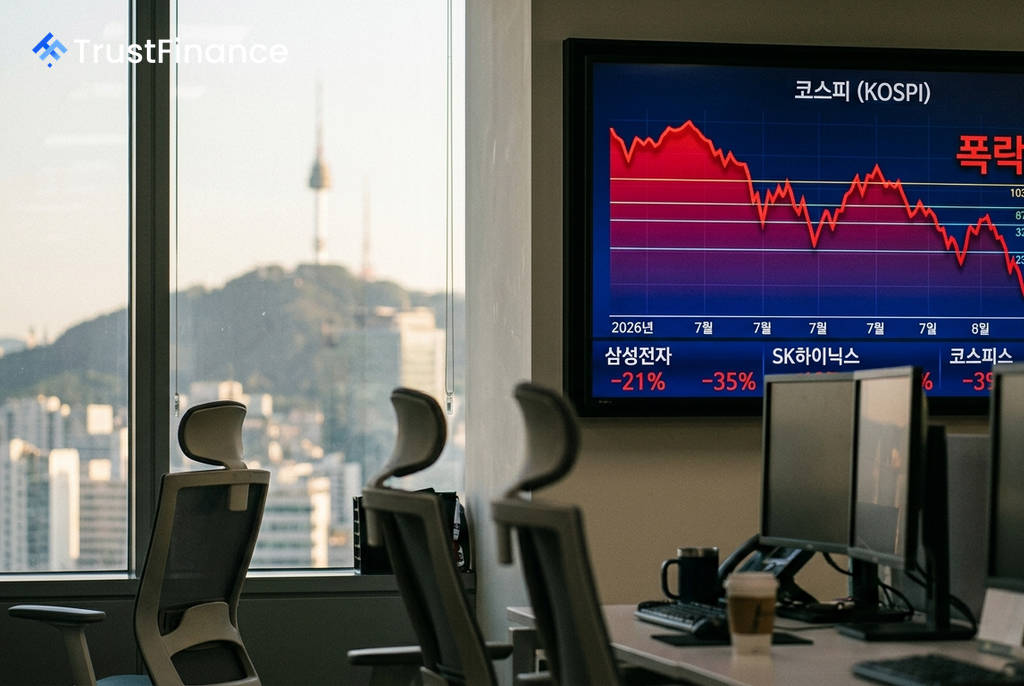
South Korean retail investors sold a record amount of Kospi-listed shares on Friday, a significant retreat from the market after July's severe reversal damaged confidence, Bloomberg reported.
The selling pressure follows a period of extreme volatility that saw the benchmark index suffer its steepest monthly decline since the global financial crisis.
A Record Month of Volatility
The Kospi index ended July with a 22% loss, despite a sharp 18% rebound on the final trading day of the month. The scale of the market swings was so severe that trading in index constituents was halted four times during July, setting a new record for circuit-breaker suspensions.
This downturn came after a period of intense retail buying in May and June, when individual traders invested approximately 78 trillion won ($54.2 billion) into Kospi shares. That influx was partly encouraged by a government market-reform campaign and the recent introduction of single-stock leveraged exchange-traded funds (ETFs).
Leveraged Products Blamed for Swings
Market analysts suggest these leveraged products, which offer amplified exposure to single companies, contributed to the heightened volatility. As the market turned, leveraged investors were forced into a rush to exit their concentrated positions, exacerbating the downward spiral.
 Ad
In response, South Korean authorities temporarily suspended new listings of single-stock leveraged ETFs in mid-July. Officials have since pledged to introduce further measures to stabilize the market and restrict retail access to such high-risk financial products.
AI Stocks at the Epicenter
The sell-off was heavily concentrated in South Korea’s dominant AI and semiconductor firms, which have an outsized impact on the broader market. Key losses in July included:
- Samsung Electronics (KS:005930): Dropped 21%
- SK Hynix (KS:000660): Fell 35%
Together, these two memory-chip manufacturers account for more than half of the Kospi's weighting. Despite the sharp correction, analysts note that the decline was more reflective of unwinding crowded trades and excessive leverage rather than a fundamental collapse in the investment case for artificial intelligence. Further volatility is considered possible as investors continue to reduce leveraged positions.
Read next
More on Stocks
FTC Orders Walmart, Uber, Delta to Disclose Data on Personalized Pricing
The U.S. Federal Trade Commission is demanding nine major companies, including leading retail, travel, and gig economy firms, to provide information on how they use consumer data for setting individual prices and wages.

Google Launches Gemini 4 Carbon AI Model to Bolster Cybersecurity Capabilities
Alphabet's Google has unveiled Gemini 4 Carbon, its latest AI model specifically designed for advanced cybersecurity tasks like vulnerability detection and secure code generation. The launch escalates competition with rivals OpenAI and Anthropic in the enterprise AI market.

Oracle Shares Surge After Unveiling $225 Billion Revenue Target for 2030
Oracle stock rose sharply after the company presented a long-term financial outlook targeting at least $225 billion in annual revenue by fiscal 2030, driven by its expanding AI infrastructure business.

DOJ Scrutinizes Nvidia's $12.9B Hugging Face Deal Amid Broader Antitrust Probe, Sources Say
The U.S. Department of Justice is reportedly examining Nvidia's planned $12.93 billion acquisition of AI platform Hugging Face as part of a wider, ongoing antitrust investigation into the chipmaker's market conduct.