
Story
SK Hynix Shares Plunge Over 15% in Record Drop Amid Profit-Taking and Market Rout
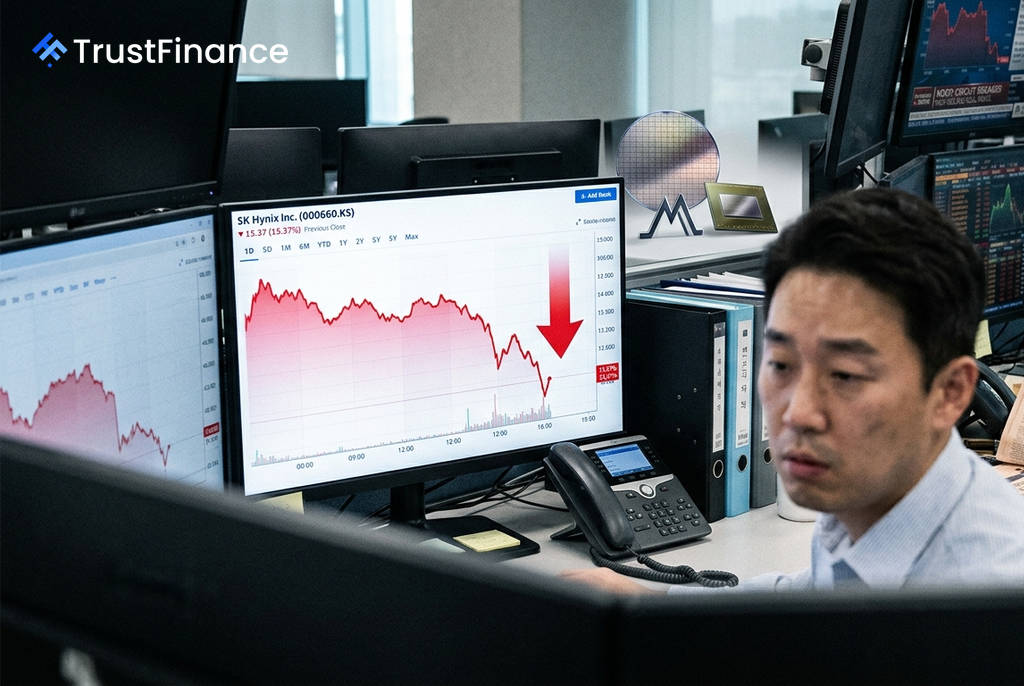
Shares of SK Hynix Inc. (KS:000660) plummeted 15.4% on Monday to close at ₩1,845,000, marking the chipmaker's largest single-day decline on record. The historic drop was driven by a confluence of heavy profit-taking following its recent U.S. stock market debut, mounting concerns about a peak in the semiconductor cycle, and a wider market collapse that triggered a trading halt.
Post-Debut Pressure and Arbitrage
The sell-off followed the company's strong debut on the Nasdaq last Friday, which prompted investors to lock in gains after a significant rally. The new listing also created a valuation gap that traders sought to exploit. According to Daniel Yoo, a global strategist at Yuanta Securities, the U.S. listing resulted in a discount rate of more than 20% between its American depositary receipts (ADRs) and its shares in Seoul, creating arbitrage pressure.
Yoo also noted that the offering acted as an "additional share issuance," increasing the supply of stock available and contributing to what he described as a "correctional period for SK Hynix domestically."
Sector-Wide Headwinds and Earnings Concerns
Adding to the pressure were growing worries about a potential near-term peak in the semiconductor market. Analysts at Korea Investment & Securities fueled the negative sentiment by forecasting SK Hynix’s second-quarter operating profit to come in below the market consensus.
 Ad
The firm cited lower-than-expected average selling prices for its crucial high-bandwidth memory (HBM) products, stoking fears of a sector "peak-out." This outlook weighed on the broader chip sector throughout the trading session.
Broader Market Turmoil Halts Trading
The company-specific issues were exacerbated by a severe downturn in the wider South Korean market. The Korea Exchange (KRX) activated a circuit breaker after the benchmark KOSPI index plunged more than 8% from the previous session's close, a move attributed to escalating geopolitical tensions in the Middle East. Foreign and institutional investors were significant net sellers during the session.
Despite the sharp decline, some analysts viewed the sell-off as a technical adjustment rather than a fundamental shift. Phillip Wool, chief research officer at Rayliant Global Advisors, characterized the activity as portfolio rebalancing that "doesn’t really speak to any sort of reduction in the excitement about AI hardware."