
Story
SK Hynix Shares Plunge in Record Sell-Off After Nasdaq Debut
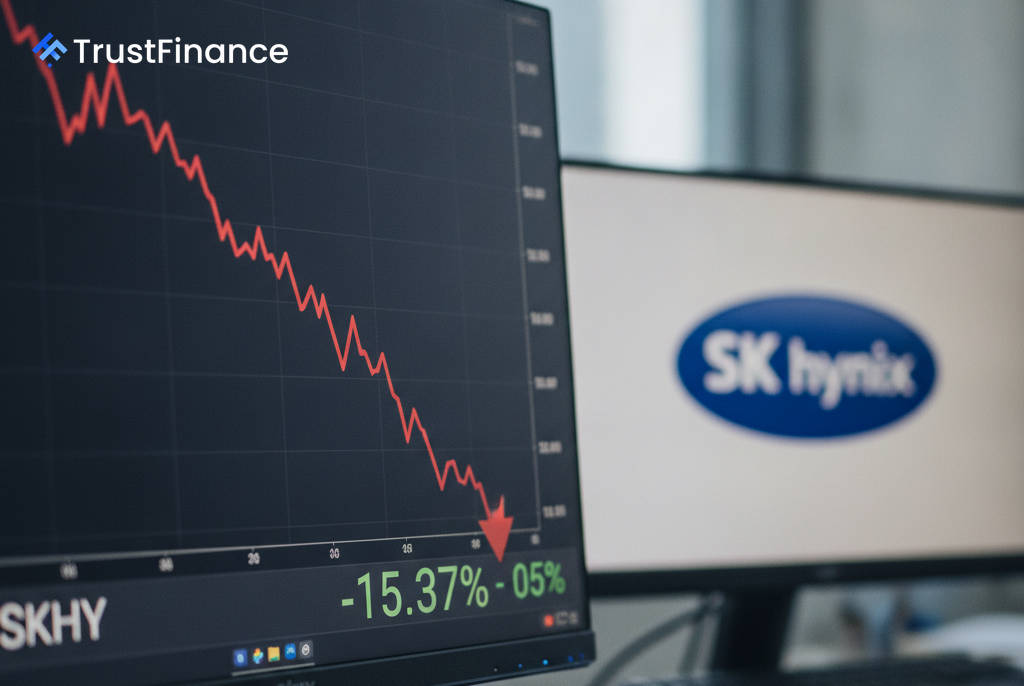
Shares of SK Hynix Inc. (KRX: 000660) plummeted 15.4% in their largest single-day drop on record, as a confluence of post-IPO profit-taking, valuation concerns, and a sharp geopolitical-driven market downturn roiled South Korean equities.
Post-Debut Pressure and Valuation Gaps
The sell-off followed the memory chip giant's successful Nasdaq debut last week. Investors appeared to be locking in profits after a significant rally leading up to the U.S. listing. The new American Depositary Receipt (ADR) has also created a new benchmark for the company's valuation, leading to arbitrage pressure on the domestic shares.
According to Daniel Yoo, global strategist at Yuanta Securities, the new listing has resulted in a discount rate of more than 20% between SK Hynix's U.S. and Korean-listed shares. Yoo noted the offering acted as an "additional share issuance," increasing the supply of stock and contributing to a "correctional period for SK Hynix domestically."
'Peak-Out' Fears and Earnings Outlook
Adding to investor concerns, analysts at Korea Investment & Securities forecast SK Hynix’s second-quarter operating profit to come in below market consensus. The firm cited lower-than-expected average selling prices for high-bandwidth memory (HBM), a critical component for AI accelerators.
 Ad
This forecast stoked fears of a potential "peak-out," where the semiconductor cycle could be nearing a near-term top after a period of supercharged growth. This sentiment weighed on the broader chip sector throughout the trading session.
Broader Market Rout
The decline in SK Hynix shares occurred amid a wider market collapse. The Korea Exchange (KRX) activated a market-wide circuit breaker after the benchmark KOSPI index plunged more than 8% from the previous session's close.
Market sources attributed the rout to renewed geopolitical tensions in the Middle East following reports of U.S.-Iran strikes. Phillip Wool, chief research officer at Rayliant Global Advisors, suggested the selling in SK Hynix was more likely a portfolio rebalancing exercise rather than a signal of a deteriorating outlook for the AI hardware industry.