
Story
Japanese Yen Hits 38-Year Low, Breaching 163 Per Dollar on Oil Surge
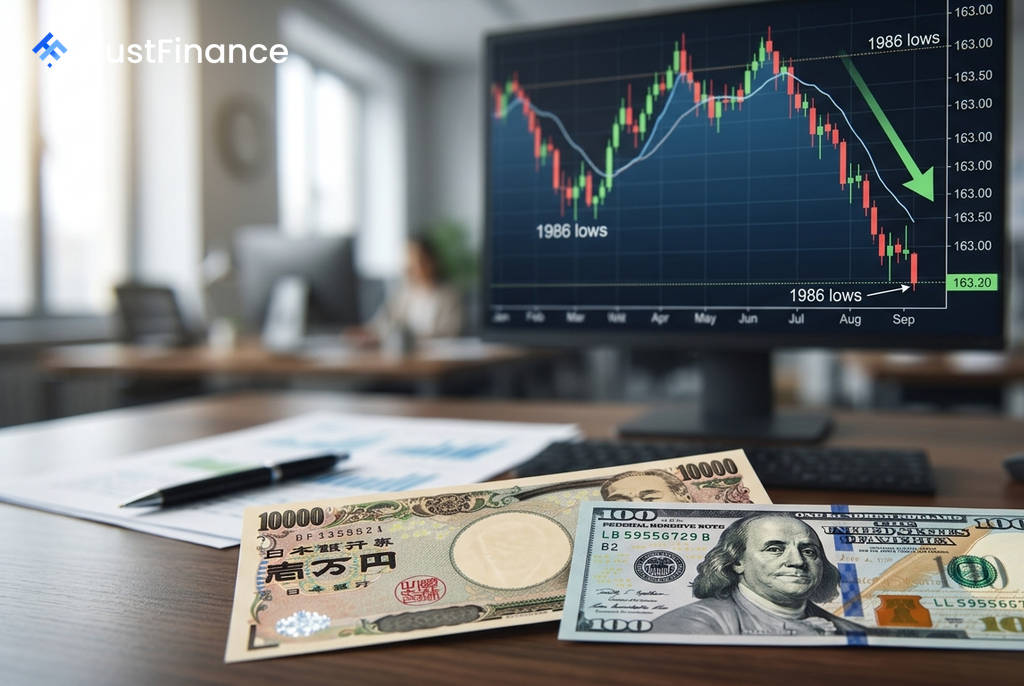
The Japanese yen fell past 163 per U.S. dollar for the first time since 1986, hitting a fresh 38-year low as rising oil prices and higher U.S. Treasury yields intensified pressure on the currency. Most other Asian currencies traded in narrow ranges on Wednesday amid escalating geopolitical tensions in the Middle East.
Yen Pressured by Energy Costs and Yields
The USD/JPY pair rose as high as 163.24 overnight, according to market data, a level unseen since 1986. The move highlights the yen's vulnerability to external factors, particularly the rising cost of crude oil, a critical import for Japan's economy.
Elevated energy prices, fueled by ongoing conflicts in the Middle East, tend to worsen Japan's trade balance and weigh on the yen. The currency's decline came despite the Japanese government unveiling its "Honebuto no Hoshin" economic blueprint, which targets over JPY 370 trillion ($2.3 trillion) in investment by fiscal 2040 to boost long-term growth. Investors remain on high alert for any signs of direct intervention from Japanese authorities to support the currency.
Geopolitical Tensions Weigh on Asian Currencies
Broader market sentiment in Asia was cautious following reports of an 11th consecutive night of U.S. strikes against Iran and threats from Yemen's Houthi group to blockade key shipping routes. These developments have stoked fears over potential disruptions to global energy supplies.
 Ad
The impact of higher energy costs was evident across the region's oil-importing economies. The Indonesian rupiah, Thai baht, Indian rupee, and Malaysian ringgit all weakened against the U.S. dollar. The U.S. Dollar Index, which measures the greenback against a basket of currencies, eased slightly to 101.15 but remained firm after rising overnight on the back of geopolitical tensions and higher Treasury yields.
Won Shows Resilience as Investors Look Ahead
In a notable exception, the South Korean won held relatively firm, outperforming several regional peers. The won has been supported by investor optimism over Seoul's plans to internationalize the currency, which include establishing an offshore market and easing foreign-exchange regulations.
According to Wei Liang Chang, an FX and Credit Strategist at DBS, the reforms should help anchor the currency. The brokerage also noted that a narrowing U.S.-South Korea interest rate differential and a widening trade surplus from strong semiconductor exports are providing fundamental support. Market participants are now looking ahead to key central bank meetings, including decisions from the Bank of Japan and the U.S. Federal Reserve next week, to gauge how policymakers will navigate the global inflation outlook.
Read next
More on Forex
Polish Zloty Hits 11-Month Low Against Euro on Energy Price Pressure
The Polish zloty weakened to 4.410 against the euro, its lowest point since November 2023, as rising energy prices and caution ahead of a U.S. Federal Reserve decision weighed on the currency.

Sterling Slips as Dollar Strengthens Ahead of Fed Decision and UK Budget
The British pound lost ground against a resurgent U.S. dollar on Wednesday as market attention shifted from tech sector volatility to upcoming central bank decisions and the UK budget announcement.

Eurozone Bond Yields Climb as French Fiscal Concerns Return Ahead of Fed, ECB Decisions
Yields on French and German government bonds rose as relief from a ratings affirmation for France proved temporary, with investors refocusing on fiscal challenges and awaiting key policy verdicts from the U.S. Federal Reserve and the European Central Bank.

Canadian Dollar Slips as Markets Await Bank of Canada, Fed Decisions
The Canadian dollar edged lower against its U.S. counterpart, snapping a seven-day winning streak as investors adopted a cautious stance ahead of Wednesday's key interest rate announcements from both the Bank of Canada and the U.S. Federal Reserve.