
Story
Japanese Financials, Domestic Stocks in Focus as BOJ Rate Hike Bets Rise
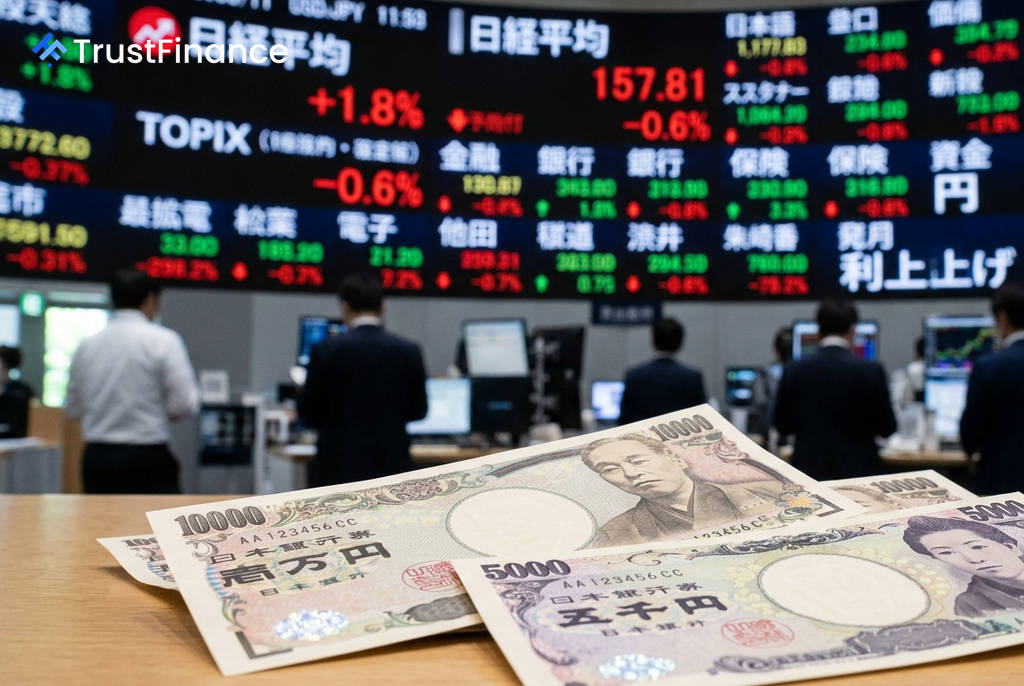
Markets are increasingly anticipating that the Bank of Japan will raise interest rates in the coming months, prompting a re-evaluation of Japanese equities as investors weigh which sectors could benefit from tighter monetary policy.
Analysis suggests that a rate hike would most directly benefit financial firms while creating a sharp divergence between domestically-focused companies and major exporters.
Financial Sector Positioned to Gain
Japanese financial institutions are widely seen as primary beneficiaries of a rising rate environment. For banks, higher policy rates can lead to wider net interest margins, as the interest charged on loans typically reprices faster than rates paid on deposits.
Insurers stand to gain from higher reinvestment yields, allowing them to deploy new premium income into government bonds and other fixed-income assets offering better returns. Brokerage firms could also see an indirect benefit from increased bond market activity and portfolio adjustments as the central bank normalizes policy.
Yen Strength Divides Domestic and Export Firms
A key consequence of BOJ tightening is an expected appreciation of the Japanese yen, which presents both opportunities and challenges. The yen strengthened to 157.81 per dollar on September 3 amid growing bets on a rate hike, according to the source material.
 Ad
A stronger yen lowers the cost of imported goods, including energy and raw materials, potentially providing a tailwind for:
- Retail and consumer staples
- Transportation and utilities
- Domestic services, contingent on resilient household spending
Conversely, export-oriented industries like automakers, electronics manufacturers, and machinery producers face significant headwinds. A stronger currency makes their products less competitive globally and reduces the yen-denominated value of their overseas earnings.
Bond Market Signals Tighter Conditions
The Japanese government bond (JGB) market is already reflecting expectations of tighter financial conditions. The 10-year JGB auction yield rose to 2.995% on August 31, while the 30-year yield reached 4.1% on September 2.
This upward trend in borrowing costs underscores the pressure on highly leveraged sectors, including real estate and construction. Meanwhile, markets were reportedly pricing in a roughly 90% probability of a 25-basis-point rate increase from the BOJ at its September meeting.
Read next
More on Stocks
FTC Orders Walmart, Uber, Delta to Disclose Data on Personalized Pricing
The U.S. Federal Trade Commission is demanding nine major companies, including leading retail, travel, and gig economy firms, to provide information on how they use consumer data for setting individual prices and wages.

Google Launches Gemini 4 Carbon AI Model to Bolster Cybersecurity Capabilities
Alphabet's Google has unveiled Gemini 4 Carbon, its latest AI model specifically designed for advanced cybersecurity tasks like vulnerability detection and secure code generation. The launch escalates competition with rivals OpenAI and Anthropic in the enterprise AI market.

Oracle Shares Surge After Unveiling $225 Billion Revenue Target for 2030
Oracle stock rose sharply after the company presented a long-term financial outlook targeting at least $225 billion in annual revenue by fiscal 2030, driven by its expanding AI infrastructure business.

DOJ Scrutinizes Nvidia's $12.9B Hugging Face Deal Amid Broader Antitrust Probe, Sources Say
The U.S. Department of Justice is reportedly examining Nvidia's planned $12.93 billion acquisition of AI platform Hugging Face as part of a wider, ongoing antitrust investigation into the chipmaker's market conduct.