
Story
German Chemical Industry Sentiment Turns Positive for First Time in Four Years, Ifo Reports
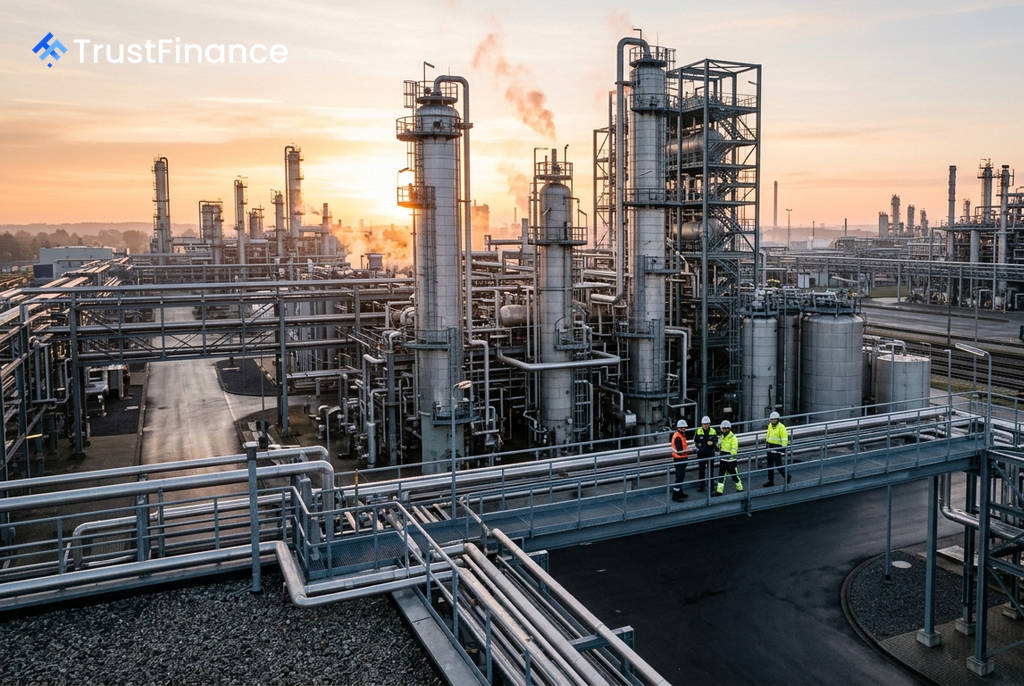
Business sentiment in Germany's chemical sector turned positive in August for the first time in four years, driven by a sharp improvement in assessments of current conditions, according to a key survey from the Ifo institute. The economic research group cautioned, however, that the rebound is heavily dependent on temporary global supply disruptions and does not yet signal a broad-based recovery for the struggling industry.
A Fragile Rebound
The Ifo business climate index for the chemical industry surged to -2.4 points in August from a seasonally adjusted -26.3 in July, the Munich-based institute reported. A key component of the index, the gauge for current business conditions, climbed to +11.6 points from -14.6 the prior month, marking its first positive reading since July 2022.
According to Ifo, the upswing is largely a result of supply chain issues affecting Asian and Middle Eastern producers, which has temporarily boosted demand for German chemical products. Ifo industry expert Anna Wolf told Reuters that this "substitution effect disappears" as soon as those international supply chains normalize, suggesting the advantage is temporary.
Underlying Weakness Persists
Despite the improved mood, underlying fundamentals for the sector remain weak. German chemical production is still approximately 20% below 2021 levels, Ifo noted. The survey also revealed that capacity utilization has shown little improvement, standing at 73.2% so far in the third quarter.
 Ad
This figure is well below both the long-term average of 80.4% and the levels typically needed for plants to operate economically. The low utilization rate suggests that stronger demand is largely being met from inventories rather than new production. Consequently, chemical firms continue to plan for job cuts as excess labor capacity persists.
Structural Hurdles and Corporate Outlook
The temporary boost has been reflected in some corporate results, with industry leaders BASF, Evonik, and Brenntag recently raising their full-year profit forecasts, citing improved pricing and demand from supply disruptions outside Europe.
However, Wolf cautioned that it was "too early to speak of a recovery," as significant structural challenges remain unresolved. These include high gas prices, concerns over energy supply security, and rising CO2 costs, which continue to weigh on the long-term competitiveness of Germany's energy-intensive chemical sector.
Read next
More on Stocks
FTC Orders Walmart, Uber, Delta to Disclose Data on Personalized Pricing
The U.S. Federal Trade Commission is demanding nine major companies, including leading retail, travel, and gig economy firms, to provide information on how they use consumer data for setting individual prices and wages.

Google Launches Gemini 4 Carbon AI Model to Bolster Cybersecurity Capabilities
Alphabet's Google has unveiled Gemini 4 Carbon, its latest AI model specifically designed for advanced cybersecurity tasks like vulnerability detection and secure code generation. The launch escalates competition with rivals OpenAI and Anthropic in the enterprise AI market.

Oracle Shares Surge After Unveiling $225 Billion Revenue Target for 2030
Oracle stock rose sharply after the company presented a long-term financial outlook targeting at least $225 billion in annual revenue by fiscal 2030, driven by its expanding AI infrastructure business.

DOJ Scrutinizes Nvidia's $12.9B Hugging Face Deal Amid Broader Antitrust Probe, Sources Say
The U.S. Department of Justice is reportedly examining Nvidia's planned $12.93 billion acquisition of AI platform Hugging Face as part of a wider, ongoing antitrust investigation into the chipmaker's market conduct.