
Story
FTSE 100 Advances as Mining Sector Rallies on Stronger Metal Prices
Summary
The UK's blue-chip FTSE 100 index rose on Wednesday, led by a strong performance in mining stocks as metal prices gained. Investors also digested a UK inflation report that met expectations.
London's FTSE 100 index gained on Wednesday, buoyed by a significant rally in mining shares that tracked a rise in global metals prices. The positive sentiment came as investors processed UK inflation data that aligned with forecasts and monitored geopolitical developments in the Middle East.
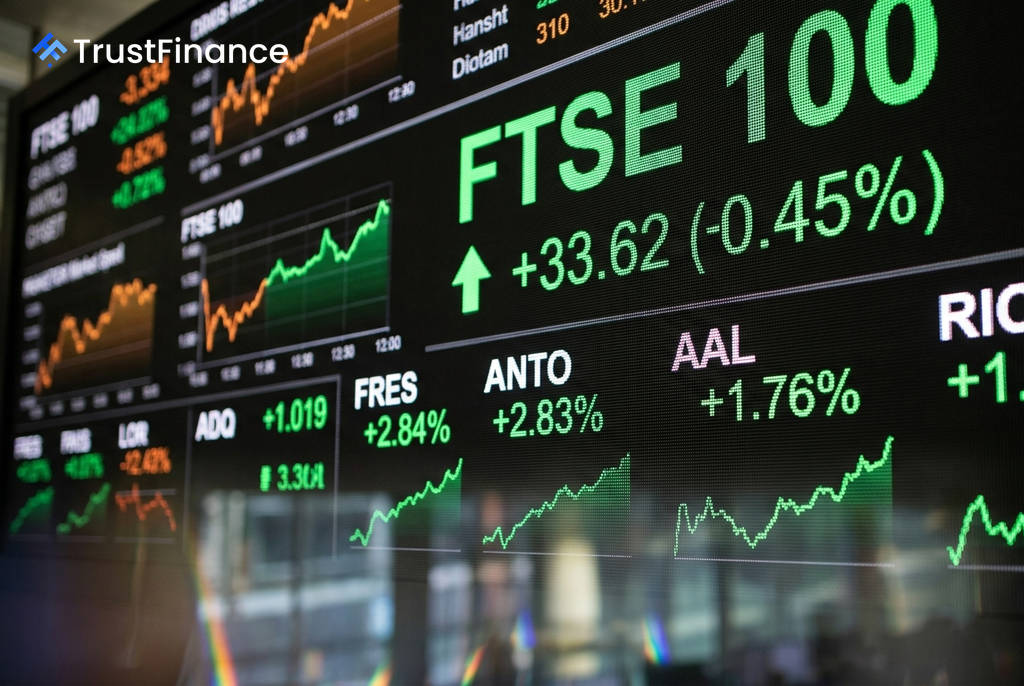
As of 07:27 GMT, the FTSE 100 was up 0.45%, according to Investing.com data. Gains were also seen across Europe, with Germany’s DAX rising 0.26% and France’s CAC 40 adding 0.29%.
Miners and Corporate Earnings Drive Gains
The primary driver for the UK's benchmark index was the strength in its heavyweight mining sector. The rally was fueled by rising prices for precious and industrial metals amid supply concerns.
- Fresnillo led the sector, climbing 2.88%.
- Antofagasta shares added 2.8%.
- Anglo American and Rio Tinto rose 1.86% and 1.16%, respectively.
In corporate news, housebuilder Barratt Redrow was the top performer on the index, jumping 6.8%. The company reported an adjusted pre-tax profit of £572.8 million, beating the consensus forecast of £540.3 million, though it trimmed its completion guidance for fiscal year 2027 due to planning delays.
Conversely, shares in WH Smith fell after the retailer said it expects annual pre-tax profit to be at the lower end of its forecast range, around £75 million, citing higher promotional costs.
 Ad
AdUK Inflation Meets Expectations
Data released by the Office for National Statistics showed UK inflation accelerated slightly in August, in line with economist expectations. The consumer price index rose to 3.1% year-over-year, up from 2.9% in July, primarily driven by higher motor fuel costs.
Core CPI, which excludes volatile items like energy and food, held steady at 2.6%. James Smith, an economist at ING, noted that the pickup was "widely expected" and that there is currently "very little sign" that the energy price shock is broadening to other parts of the economy. This suggests that the Bank of England may not be pressured into an immediate policy change based on this data alone.
Broader Market and Geopolitical Context
Investors remained watchful of geopolitical tensions after China's foreign minister called for de-escalation and dialogue between the United States and Iran. Despite the tensions, crude oil prices declined, with Brent crude falling 0.93% to $107.74 a barrel and WTI crude dropping 1.47% to $104.27.
In the currency market, the British pound was little changed against the dollar, trading at $1.3479.
Read next
More on Stocks
U.S. Stock Futures Rebound as Markets Digest Hawkish Fed Rate Hike
U.S. stock futures rose in overnight trading, recovering from a sell-off triggered by the Federal Reserve's first interest rate hike in three years. Falling oil prices and positive corporate news helped lift market sentiment.

Holtec Suspends $900 Million IPO Amid Challenging Market Conditions
Nuclear services company Holtec Nuclear Corp. has postponed its U.S. initial public offering, which aimed to raise as much as $900 million, citing unfavorable market conditions and weak performance from recently listed peers in the sector.

Snap Stock Climbs on Enterprise Push for New Specs AR Glasses
Shares of Snap Inc. gained in after-hours trading after the company unveiled its new $2,195 Specs AR glasses and announced key enterprise partnerships with Salesforce, Nvidia, and AWS.

Gold Prices Fall as Hawkish Fed Outlook Boosts US Dollar
Gold prices declined after the Federal Reserve raised interest rates by 25 basis points and signaled further tightening, strengthening the U.S. dollar and increasing the opportunity cost of holding the non-yielding metal.