
Story
Clorox Dividend Sustainability Questioned as Payouts Exceed Free Cash Flow
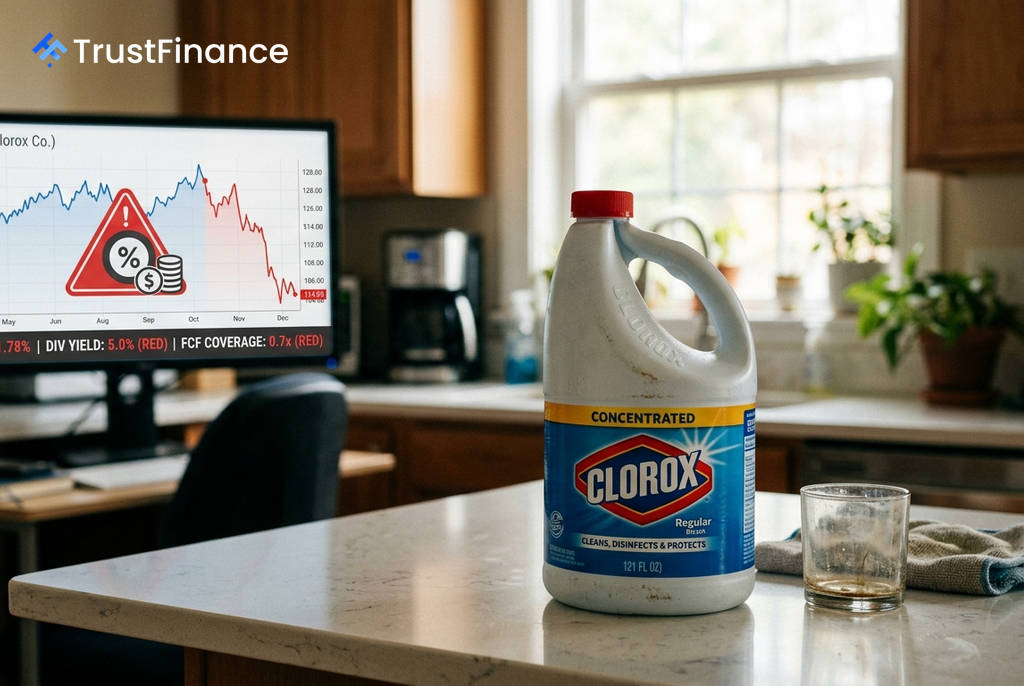
Clorox (NYSE: CLX) is drawing attention from income-focused investors with a dividend yield of approximately 5% and a nearly five-decade history of annual payout increases. However, a closer look at the company's financials reveals a significant shortfall, with its dividend distributions currently exceeding its free cash flow generation.
Payouts Outpace Cash Generation
The core issue for investors is the gap between the company's cash generation and its dividend commitment. According to recent financial data, Clorox's levered free cash flow stands at $380 million, which is insufficient to cover its annualized dividend payments of approximately $563 million. This results in a cash flow coverage ratio of less than 0.7x, a metric where anything below 1.0x is typically considered a warning sign for dividend sustainability.
This pressure comes as Clorox is on the verge of a major milestone. With 49 consecutive years of dividend increases, the company is just one year away from achieving "Dividend King" status, an elite designation for companies with at least 50 straight years of raises. This long-standing commitment often means management will go to great lengths to avoid a dividend freeze or cut.
Fundamental Headwinds Weigh on Performance
The cash flow strain is symptomatic of broader business challenges. Clorox has seen its revenue decline from $7.39 billion to $6.72 billion over the past four fiscal years. More recently, the company reported a roughly 3% drop in domestic sales, with its key Household segment declining 11%.
 Ad
Several other financial metrics point to operational and liquidity pressures:
- Tight Liquidity: The company's current ratio is 0.7x, indicating that its short-term liabilities exceed its short-term assets.
- Analyst Concerns: Six analysts have recently revised their earnings estimates for Clorox downward.
- Cost Pressures: The company faces an estimated $100 million negative impact on its cost of goods sold due to tariff headwinds.
Investor Outlook Remains Cautious
The situation presents a classic bull versus bear debate for investors. The bull case rests on the belief that management will protect its dividend streak at all costs, supported by the pricing power of iconic brands like Clorox and Pine-Sol. A potential recovery in cash flow in the second half of the year could also alleviate pressure.
Conversely, the bear case highlights the risk of a "dividend trap," where a high yield masks underlying financial weakness. The combination of declining revenue, shrinking earnings estimates, and a liquidity squeeze increases the risk of a dividend freeze, which could trigger a sell-off from income-oriented shareholders. While some analysts have price targets above the current stock price, the consensus view suggests the stock is fully valued, offering limited upside.
Read next
More on Stocks
FTC Orders Walmart, Uber, Delta to Disclose Data on Personalized Pricing
The U.S. Federal Trade Commission is demanding nine major companies, including leading retail, travel, and gig economy firms, to provide information on how they use consumer data for setting individual prices and wages.

Google Launches Gemini 4 Carbon AI Model to Bolster Cybersecurity Capabilities
Alphabet's Google has unveiled Gemini 4 Carbon, its latest AI model specifically designed for advanced cybersecurity tasks like vulnerability detection and secure code generation. The launch escalates competition with rivals OpenAI and Anthropic in the enterprise AI market.

Oracle Shares Surge After Unveiling $225 Billion Revenue Target for 2030
Oracle stock rose sharply after the company presented a long-term financial outlook targeting at least $225 billion in annual revenue by fiscal 2030, driven by its expanding AI infrastructure business.

DOJ Scrutinizes Nvidia's $12.9B Hugging Face Deal Amid Broader Antitrust Probe, Sources Say
The U.S. Department of Justice is reportedly examining Nvidia's planned $12.93 billion acquisition of AI platform Hugging Face as part of a wider, ongoing antitrust investigation into the chipmaker's market conduct.