
Story
Canadian Grocers Alter Supply Chains as Consumer Boycott of U.S. Products Gains Steam
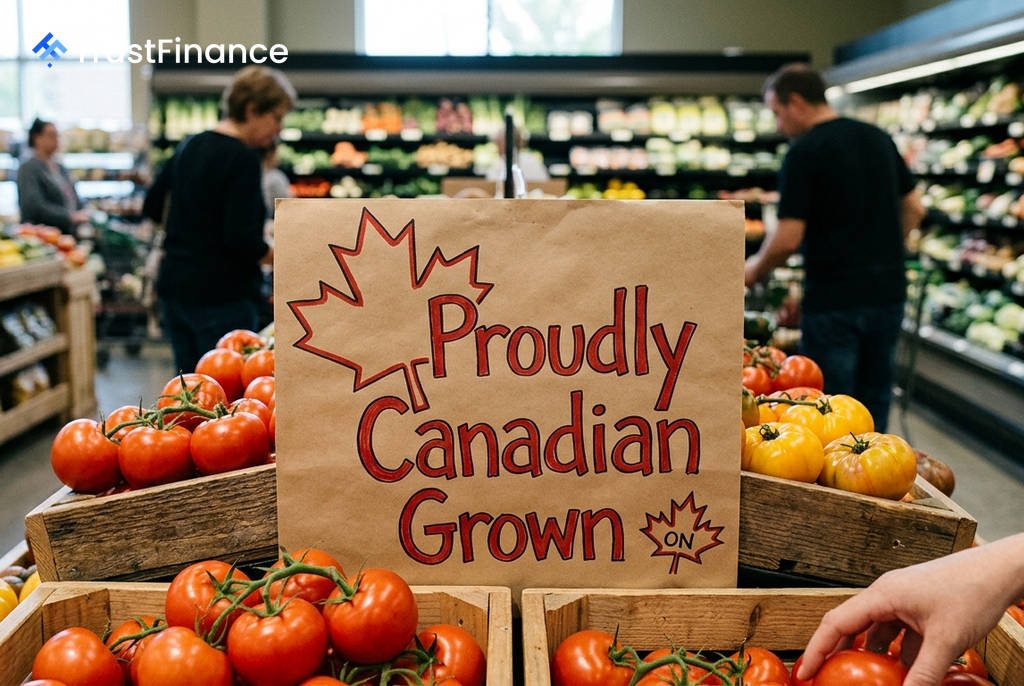
A consumer-led boycott of U.S. products is reshaping grocery aisles across Canada, forcing retailers to adapt their supply chains and marketing in response to escalating trade tensions. The movement is prompting grocers to prioritize domestic goods and seek alternative international suppliers to meet customer demand, according to a Reuters report.
Retailers Respond to Consumer Pressure
Major Canadian food retailers are actively changing their procurement and in-store presentation. Loblaw Cos, the nation's largest grocer, has reintroduced prominent maple leaf signage to identify Canadian products and a special tag to flag items affected by U.S. tariffs. Metro, the third-largest grocer, confirmed it is prioritizing local products.
Independent grocers are also feeling the pressure. Giancarlo Trimarchi, president of Vince’s Market in Ontario, told Reuters his stores now source approximately 90% of their produce from Canada, switching to Quebec strawberries over U.S. imports. "We were always put in a position where you had to balance quality versus price. Now it’s quality versus price versus country of origin," Trimarchi said.
Shifting Import Dynamics
The boycott is reflected in official trade data. While the U.S. remains Canada's largest supplier of fresh produce, its market share is declining.
 Ad
- The share of Canada's vegetable imports from the U.S. fell to 62.6% in July, down from 69% in the same month of 2023, according to the latest government data cited by Reuters.
- More than half of Canada's fruit imports still originated from the U.S. as of July.
"There has been a permanent change in the Canadian psyche," said Gary Sands of the Canadian Federation of Independent Grocers, noting the movement has become more aggressive than in previous years.
Building New Supply Chains
To address the challenges of sourcing produce during Canada's harsh winters, grocers are diversifying away from the U.S. Gordon Dean, owner of Mike Dean Local Grocer, reported selling more produce from countries like Spain, Brazil, and Honduras. He noted that once new, more diversified supply chains are established, retailers are in a "safer position."
This shift is supported by government initiatives, including a C$3 billion investment over 10 years to build more greenhouses and increase domestic food production. However, experts caution that economics could eventually outweigh nationalism. Mike von Massow, a professor at the University of Guelph, suggested that an easing of political tensions could prompt a return to American products if they remain a cheaper alternative.
Read next
More on Stocks
FTC Orders Walmart, Uber, Delta to Disclose Data on Personalized Pricing
The U.S. Federal Trade Commission is demanding nine major companies, including leading retail, travel, and gig economy firms, to provide information on how they use consumer data for setting individual prices and wages.

Google Launches Gemini 4 Carbon AI Model to Bolster Cybersecurity Capabilities
Alphabet's Google has unveiled Gemini 4 Carbon, its latest AI model specifically designed for advanced cybersecurity tasks like vulnerability detection and secure code generation. The launch escalates competition with rivals OpenAI and Anthropic in the enterprise AI market.

Oracle Shares Surge After Unveiling $225 Billion Revenue Target for 2030
Oracle stock rose sharply after the company presented a long-term financial outlook targeting at least $225 billion in annual revenue by fiscal 2030, driven by its expanding AI infrastructure business.

DOJ Scrutinizes Nvidia's $12.9B Hugging Face Deal Amid Broader Antitrust Probe, Sources Say
The U.S. Department of Justice is reportedly examining Nvidia's planned $12.93 billion acquisition of AI platform Hugging Face as part of a wider, ongoing antitrust investigation into the chipmaker's market conduct.