
Story
Barclays: Global Energy Sector Needs $3.6 Trillion in Annual Investment by 2027
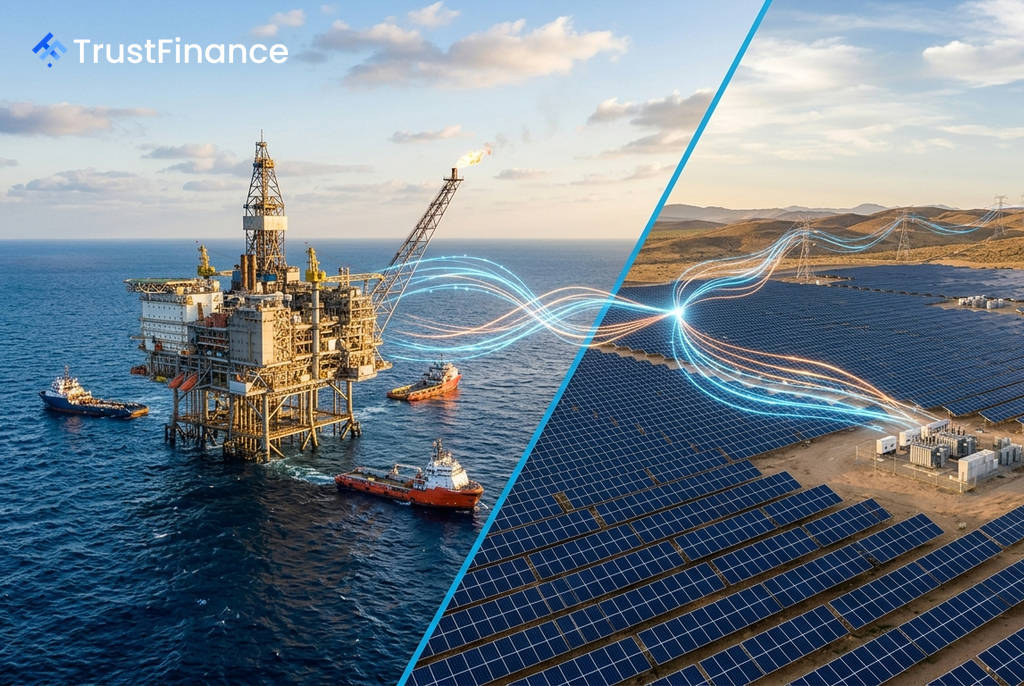
The global energy sector will require approximately $3.6 trillion in annual investment by 2027 as demand from artificial intelligence, electrification, and energy security concerns outpaces existing supply and infrastructure, according to a new report from Barclays analysts.
This level of spending, projected to grow at over 5% annually, represents one of the most significant capital allocation opportunities of the next decade, spanning the entire energy value chain.
A New 'Energy Stack' Era
Barclays argues the global economy is not simply transitioning from fossil fuels to renewables but entering an era of an "energy stack," where demand for both traditional and low-carbon sources will rise in tandem. The bank projects that global energy demand will expand at a compound annual growth rate of 1.9% from 2025 to 2050.
This dual-track demand growth is driven by a confluence of factors that are straining the current system. The investment need covers a broad range of sectors, including oil and gas, LNG, pipelines, power generation, grids, renewables, energy storage, and electrification.
AI Power Demand Creates Strain
 Ad
The rapid expansion of artificial intelligence is placing significant pressure on power systems. Barclays projects that global data center electricity consumption will hit 565 terawatt-hours (TWh) in 2026, a 26% increase from 2025, with power demand potentially reaching 290 gigawatts (GW) by 2030.
By 2040, data centers alone could add approximately 32 quadrillion BTUs of energy demand. This is equivalent to over 600 GW of installed capacity—roughly the total estimated energy consumption of Russia in 2025, according to the report.
Infrastructure Bottlenecks and Investment Opportunities
Years of underinvestment have created significant chokepoints across the energy landscape. The report notes that global upstream oil and gas capital expenditure remains about 45% below its peak. Simultaneously, a backlog of over 2,500 GW of renewable energy, storage, and other large-scale projects are waiting for grid connection.
This makes electrical grids, transformers, substations, and transmission networks a primary constraint on both AI expansion and the broader electrification trend. Barclays sees investment opportunities across upstream producers, oilfield services, LNG, pipelines, utilities, and clean technology. The bank stated that its 2028 earnings forecasts for its favored energy stocks are, on average, 11% higher than consensus estimates, with price targets implying a potential upside of approximately 30%.
Read next
More on Stocks
FTC Orders Walmart, Uber, Delta to Disclose Data on Personalized Pricing
The U.S. Federal Trade Commission is demanding nine major companies, including leading retail, travel, and gig economy firms, to provide information on how they use consumer data for setting individual prices and wages.

Google Launches Gemini 4 Carbon AI Model to Bolster Cybersecurity Capabilities
Alphabet's Google has unveiled Gemini 4 Carbon, its latest AI model specifically designed for advanced cybersecurity tasks like vulnerability detection and secure code generation. The launch escalates competition with rivals OpenAI and Anthropic in the enterprise AI market.

Oracle Shares Surge After Unveiling $225 Billion Revenue Target for 2030
Oracle stock rose sharply after the company presented a long-term financial outlook targeting at least $225 billion in annual revenue by fiscal 2030, driven by its expanding AI infrastructure business.

DOJ Scrutinizes Nvidia's $12.9B Hugging Face Deal Amid Broader Antitrust Probe, Sources Say
The U.S. Department of Justice is reportedly examining Nvidia's planned $12.93 billion acquisition of AI platform Hugging Face as part of a wider, ongoing antitrust investigation into the chipmaker's market conduct.