
Story
BAE Systems Unveils 'Brontanax' Uncrewed Fighter to Compete in CCA Market
Summary
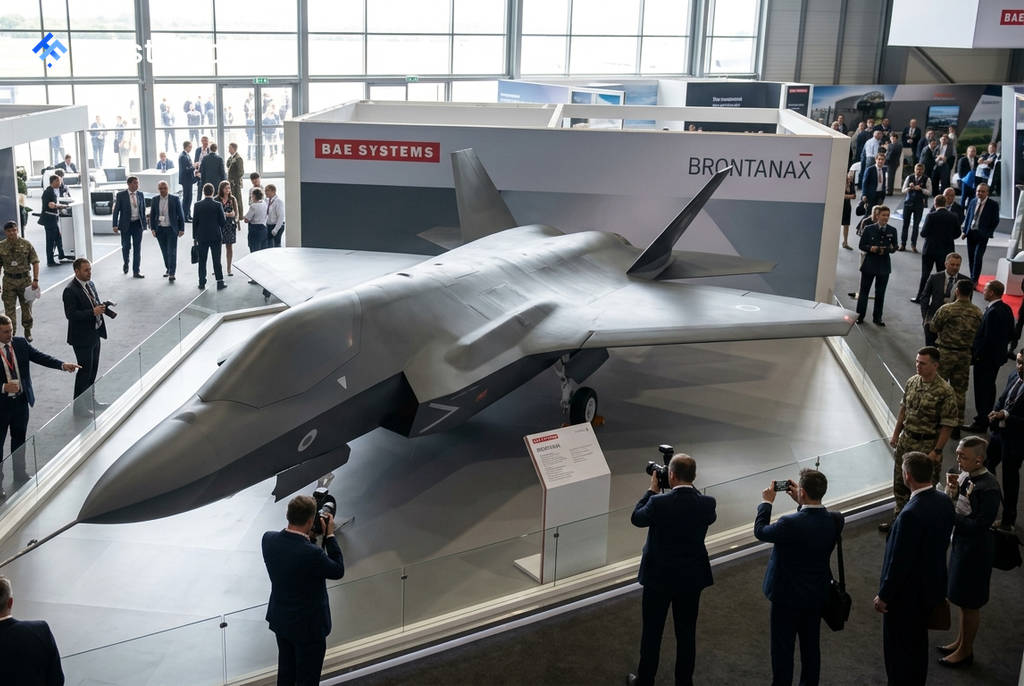
British defense giant BAE Systems has revealed its new uncrewed fighter jet, Brontanax, at the Farnborough Airshow, entering a competitive global market for Collaborative Combat Aircraft designed to fly alongside crewed jets.
BAE Systems has officially entered the fiercely competitive market for uncrewed fighter jets, unveiling a model of its new aircraft, named Brontanax, at the Farnborough Airshow on Wednesday. The move positions the U.K.'s largest defense contractor to compete for a growing share of the global Collaborative Combat Aircraft (CCA) sector.
A Strategic Entry into a Crowded Market
Often described as "loyal wingmen," CCAs are uncrewed aircraft designed to operate alongside traditional piloted fighters, expanding mission capabilities at a lower cost. The strategic importance of air superiority and fleet size has been underscored by the war in Ukraine, driving rapid expansion and investment in the sector, according to defense analysts.
BAE joins an increasingly crowded field of competitors, including Boeing, Airbus, Anduril, and General Atomics, all vying for contracts in this emerging domain. Boeing's MQ-28 Ghost Bat, which has already begun flight testing, was also on display at the airshow, highlighting the advanced state of competition.
Project Details and Timeline
BAE's Brontanax, named from the ancient Greek words for thunder and king, is approximately the size of a Hawk trainer jet. The company stated that a fully assembled aircraft already exists at its facility in Warton, England, and is slated to begin flight testing next year.
 Ad
AdIn a significant endorsement, the U.K. government announced its support for the project. New Defence Secretary Wes Streeting said at the airshow, "We will adopt this as our operational concept demonstrator, and we’re going to get it in the air in 2027." This aligns with Britain's sovereign CCA program, named Storm Fighter, which has an initial investment of £300 million ($401.10 million), according to a recent defense plan. BAE projects the aircraft could enter service by 2030.
BAE's Investment and Cost-Capability Goals
BAE has invested hundreds of millions of pounds of its own capital into the program, a departure from the typical government co-investment model for new platforms. "We’ve put our money where our mouth is," BAE CEO Charles Woodburn told Reuters, adding that the company anticipated the market's direction and hopes to secure a U.K. order, with interest also coming from Europe and the Middle East.
The company is targeting an aggressive price-to-performance ratio for Brontanax, aiming for it to possess 70% to 80% of a conventional fighter jet's capabilities at under 25% of the cost. This could place its price tag at approximately $25 million per unit. BAE also highlighted the aircraft's stealth features and its open, modular architecture, which will allow for easier software and hardware upgrades.
Read next
More on Stocks
Tesla Launches 'High-Volume' Semi Truck Production, Targeting 50,000 Units Annually
Tesla has commenced high-volume production of its electric Semi truck at a new dedicated factory in Nevada, with an annual production goal of 50,000 vehicles, CEO Elon Musk announced.

Insurance Australia Group Settles A$2.8 Billion Greensill Lawsuit with Credit Suisse
Insurance Australia Group has agreed to a confidential settlement to resolve a lawsuit brought by Credit Suisse entities over policies linked to the collapsed finance firm Greensill. The insurer stated the agreement will not have a material impact on its financial position.

OpenAI to Preview Cybersecurity-Focused GPT-6 Model, Fortune Reports
The AI developer is reportedly preparing to unveil GPT-6 Cyber and a related security automation product in the coming weeks, signaling a deeper push into the enterprise cybersecurity market.
Tech and Wall Street CEOs Attend Trump-Xi White House State Dinner
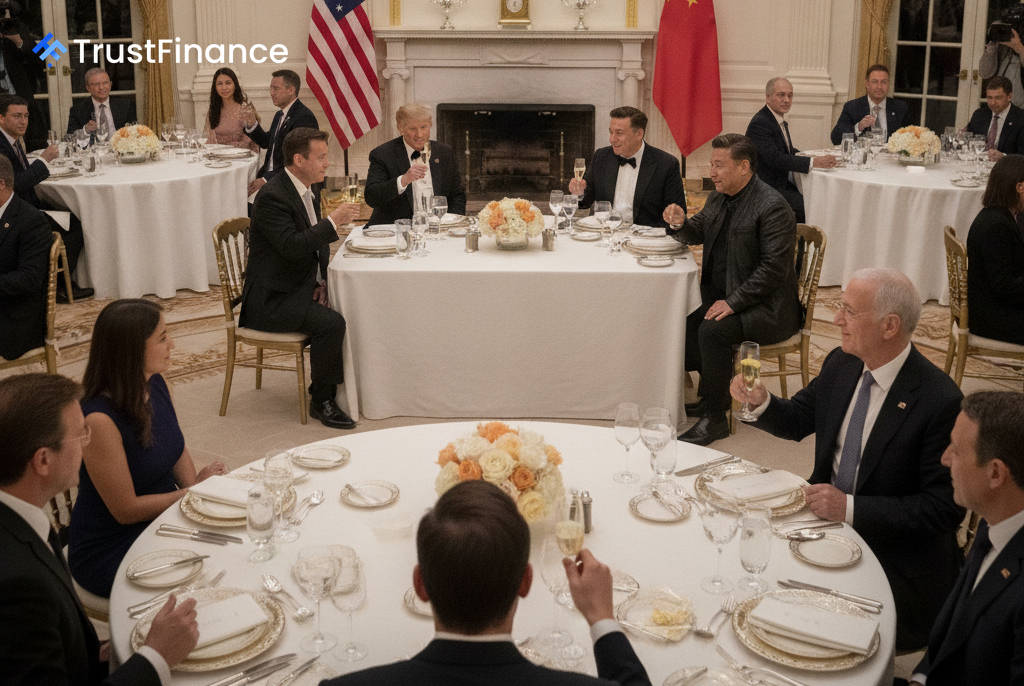
A state dinner hosted by U.S. President Donald Trump for Chinese President Xi Jinping featured a prominent list of corporate leaders, including SpaceX's Elon Musk, Nvidia's Jensen Huang, and JPMorgan's Jamie Dimon, signaling a focus on technology and finance in bilateral talks.