
Story
AI Boosts Market Efficiency but Heightens 'Tail Risk,' Bernstein Says
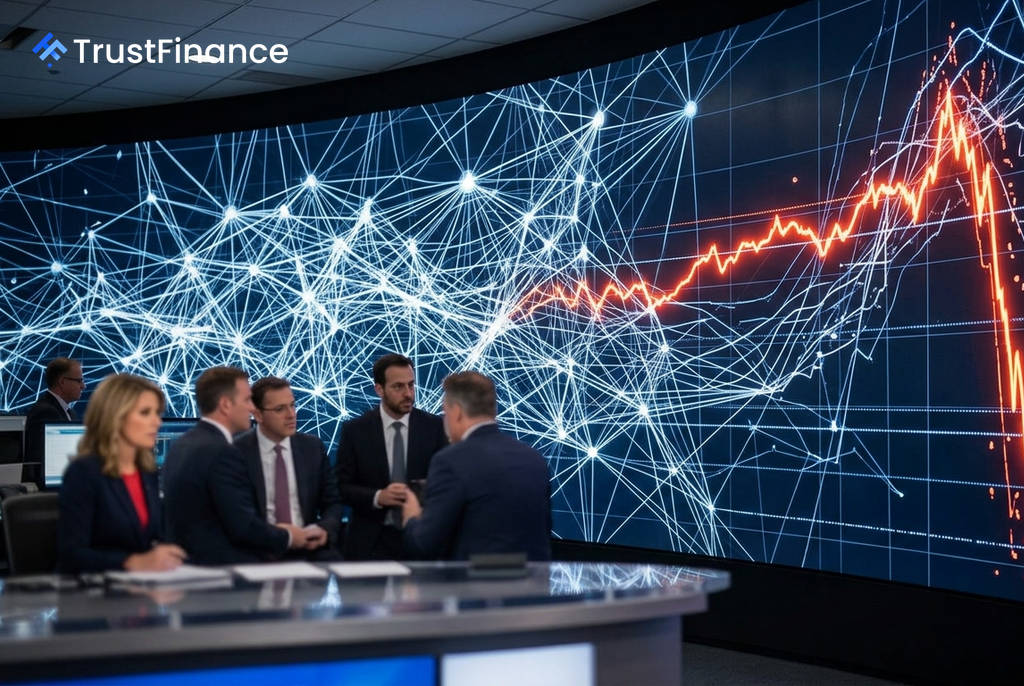
Artificial intelligence is making financial markets more efficient by rapidly processing vast amounts of data, but it is also introducing new vulnerabilities that could lead to crowded trades and amplify volatility, according to a new research note from Bernstein.
The analysis suggests a dual impact: AI is likely to reduce average market inefficiencies while simultaneously increasing the probability of larger, more severe market dislocations, a concept known as tail risk.
AI as an Efficiency Engine
At the company level, AI is enhancing market efficiency by accelerating the analysis of corporate earnings reports, regulatory filings, and alternative datasets, the note states. This allows for faster price discovery and helps narrow information gaps between investors.
This speed is leading to more accurate analyst forecasts that converge more quickly with actual results, reducing the size of earnings surprises. Bernstein also highlights that automated workflows are reshaping the research process itself, enabling analysts to cover more companies, particularly under-researched small-cap stocks in emerging markets.
New Risks and Vulnerabilities
 Ad
Despite the benefits, the widespread adoption of similar AI models presents new dangers. Bernstein warns that as more investors rely on comparable tools trained on overlapping data, trading signals could become increasingly synchronized. This can encourage crowded positions and make market reversals more severe during periods of stress.
The note points to recent market events, such as the unwind of the yen carry trade and instances of AI-generated misinformation briefly moving U.S. equities, as examples of how automated strategies can accelerate volatility. Another concern is the "reflexivity problem," where AI-generated recommendations influence investor behavior, creating a feedback loop that reinforces model outputs and could lead to larger valuation extremes.
The Bottom Line for Investors
Taken together, Bernstein's findings paint a complex picture for the future of AI-driven markets. The technology is poised to streamline research and improve execution, lowering the day-to-day friction and inefficiencies in the market.
However, this increased efficiency comes at the cost of greater systemic risk. The report concludes that investors may face a market with lower average volatility but a higher probability of sudden, sharp dislocations. This environment underscores the growing importance of risk management in an increasingly automated financial landscape.