
Story
Ukraine Drone Strikes Disrupt Key Russian Grain Route in Sea of Azov
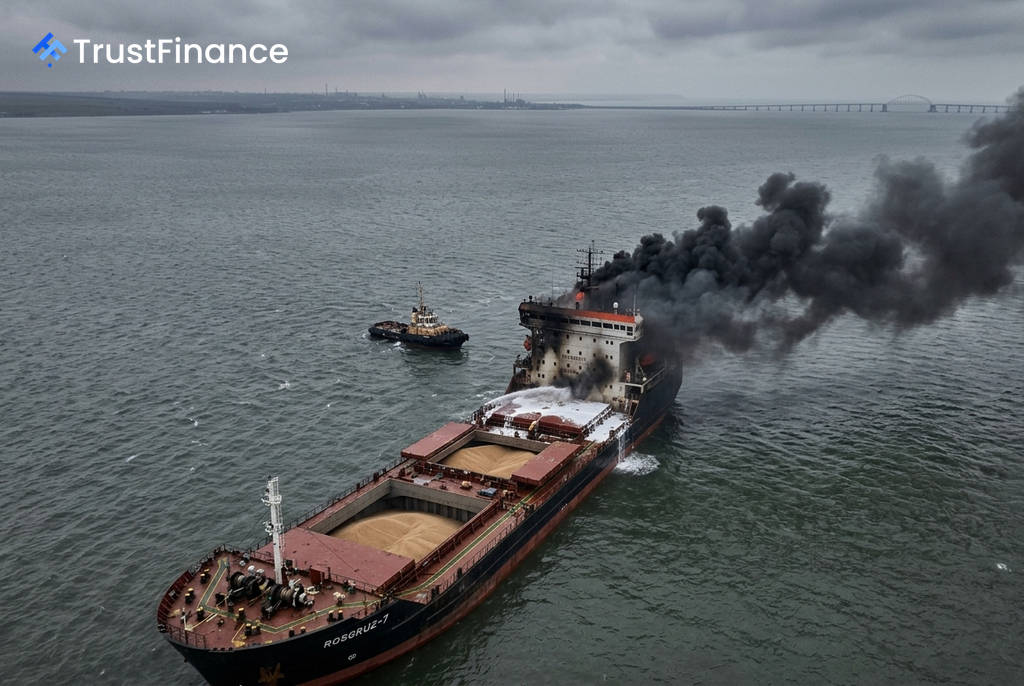
Russia on Tuesday accused Ukraine of terrorism after a significant escalation in drone attacks on shipping in the Sea of Azov, disrupting a vital channel for the country's agricultural exports. The attacks represent a new front in the conflict, targeting Russian economic logistics and prompting promises of rerouted supply chains.
Attacks Intensify on Key Waterway
Ukrainian drone forces struck 11 Russian vessels in the Sea of Azov overnight, according to a statement from Kyiv’s drone forces commander, Robert Brovdi. The targets reportedly included five tankers, five dry cargo vessels, and a tugboat.
This latest barrage brings the total number of vessels hit in the past nine days to 116, according to the Ukrainian commander's statement on Telegram. In response, Russian Foreign Minister Sergei Lavrov labeled the actions "terrorism, pure and simple," claiming the goal was solely to "cause damage and intimidate." A Ukrainian military source told Reuters that its forces only strike military targets or those strengthening Russia's combat capabilities, not civilian cargoes.
Disruption to Grain Exports
The Sea of Azov is a crucial maritime chokepoint for Moscow, handling about a quarter of its grain exports. Industry sources, speaking to Reuters on condition of anonymity, confirmed that several grain ships were hit on July 13 and 14 and caught fire.
 Ad
Shipping in the area remained restricted on Tuesday, with sources telling Reuters that commercial vessels were unable to use the Kerch Strait or the Azov-Don channel, which connects the sea to the Don River. "In a couple of days, there won’t be a single intact boat left in the Sea of Azov, only damaged ones," one source said.
Russia Vows to Reroute Shipments
Despite the disruption, Russian officials stated that export commitments would be met. The Agriculture Ministry acknowledged that shipments may need to be redirected, noting that Russia has "significant capacity for transshipping agricultural cargo in various regions."
Potential alternative routes include deep-water terminals on the Black Sea or ports in the Baltic Sea. Russia's Union of Grain Exporters and Producers affirmed that the country would fully meet its grain export obligations to foreign partners. The attacks come as Russia begins harvesting its new grain crop in southern regions.
Read next
More on Commodities
U.S. Crude Inventories Post Surprise Draw While Gasoline Stocks Swell, EIA Reports
U.S. crude oil stockpiles fell unexpectedly last week, driven by a surge in exports, while gasoline inventories saw a significant build amid weakening demand, according to the latest EIA data.

UBS Raises Year-End Brent Forecast to $110 on Middle East Supply Risks
UBS has increased its year-end forecast for Brent crude to $110 per barrel, citing escalating supply risks in the Middle East, declining global inventories, and record-high freight costs.

Iran Dismisses Latest Qatari Peace Proposal as 'Unacceptable'
A senior Iranian official has rejected the latest Qatari-mediated draft deal to end the eight-month war, calling the ideas 'unacceptable' and signaling a continued diplomatic impasse. The news comes amid rising oil prices following attacks on Saudi energy infrastructure.

Argentina Poised to Gain EU Soymeal Market Share as Deforestation Rules Hit Brazil
Argentina's soybean industry is preparing to capture a larger share of the European Union's soymeal market as new EU anti-deforestation rules are expected to disrupt exports from rival Brazil.