
Story
Tesla Cybercab Faces Federal Safety Probe Over Lack of Manual Controls
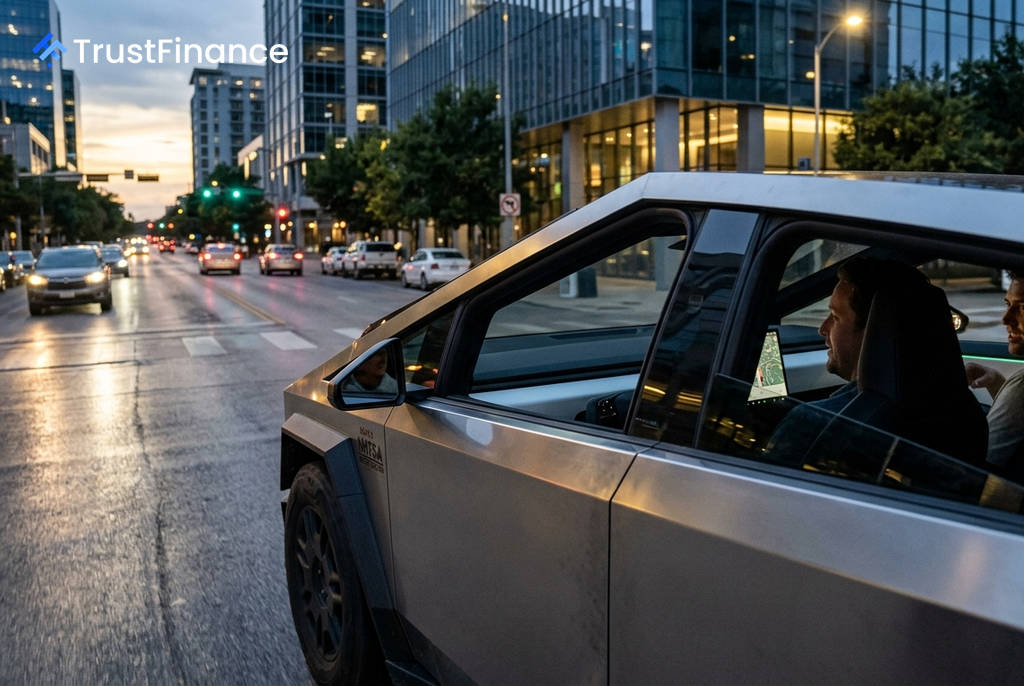
The U.S. National Highway Traffic Safety Administration (NHTSA) has opened an investigation into whether Tesla (NASDAQ:TSLA) properly certified its new autonomous Cybercab robotaxi. The federal auto safety regulator is scrutinizing the vehicle's compliance with federal safety standards, a move that introduces regulatory uncertainty for the automaker's nascent ride-hailing service.
Details of the Investigation
NHTSA announced the probe on Friday, confirming it is examining the technical data and certification process Tesla used for up to 1,000 Cybercabs. The investigation centers on the vehicle's unconventional design, which lacks manual driver controls.
According to the agency, the two-seater Cybercab does not include several components required by current Federal Motor Vehicle Safety Standards, such as:
- A steering wheel
- Brake and accelerator pedals
- Mirrors
Automakers are required to self-certify that their vehicles meet all applicable federal standards before they can be sold or deployed. NHTSA stated that it investigates when certified vehicles appear not to adhere to these requirements.
Regulatory Context
 Ad
The inquiry was launched just one day after Tesla began a small commercial deployment of the Cybercab in Austin, Texas. The company had announced plans to gradually expand the service to more vehicles and cities.
The probe highlights the tension between advancing autonomous vehicle technology and the existing regulatory framework. While NHTSA has proposed new rules to accommodate vehicles without human controls—including potentially ending the requirement for manual brake pedals—the agency emphasized that existing standards remain in force until that work is completed.
Implications for Tesla and the AV Sector
This federal probe represents a significant potential roadblock for one of Tesla's most anticipated future products. The outcome could affect the timeline and scope of the Cybercab's planned nationwide rollout, a key pillar of the company's long-term valuation narrative.
For investors and the broader autonomous vehicle industry, the investigation underscores the persistent regulatory hurdles facing the deployment of fully driverless cars. The case could set an important precedent for how regulators approach the certification of vehicles that fundamentally depart from traditional automotive design.
Read next
More on Stocks
FTC Orders Walmart, Uber, Delta to Disclose Data on Personalized Pricing
The U.S. Federal Trade Commission is demanding nine major companies, including leading retail, travel, and gig economy firms, to provide information on how they use consumer data for setting individual prices and wages.

Google Launches Gemini 4 Carbon AI Model to Bolster Cybersecurity Capabilities
Alphabet's Google has unveiled Gemini 4 Carbon, its latest AI model specifically designed for advanced cybersecurity tasks like vulnerability detection and secure code generation. The launch escalates competition with rivals OpenAI and Anthropic in the enterprise AI market.

Oracle Shares Surge After Unveiling $225 Billion Revenue Target for 2030
Oracle stock rose sharply after the company presented a long-term financial outlook targeting at least $225 billion in annual revenue by fiscal 2030, driven by its expanding AI infrastructure business.

DOJ Scrutinizes Nvidia's $12.9B Hugging Face Deal Amid Broader Antitrust Probe, Sources Say
The U.S. Department of Justice is reportedly examining Nvidia's planned $12.93 billion acquisition of AI platform Hugging Face as part of a wider, ongoing antitrust investigation into the chipmaker's market conduct.