
Story
SpaceX Faces Potential $130 Billion Price Tag for Standalone Mobile Network, Bernstein Says
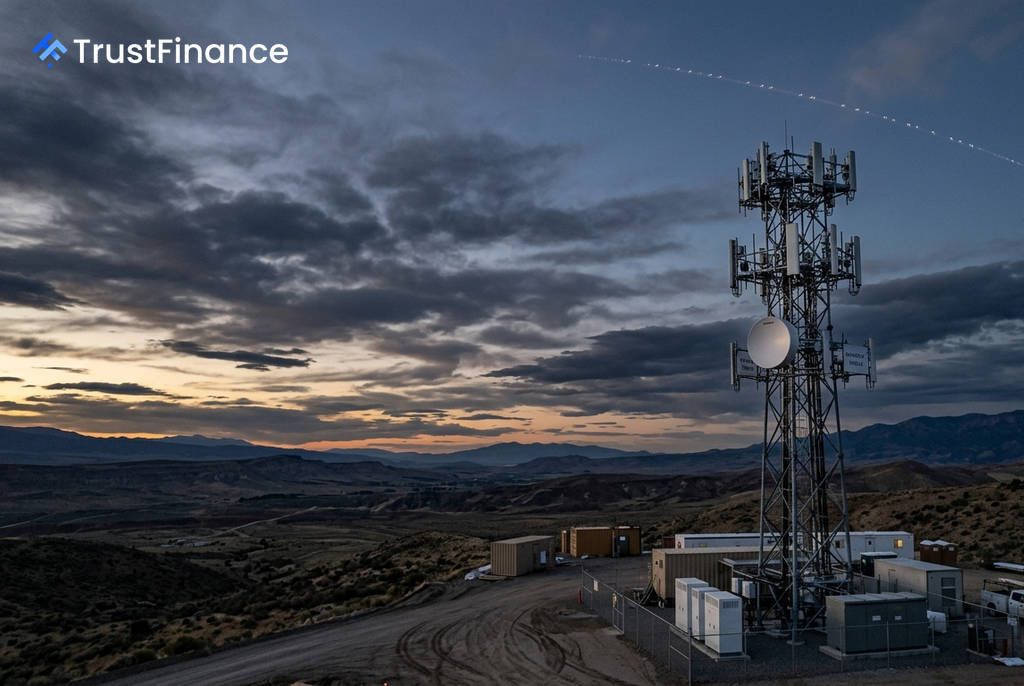
SpaceX could face a staggering cost of $50 billion to $130 billion to build a standalone terrestrial network for its direct-to-device mobile business, according to a new analysis from Bernstein. The investment bank views the ambitious project as the most challenging component of the company's broader satellite strategy, which includes its successful launch and Starlink broadband divisions.
Towering Costs and Key Variables
In a research note, analysts led by Douglas Harned stated that while they have a positive outlook on SpaceX's core businesses, the direct-to-device mobile venture is "the one business that we have viewed as the most difficult." The firm's cost estimate, which includes spectrum acquisition, translates to building between 30,000 and 120,000 macro cell sites.
The wide forecast range depends on two key strategic decisions: how aggressively SpaceX chooses to compete with established terrestrial carriers on network quality and whether it acquires a crucial block of low-band spectrum from Grain Management.
The Spectrum Question
A central factor in the cost calculation is the low-band spectrum Grain Management plans to auction. Bernstein notes this is "the only obviously available low band spectrum" and estimates that acquiring it could reduce the number of required cell sites by approximately 30%.
 Ad
While Elon Musk posted "not true" on X in response to a report that SpaceX was interested in the spectrum, Bernstein analysts believe "a Grain spectrum acquisition is not off the table." The spectrum has also attracted interest from competitor AST Spacemobile, which received temporary FCC approval in August to test on the frequencies.
Scenarios and Likely Outcome
Bernstein modeled several scenarios, ranging from a bare-bones "Metro" network covering 70% of the population to a "Premium" network designed to compete directly with major telecom carriers. The firm's base case is a "National" build, comparable to Sprint's historical network, which would cost an estimated $70 billion for 57,000 sites over eight years, assuming the Grain spectrum is acquired.
Despite the detailed analysis, the analysts concluded that a partnership with an existing carrier remains the most likely path for SpaceX's mobile business. However, they noted the analysis was necessary because "the company continues to indicate a terrestrial buildout is possible," prompting investor questions about the potential costs.
Read next
More on Stocks
FTC Orders Walmart, Uber, Delta to Disclose Data on Personalized Pricing
The U.S. Federal Trade Commission is demanding nine major companies, including leading retail, travel, and gig economy firms, to provide information on how they use consumer data for setting individual prices and wages.

Google Launches Gemini 4 Carbon AI Model to Bolster Cybersecurity Capabilities
Alphabet's Google has unveiled Gemini 4 Carbon, its latest AI model specifically designed for advanced cybersecurity tasks like vulnerability detection and secure code generation. The launch escalates competition with rivals OpenAI and Anthropic in the enterprise AI market.

Oracle Shares Surge After Unveiling $225 Billion Revenue Target for 2030
Oracle stock rose sharply after the company presented a long-term financial outlook targeting at least $225 billion in annual revenue by fiscal 2030, driven by its expanding AI infrastructure business.

DOJ Scrutinizes Nvidia's $12.9B Hugging Face Deal Amid Broader Antitrust Probe, Sources Say
The U.S. Department of Justice is reportedly examining Nvidia's planned $12.93 billion acquisition of AI platform Hugging Face as part of a wider, ongoing antitrust investigation into the chipmaker's market conduct.