
Story
SEC Mandates Activist Investors Disclose Client Identities in Filings
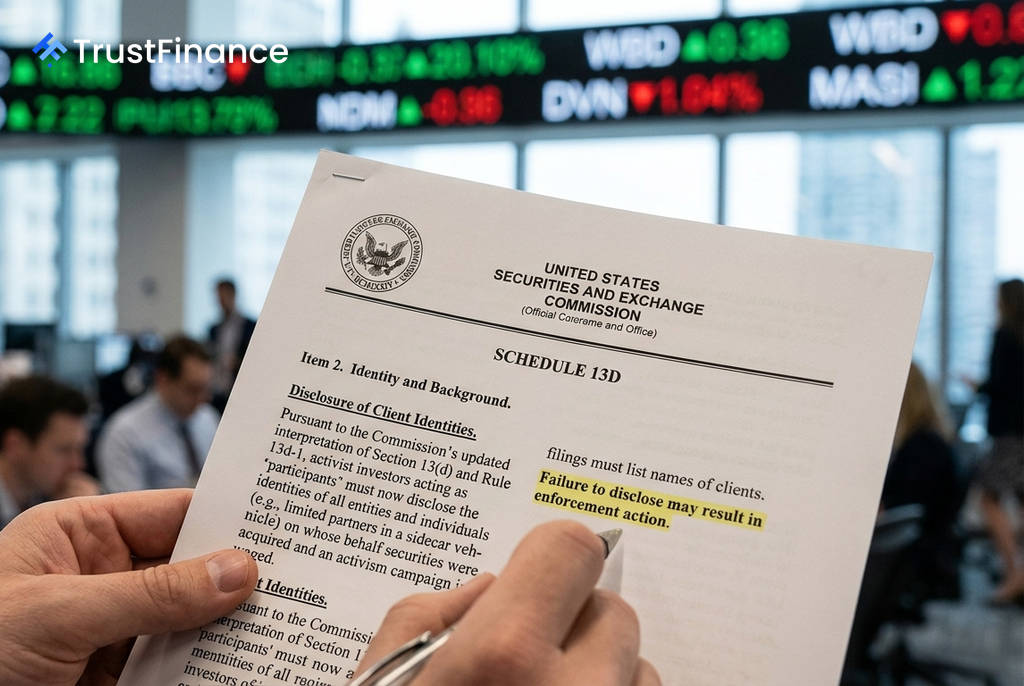
The U.S. Securities and Exchange Commission (SEC) has issued new guidance requiring activist investors to disclose the identities of their clients in certain regulatory filings. This move challenges the long-held secrecy of hedge funds engaged in corporate campaigns and is expected to have significant implications for shareholder activism.
New Disclosure Requirements
The updated interpretations from the SEC's Division of Corporate Finance clarify disclosure rules for Schedule 13D filings and proxy statements. The guidance specifically targets investment vehicles, often called "sidecars," created to fund a campaign at a single target company.
According to the SEC's new interpretation (Question 110.09), "the identities of the investors in an entity formed for the purpose of acquiring securities of a specific issuer and engaging in an activism campaign at that issuer must be disclosed." Furthermore, in proxy contests, clients who invested more than $500 are now considered "participants" whose identities must be revealed (Question 155.02).
Impact on Activist Campaigns
For companies targeted by activists, this increased transparency provides critical information about who is funding a proxy fight or a push for strategic changes. Corporate boards have long argued that knowing the ultimate source of capital is necessary to properly evaluate and respond to a campaign.
 Ad
Conversely, activist hedge funds have traditionally guarded the identities of their investors, or limited partners, as a competitive secret. They argue that such confidentiality is crucial to protect their investment strategies from being copied and to maintain their operational advantage. This new requirement may alter how activists structure their campaigns and raise capital for specific targets.
Context and Precedent
The SEC's action follows a busy first half of 2026 for shareholder activism, with notable campaigns launched by firms like Elliott Investment Management and Ancora Alternatives at companies including Warner Bros Discovery and Devon Energy. The new guidance was issued without significant advance notice, according to legal experts cited by Reuters.
This development recalls a 2022 incident where medical device company Masimo Corp. amended its bylaws to force activists nominating directors to disclose their fund's investors. The move sparked significant backlash from the investment community, and Masimo later reversed the policy. The SEC's latest interpretation now establishes a similar disclosure standard at the federal regulatory level.