
Story
SEBI to Review Derivatives Settlement Pricing Amid Market Stability Concerns
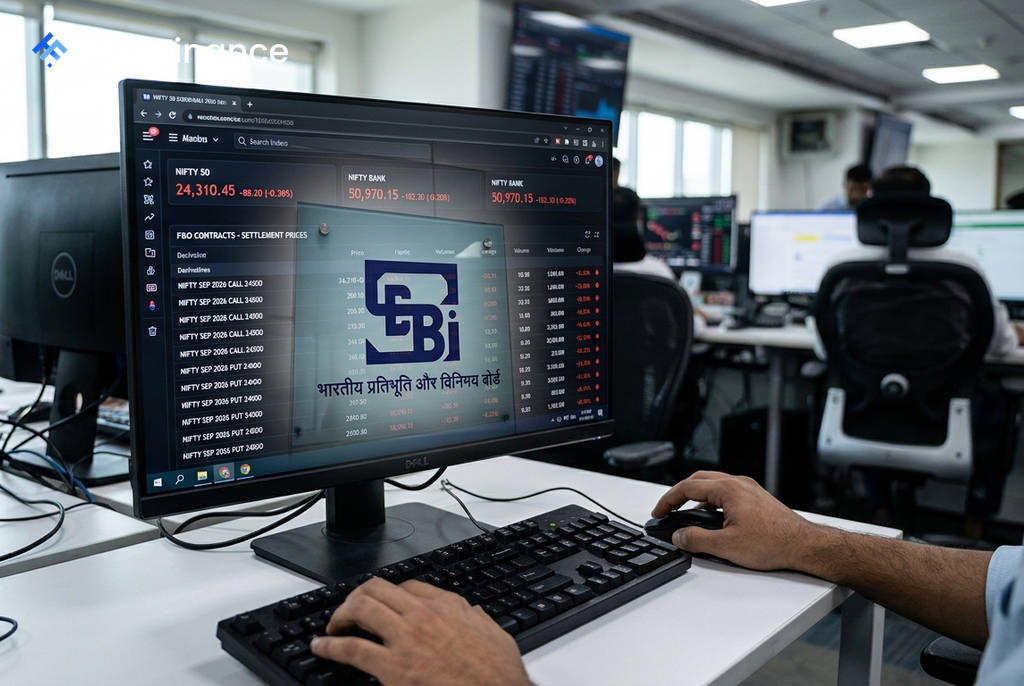
India’s Securities and Exchange Board (SEBI) announced on Thursday that it will review the methodology for calculating settlement prices for derivatives contracts. The move comes in response to feedback from market participants and concerns about instability linked to the recently implemented closing auction session in the equity cash market.
Regulator Responds to Market Feedback
SEBI stated it has received feedback from various stakeholders regarding the new closing auction session, which was introduced on August 3 to establish the closing prices for securities. The regulator acknowledged that several issues have been identified since its implementation.
In response, SEBI plans to release a discussion paper detailing proposed changes to the settlement price methodology within one week. This initiative aims to address the problems that have emerged and refine the price discovery mechanism for the derivatives market.
Closing Auction Session Issues
 Ad
The review was prompted by several specific problems that have raised concerns about market integrity and stability, particularly on days when benchmark derivatives contracts expire. Market participants have observed sharp and unusual price movements during the new closing auction window.
Key issues identified by stakeholders include:
- Divergent index closing levels across different stock exchanges.
- Unstable and erratic options pricing during the closing session.
- Concerns about the potential for market manipulation, especially on expiry days.
For investors and traders, an accurate and stable settlement price is crucial for the fair valuation and settlement of futures and options contracts. The current issues can lead to unexpected gains or losses, undermining confidence in the market's pricing mechanisms.
Read next
More on Stocks
FTC Orders Walmart, Uber, Delta to Disclose Data on Personalized Pricing
The U.S. Federal Trade Commission is demanding nine major companies, including leading retail, travel, and gig economy firms, to provide information on how they use consumer data for setting individual prices and wages.

Google Launches Gemini 4 Carbon AI Model to Bolster Cybersecurity Capabilities
Alphabet's Google has unveiled Gemini 4 Carbon, its latest AI model specifically designed for advanced cybersecurity tasks like vulnerability detection and secure code generation. The launch escalates competition with rivals OpenAI and Anthropic in the enterprise AI market.

Oracle Shares Surge After Unveiling $225 Billion Revenue Target for 2030
Oracle stock rose sharply after the company presented a long-term financial outlook targeting at least $225 billion in annual revenue by fiscal 2030, driven by its expanding AI infrastructure business.

DOJ Scrutinizes Nvidia's $12.9B Hugging Face Deal Amid Broader Antitrust Probe, Sources Say
The U.S. Department of Justice is reportedly examining Nvidia's planned $12.93 billion acquisition of AI platform Hugging Face as part of a wider, ongoing antitrust investigation into the chipmaker's market conduct.