
Story
SanDisk Stock Surges on Easing Treasury Yields and Strong NAND Market
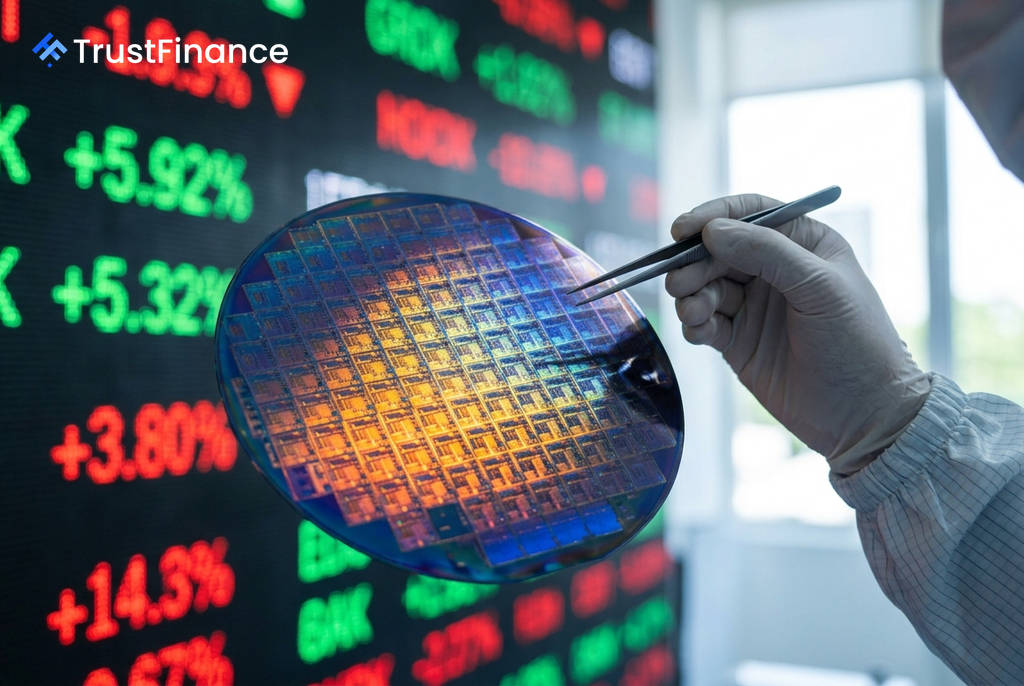
SanDisk (SNDK) shares surged in morning trading, buoyed by a retreat in U.S. Treasury yields and robust fundamentals in the NAND flash memory market. The rally marks a sharp recovery for the memory-chip sector, which had faced persistent selling pressure in recent sessions.
Sector Rebounds on Macro Relief
The primary catalyst for the stock's 5.8% jump to $1,645.17 was macroeconomic relief, as a dip in bond yields prompted investors to rotate back into high-growth semiconductor names that are sensitive to interest rates. This move was not isolated to SanDisk; peer memory-chip maker Micron Technology (MU) also traded higher, confirming a broad, sector-driven recovery.
The rally stood in contrast to the wider market, with the S&P 500 edging down 0.1% and the Nasdaq Composite remaining nearly flat, underscoring the sector-specific nature of the buying interest.
Strong AI Demand Bolsters NAND Market
 Ad
Underpinning the rebound is a strong fundamental backdrop for flash storage. According to market data cited by Investing.com, global NAND revenue increased by approximately 70% quarter-over-quarter in the second quarter. This strength is largely driven by high-volume demand from AI data center buildouts, which is keeping supply tight and supporting firm pricing.
Reflecting this long-term optimism, analysts at Bernstein have maintained a bullish $3,000 price target on SanDisk, based on a thesis of a multi-year NAND shortage. Today's rally helps the stock recover from a recent downturn, though it remains significantly below its 52-week high of $2,354.39.
Context on Insider Activity
A recent regulatory filing noted that SanDisk’s Chief Legal Officer, Bernard Shek, sold 600 shares on September 1. The transaction was executed under a pre-scheduled Rule 10b5-1 trading plan. Such plans are established in advance by company insiders to sell a predetermined number of shares at a predetermined time and are generally not considered indicative of an executive's current outlook on the company's performance.
Read next
More on Stocks
FTC Orders Walmart, Uber, Delta to Disclose Data on Personalized Pricing
The U.S. Federal Trade Commission is demanding nine major companies, including leading retail, travel, and gig economy firms, to provide information on how they use consumer data for setting individual prices and wages.

Google Launches Gemini 4 Carbon AI Model to Bolster Cybersecurity Capabilities
Alphabet's Google has unveiled Gemini 4 Carbon, its latest AI model specifically designed for advanced cybersecurity tasks like vulnerability detection and secure code generation. The launch escalates competition with rivals OpenAI and Anthropic in the enterprise AI market.

Oracle Shares Surge After Unveiling $225 Billion Revenue Target for 2030
Oracle stock rose sharply after the company presented a long-term financial outlook targeting at least $225 billion in annual revenue by fiscal 2030, driven by its expanding AI infrastructure business.

DOJ Scrutinizes Nvidia's $12.9B Hugging Face Deal Amid Broader Antitrust Probe, Sources Say
The U.S. Department of Justice is reportedly examining Nvidia's planned $12.93 billion acquisition of AI platform Hugging Face as part of a wider, ongoing antitrust investigation into the chipmaker's market conduct.