
Story
Samsung, SK Hynix Test Chinese Chip Tools to Mitigate U.S. Curbs Risk
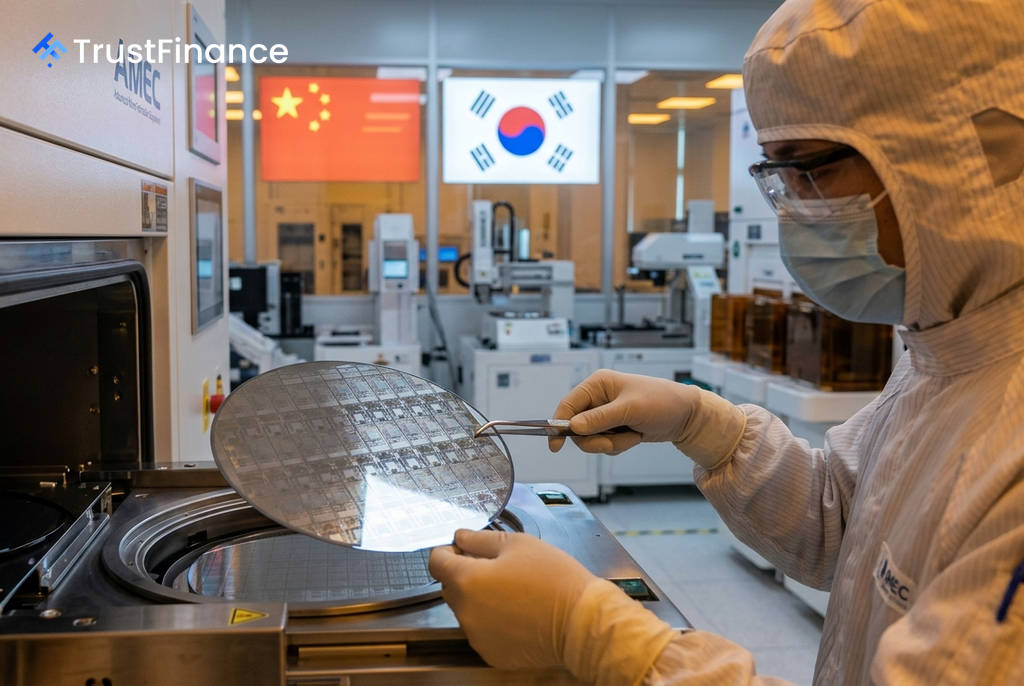
Samsung Electronics and SK Hynix have been testing chipmaking equipment from Chinese suppliers at their factories in China, a move aimed at securing a backup plan amid the risk of tightening U.S. export controls. The tests, which reportedly began around two years ago, involve tools from China's Advanced Micro-Fabrication Equipment (AMEC), according to a Reuters report citing people familiar with the matter.
Following the report, shares in the South Korean chipmakers advanced, with SK Hynix gaining 4.9% and Samsung Electronics rising 2.5%, outperforming the wider KOSPI index.
A Contingency for Supply Chain Stability
The primary driver for these evaluations is the growing concern that future U.S. restrictions could disrupt operations at the companies' Chinese facilities. The risk extends beyond access to new Western-made equipment to include the potential loss of maintenance support and replacement parts for tools already installed.
Sources cited in the report clarified that the trials are a precautionary measure to sustain existing production levels, not to expand capacity. The move underscores an unintended consequence of Washington's semiconductor strategy: pushing global manufacturers operating in China to consider local equipment suppliers to mitigate geopolitical risks.
 Ad
Regulatory Uncertainty and Market Impact
Samsung and SK Hynix operate major memory chip plants in China and navigate a complex regulatory environment. In 2023, the U.S. designated their China plants as "validated end users," allowing them to import certain American equipment. While this status was later adjusted, the companies have received annual licenses to cover necessary imports, but the long-term outlook remains uncertain.
A significant order from either Samsung or SK Hynix would serve as a major commercial endorsement for China's domestic chip-equipment industry. However, any widespread adoption of Chinese tools faces several hurdles, including:
- Lengthy and rigorous qualification processes
- Smaller service and support networks compared to Western incumbents
- Concerns over intellectual property protection
- Potential political pressure from Washington
Read next
More on Stocks
FTC Orders Walmart, Uber, Delta to Disclose Data on Personalized Pricing
The U.S. Federal Trade Commission is demanding nine major companies, including leading retail, travel, and gig economy firms, to provide information on how they use consumer data for setting individual prices and wages.

Google Launches Gemini 4 Carbon AI Model to Bolster Cybersecurity Capabilities
Alphabet's Google has unveiled Gemini 4 Carbon, its latest AI model specifically designed for advanced cybersecurity tasks like vulnerability detection and secure code generation. The launch escalates competition with rivals OpenAI and Anthropic in the enterprise AI market.

Oracle Shares Surge After Unveiling $225 Billion Revenue Target for 2030
Oracle stock rose sharply after the company presented a long-term financial outlook targeting at least $225 billion in annual revenue by fiscal 2030, driven by its expanding AI infrastructure business.

DOJ Scrutinizes Nvidia's $12.9B Hugging Face Deal Amid Broader Antitrust Probe, Sources Say
The U.S. Department of Justice is reportedly examining Nvidia's planned $12.93 billion acquisition of AI platform Hugging Face as part of a wider, ongoing antitrust investigation into the chipmaker's market conduct.