
Story
Russia Deploys Low-Cost, Jam-Proof Drones to Strike Ukraine's Power Grid
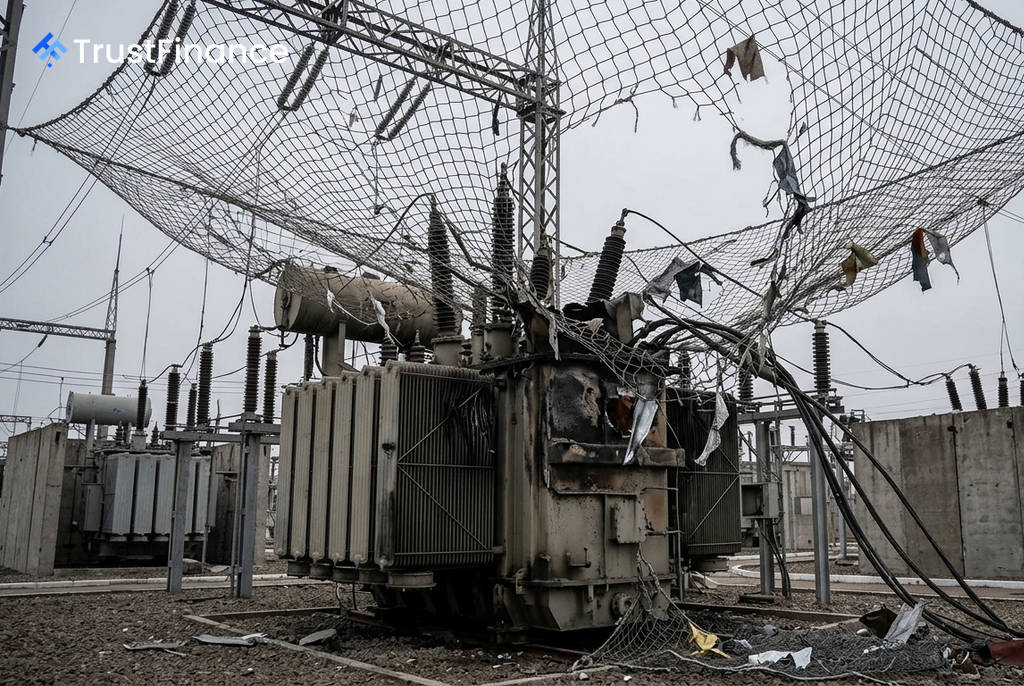
Russia is deploying a new generation of small, low-cost drones guided by fiber-optic cables to successfully strike heavily fortified Ukrainian electrical substations, bypassing electronic jamming systems and inflicting high-value damage. The tactic represents a significant evolution in Russia's ongoing campaign against Ukraine's energy infrastructure.
A New Tactic Bypasses Defenses
According to open-source analysis verified by the Centre for Information Resilience (CIR) in London and confirmed by Reuters, the attacks have been concentrated in the frontline Sumy region. Unlike conventional drones that rely on radio signals, these First Person View (FPV) drones are physically tethered by a thin fiber-optic cable, making them immune to the electronic warfare systems Ukraine uses to defend its critical infrastructure.
Ukrainian authorities have previously shielded high-voltage transformers with concrete sarcophagi and anti-drone nets. However, CIR investigator Joshua Scriven said Russian forces are now using a two-step process: a first drone breaks a hole in the protective netting, allowing a second drone to fly through the gap, navigate through ventilation holes, and strike the core equipment.
Significant Economic Asymmetry
The financial implications of this strategy are stark, highlighting a significant cost-benefit advantage for the attacker. The strikes target the autotransformer, a critical component that brings down the entire transformer unit.
 Ad
- A single fiber-optic FPV drone can cost as little as $2,000.
- The autotransformer in a 330-kilovolt substation is valued at approximately $3.5 million, according to Oleksandr Kharchenko, head of the Energy Research Centre in Kyiv.
CIR has verified four such strikes on large 330 kV substations and at least four more on smaller 110 kV facilities. The attacks have occurred between 16 and 26 kilometers (10-16 miles) from the frontline, demonstrating the growing range of these systems.
Strategic Goal and Context
Analysts believe the strikes are part of a broader Russian strategy to isolate Ukrainian regions from the national grid before targeting local power stations to cause blackouts. "Russia’s goal is to terrorise people and make life in the border regions unbearable," Ukrainian Defence Minister Mykhailo Fedorov stated in a recent comment on the deteriorating security situation in Sumy.
The attacks continue Russia's sustained bombardment of Ukrainian energy facilities throughout the war. The International Criminal Court has previously issued arrest warrants for senior Russian commanders in relation to strikes on Ukraine's power grid between 2022 and 2023.