
Story
Pound Sterling Gains as U.S. Treasury Buyback Announcement Pressures Dollar
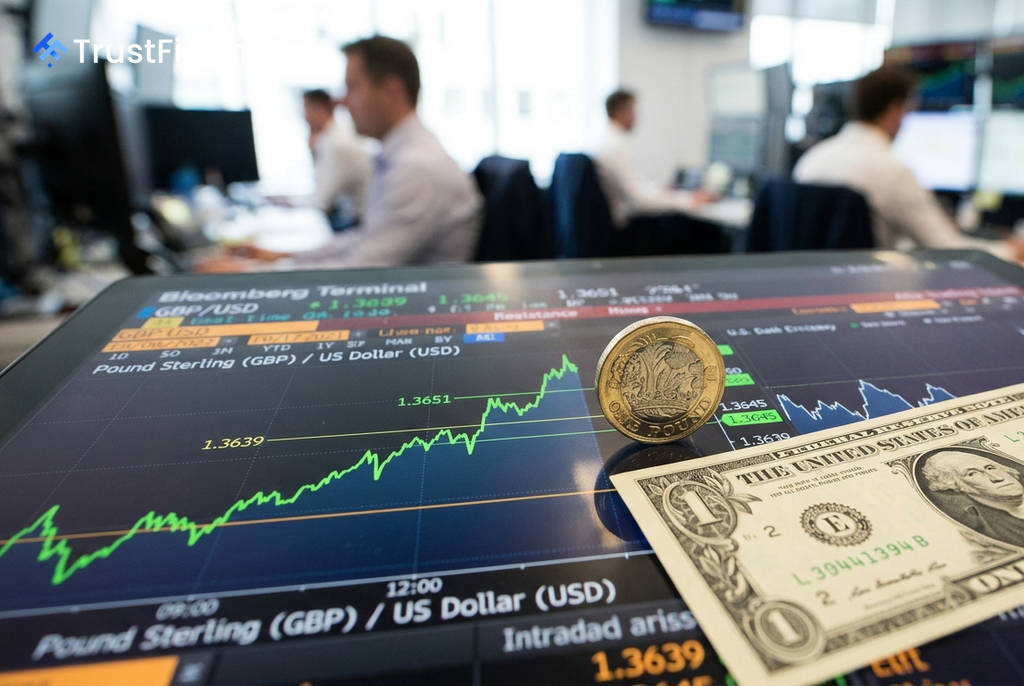
The British pound climbed against the U.S. dollar on Thursday, driven by a broad sell-off in the greenback after the U.S. Treasury Department unexpectedly announced it would expand its debt buyback program. The move was interpreted by markets as a signal to cap rising long-term bond yields, which in turn improved global risk appetite.
As of 5:40 AM ET (09:40 GMT), the pound was up 0.25% against the dollar at $1.3640, while the euro also gained 0.21% to trade at $1.1702.
Treasury Move Pressures U.S. Yields
The primary catalyst for the dollar's weakness originated from Washington. On Wednesday, the U.S. Treasury announced an unscheduled addition of $2 billion to its liquidity buyback operations. This was seen as a clear indication of official unease with the recent sell-off in the long-end of the bond market. Following the news, long-term U.S. Treasury yields fell by approximately 10 basis points.
"This unscheduled announcement suggests the Treasury is deeply unhappy with the recent sell-off in the long end," said Chris Turner, Global Head of Markets at ING, in a note. Turner added that this creates a perceived backstop for the U.S. bond market, which "removes one of the key threats to risk assets this summer" and makes carry-trade strategies more attractive.
Market Impact and Outlook
The pound's advance was entirely driven by these external factors rather than domestic developments in the U.K., where the economic calendar was light. Sterling often acts as a high-beta currency, performing well in "risk-on" environments characterized by a weaker dollar.
 Ad
The Dollar Index (DXY) broke below its support range of 99.40-100, with ING analysts suggesting it could fall further toward 98.65 or even 98 if positive risk sentiment persists. The dollar's weakness was also supported by dovish-leaning minutes from the Federal Reserve's July meeting released Wednesday, which prompted a 5-basis-point drop in short-term U.S. yields.
Investors will be watching upcoming speeches from San Francisco Fed President Mary Daly, who voted for a rate hike in July, and St. Louis Fed President Alberto Musalem. Their comments could test the dollar's new, lower trading range.
Euro Supported by Inflows
The euro also benefited from the dollar's decline, trading near ING's end-of-September target of $1.17. Analysts see resistance at the $1.1700 level, with a potential move toward $1.1790 if breached.
Supporting the euro's medium-term outlook, recent European Central Bank data showed that foreign investors purchased approximately €1.1 trillion in eurozone securities over the past year. This reinforces the narrative of ongoing capital diversification away from U.S. assets.
Read next
More on Forex
Polish Zloty Hits 11-Month Low Against Euro on Energy Price Pressure
The Polish zloty weakened to 4.410 against the euro, its lowest point since November 2023, as rising energy prices and caution ahead of a U.S. Federal Reserve decision weighed on the currency.

Sterling Slips as Dollar Strengthens Ahead of Fed Decision and UK Budget
The British pound lost ground against a resurgent U.S. dollar on Wednesday as market attention shifted from tech sector volatility to upcoming central bank decisions and the UK budget announcement.

Eurozone Bond Yields Climb as French Fiscal Concerns Return Ahead of Fed, ECB Decisions
Yields on French and German government bonds rose as relief from a ratings affirmation for France proved temporary, with investors refocusing on fiscal challenges and awaiting key policy verdicts from the U.S. Federal Reserve and the European Central Bank.

Canadian Dollar Slips as Markets Await Bank of Canada, Fed Decisions
The Canadian dollar edged lower against its U.S. counterpart, snapping a seven-day winning streak as investors adopted a cautious stance ahead of Wednesday's key interest rate announcements from both the Bank of Canada and the U.S. Federal Reserve.