
Story
Pinterest's Proven AI Model Contrasts With Rumble's High-Stakes Infrastructure Pivot

Summary
A fundamental analysis shows Pinterest successfully using AI to drive profitable advertising, while Rumble undertakes a high-risk, cash-intensive transformation into an AI infrastructure provider.
Pinterest (PINS) and Rumble (RUM) are pursuing starkly different artificial intelligence strategies, a divergence clearly reflected in their underlying financial health and market valuation. While Pinterest is leveraging AI to refine and monetize its core platform, Rumble has pivoted its entire business model to bet on the future of AI infrastructure.
Pinterest's Applied AI Success
Pinterest's strategy focuses on using AI to enhance its existing advertising business. At a Goldman Sachs conference on September 9, 2026, CEO Bill Ready explained the company uses compact, open-source AI models trained on its vast proprietary user data. This approach has successfully shifted the company's revenue stream, with lower-funnel performance ads now accounting for two-thirds of its total, a significant change from four years ago.
The results of this strategy are tangible. The company reported that clicks to advertisers have surged fivefold in three years, contributing to 12 consecutive quarters of record user growth. Financially, Pinterest is on solid ground with a 79.5% gross margin, a 5.5% net profit margin, and a strong free cash flow yield of 11.6%.
Rumble's High-Risk Transformation
Rumble is undergoing a radical transformation from a niche video platform into an AI infrastructure provider called Quake AI. The company's future hinges on a massive $13.7 billion deal for NVIDIA GPUs, secured in August 2026, which represents a contract value nearly five times its market capitalization.
 Ad
AdWhile the company has seen GPU utilization jump from below 20% to over 83%, the pivot is capital-intensive and has yet to yield profitability. Rumble is currently burning cash, reflected in its deeply negative -134.6% net margin and negative free cash flow. The investment case for Rumble is a speculative bet on its ability to execute this ambitious infrastructure build-out.
A Tale of Two Valuations
The fundamental data highlights the contrast between a proven business model and a speculative turnaround.
- Profitability: Pinterest is profitable with a 5.5% net margin, whereas Rumble is deeply unprofitable.
- Valuation: Pinterest trades at a forward price-to-earnings ratio of just 9.1x, suggesting a value proposition. In contrast, Rumble's forward P/E is a high 68.0x, pricing in significant future growth.
- Analyst Outlook: While analysts see a potential 49.6% upside for Pinterest, the target for Rumble is a speculative 206.8%, an outlook almost entirely dependent on the success of its Quake AI division.
For investors, the choice is between Pinterest's demonstrated ability to integrate AI for immediate profit and Rumble's high-risk, high-reward gamble on becoming a key player in the AI infrastructure market.
Read next
More on Stocks
Orion180 Prices IPO at $12 Per Share, Targeting $240 Million Raise
Florida-based insurer Orion180 Insurance Group Inc. has priced its initial public offering of 20 million shares at $12.00 each, aiming to raise $240 million ahead of its debut on the Nasdaq.

Nucor Stock Slides After Q3 Earnings Guidance Misses Analyst Forecasts
Nucor Corporation (NUE) shares fell after the company projected third-quarter earnings of $5.55 to $5.65 per share, below the Wall Street consensus of $5.99, citing the absence of significant one-time gains from the prior quarter.
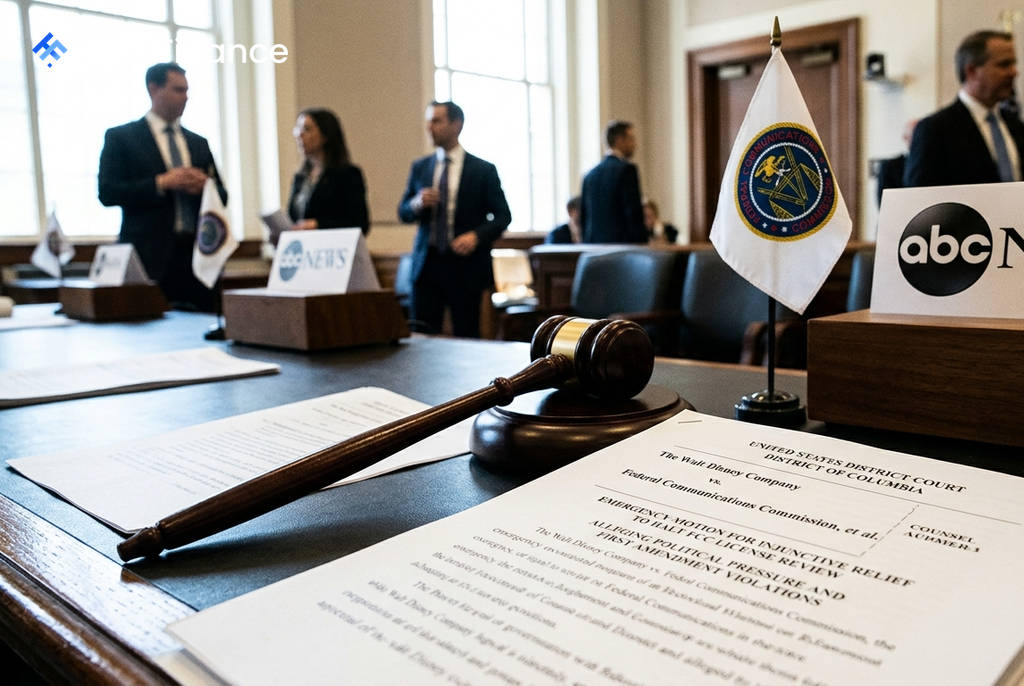
Disney Asks Court to Halt FCC License Review, Alleges Political Pressure From Trump
The Walt Disney Company has filed a legal challenge to stop the Federal Communications Commission from conducting an early review of its ABC station licenses, claiming the regulator is acting on President Trump's directives.
Starbucks Settles Florida Lawsuit Over Diversity Policies for $1 Million
The coffee giant has agreed to settle a lawsuit with Florida's attorney general, pledging to avoid race- or sex-based quotas in its employment practices and pay $1 million to cover the state's litigation costs.